
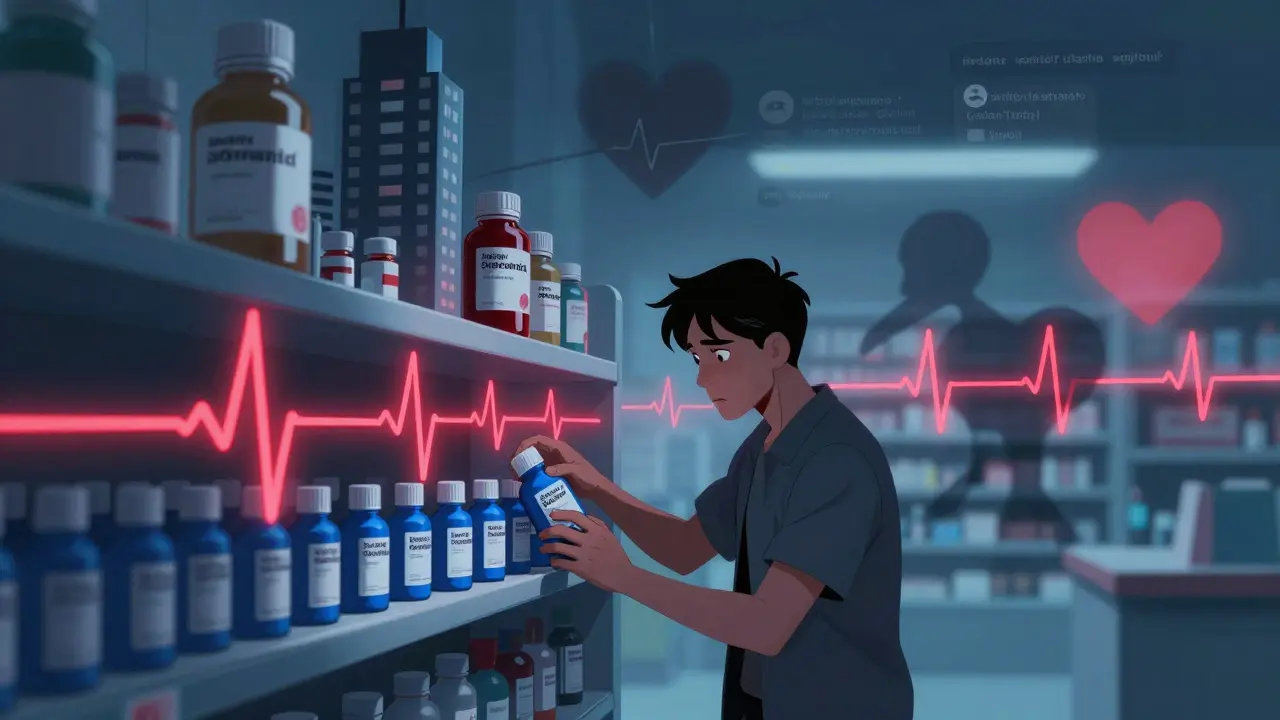
Most people think of loperamide as a simple fix for a bad stomach. You grab a bottle of Imodium A-D at the pharmacy, take one or two pills, and the cramps go away. It’s safe, legal, and easy to get-no prescription needed. But what if that little blue pill becomes the only thing standing between you and opioid withdrawal? What happens when someone takes 50, 100, even 400 milligrams a day-not to stop diarrhea, but to get high or numb the shakes of addiction?
How Loperamide Was Meant to Work
Loperamide was developed in the 1970s as a non-addictive alternative to opioid-based anti-diarrheals like Lomotil. It works by slowing down gut movement, letting your body absorb more water and firm up stools. At normal doses-2 mg to 8 mg a day-it barely touches the brain. That’s because of a natural defense: P-glycoprotein, a transporter in the blood-brain barrier, kicks loperamide out before it can build up in the central nervous system. It’s designed to act only in the gut. That’s why it’s sold over the counter. That’s also why it’s so dangerous when abused.
The Shift from Medicine to Misuse
Since 2010, something changed. As prescription opioids became harder to get, people started looking for alternatives. Loperamide, cheap and legal, became one. People with opioid use disorder began swallowing 10 to 50 times the recommended dose to mimic opioid effects or ease withdrawal symptoms. Reddit threads, medical case reports, and poison control data all tell the same story: users are taking 100 mg, 200 mg, even 400 mg daily. One patient in a 2018 case report took 80 mg a day-40 pills-and ended up in the ER with a dangerously irregular heartbeat.
Here’s the cruel twist: loperamide doesn’t give you a strong high. Unlike heroin or oxycodone, it barely produces euphoria-even at toxic levels. So users keep increasing the dose, thinking more will feel better. That’s when the real danger kicks in.
The Hidden Heart Danger
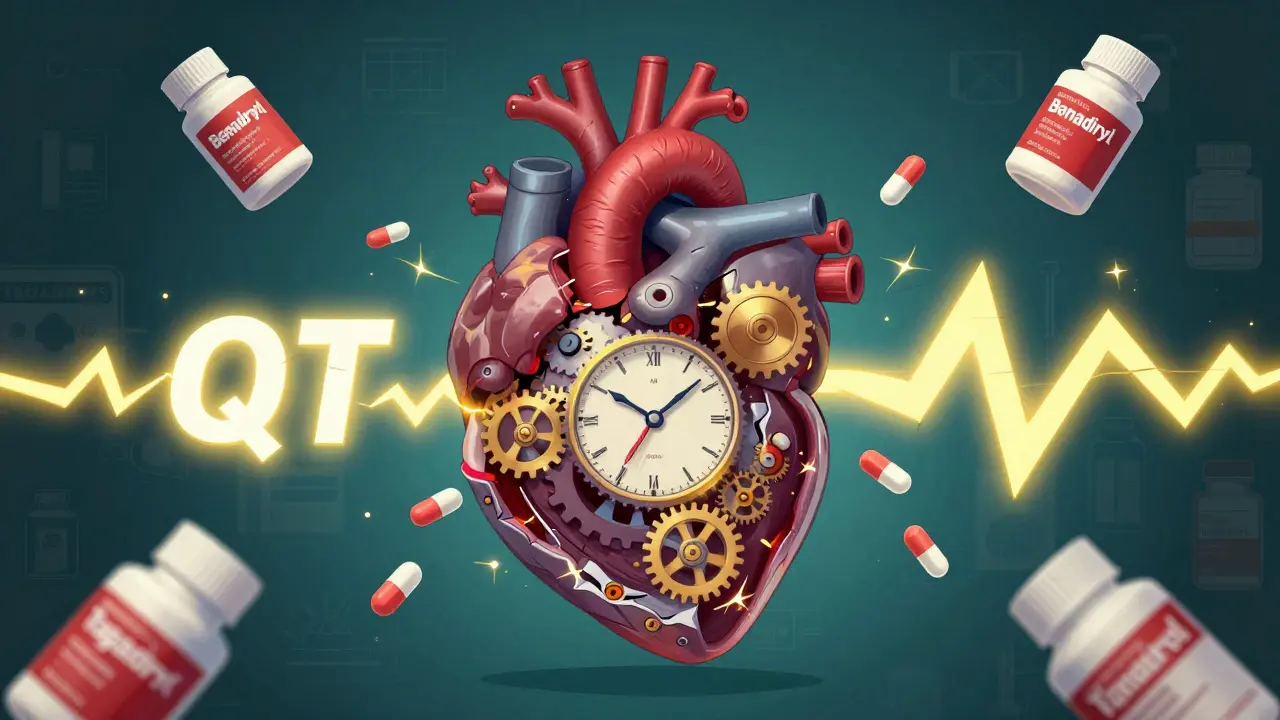
Loperamide doesn’t just slow your bowels. At high doses, it messes with your heart. It blocks hERG potassium channels and sodium channels in heart muscle cells. This causes the electrical system to go haywire. The result? QT interval prolongation. That’s when the heart takes too long to recharge between beats. It can spiral into torsades de pointes-a rare, life-threatening arrhythmia that can turn into cardiac arrest.
The FDA reviewed 48 serious cardiac events tied to loperamide abuse. More than half happened after 2010. Seventeen people died between 2011 and 2020. Many of them had no prior heart problems. Their ECGs looked fine until they didn’t. One patient, taking 30 mg a day for withdrawal, had a borderline QTc of 436 ms. Normal is under 450 ms for men, under 470 for women. He wasn’t even in the danger zone yet-and he was already at risk.
And here’s the kicker: standard drug tests don’t detect loperamide. ER doctors might see a patient collapse with cardiac arrest and never think to test for it. That’s why many cases go undiagnosed until it’s too late.
How People Are Bypassing Safety
Some users don’t just take more loperamide-they combine it with other drugs to make it work better. Quinidine, diphenhydramine (Benadryl), and cimetidine (Tagamet) are common additives. These drugs block the P-glycoprotein pump, letting more loperamide slip into the brain. It’s like hacking the body’s safety system. The result? Faster, stronger opioid-like effects-and a much higher chance of sudden death.
One 2019 case described a patient who took 192 mg of loperamide daily with diphenhydramine. He developed severe QT prolongation and needed intensive care. He survived. Others didn’t.
Warning Signs You Can’t Ignore
If someone you know is using loperamide beyond the label, watch for these signs:
- Buying multiple bottles at once, or ordering large quantities online
- Complaining of chest pain, palpitations, or dizziness without clear cause
- Unexplained fainting or near-fainting episodes
- Extreme constipation, bloating, or inability to pass stool
- History of opioid use disorder or recent attempts to quit
- Using other medications like Benadryl or Tagamet alongside Imodium
These aren’t just side effects-they’re red flags. A person who’s taking 10 pills a day for diarrhea is likely sick. A person taking 40 pills a day is trying to self-treat addiction. And that’s a medical emergency.
What Happens When You Stop?
Stopping loperamide cold turkey after long-term abuse can trigger severe withdrawal: anxiety, muscle aches, sweating, nausea, and insomnia. But unlike opioid withdrawal, which is painful but rarely deadly, loperamide withdrawal can come with lingering heart damage. QT prolongation doesn’t always reverse immediately. Some patients need weeks of monitoring. Others develop permanent arrhythmias.
There’s no safe way to quit on your own. If someone has been abusing loperamide, they need medical supervision. Doctors may use magnesium sulfate to stabilize heart rhythm. In some cases, they use naloxone to reverse central effects-but naloxone doesn’t fix the heart damage. That’s why cardiac monitoring is non-negotiable.

What’s Being Done?
The FDA hasn’t pulled loperamide off shelves. They know it helps millions with real diarrhea. But since 2016, they’ve required stronger warning labels. In 2019, manufacturers started putting loperamide in single-dose blister packs if the package contains more than 45 mg total. That makes it harder to swallow 20 pills at once.
Sales dropped 12% between 2016 and 2020. But abuse didn’t disappear-it just moved. People now buy bulk packs online or split pills from friends. The 2020 National Survey on Drug Use and Health found that about 580,000 Americans used loperamide non-medically in the past year. Among those with opioid use disorder, nearly 1 in 6 admitted to using it.
What Should You Do?
If you’re using loperamide to manage opioid withdrawal: stop. It’s not safe. Talk to a doctor about methadone, buprenorphine, or naltrexone. These are proven, monitored treatments. They won’t kill you.
If you’re worried about someone else: don’t wait. If they’re taking more than 8 mg a day, especially with other drugs, get them to an ER. Tell the staff you suspect loperamide abuse. Ask for an ECG. Ask for cardiac monitoring. Don’t let them walk out with a diagnosis of ‘gastroenteritis’ when their heart is failing.
And if you’re a healthcare provider: always ask about OTC medication use in patients with opioid use disorder. Don’t assume they’re only using what’s prescribed. Loperamide abuse is silent, hidden, and deadly. But it’s not invisible-if you know what to look for.
Why This Matters
Loperamide abuse isn’t a niche problem. It’s a direct consequence of the opioid crisis-and a warning sign of how desperate people are for relief. The drug was meant to help. Instead, it’s becoming another tool for self-destruction. The fact that it’s sold next to pain relievers and allergy meds makes it easy to ignore. But its dangers are real, measurable, and growing.
There’s no shame in needing help. But using loperamide to treat addiction is like using gasoline to put out a fire. It might feel like it’s working. But it’s only making things worse.



January 1, 2026 AT 01:26 AM
Loperamide is just another tool the pharma giants want you to fear so they can sell you expensive rehab packages
January 2, 2026 AT 17:31 PM
ok but like… why is everyone acting like this is new?? i’ve seen people on r/stopdrugs doing 100mg a day since 2015?? and no one’s talking about how the FDA’s ‘blister pack’ thing is just a performative gesture?? they still sell 90-pill bottles online… and people just… buy them??
January 3, 2026 AT 06:14 AM
Y’all are missing the forest for the trees. Loperamide abuse isn’t about the drug-it’s about the gaping hole in our healthcare system. People don’t take 400mg because they’re thrill-seekers. They do it because detox centers cost $20k, insurance denies buprenorphine, and the ER just hands them a prescription for Pepto-Bismol and a pitying look. This isn’t a ‘bad choice’-it’s a symptom of abandonment. We’re treating the symptom like it’s the disease.
And let’s be real: if heroin was sold in the same aisle as Tums, we’d have a national emergency. But loperamide? It’s just… ‘oh, that’s just Imodium.’ No. It’s the last lifeline for someone who’s been told they don’t deserve help.
January 4, 2026 AT 12:42 PM
QT prolongation is not a myth. It’s measurable. It’s documented. And it’s lethal. If you’re using loperamide for withdrawal, you’re gambling with your heart-and the odds are stacked against you. No amount of Reddit wisdom replaces an ECG. Please, get monitored.
January 5, 2026 AT 17:25 PM
Imodium is not a substitute for methadone or buprenorphine. I know people who tried it, thought it worked, and ended up in the hospital with cardiac arrest. It’s not worth it. Talk to a doctor. Seriously.
January 6, 2026 AT 15:23 PM
People who do this are just weak. If you can’t handle withdrawal, you shouldn’t have used opioids in the first place. This isn’t a medical issue-it’s a moral failure.
January 7, 2026 AT 12:37 PM
Hey, I’ve been there. I used loperamide for 8 months after quitting oxycodone. I didn’t know about the heart risks until I passed out in the grocery store. My mom found me. I was 24. I didn’t know I was in danger until I was in the ICU. I’m alive now, but my heart still skips sometimes. If you’re reading this and you’re doing this… please, just call someone. A hotline. A friend. A stranger on Reddit. Don’t wait until your heart stops. You’re not alone. There are people who care. And there are treatments that don’t kill you. I’m proof.
Don’t be ashamed. Just get help. The world still needs you.
January 8, 2026 AT 14:29 PM
the fact that people are dying from imodium is wild. like… i get it, you’re desperate. but you’re literally trying to outsmart your own biology? you think the body’s safety systems are just suggestions? that’s not bravery, that’s ignorance with a side of tragedy. and the fact that we’re still selling this stuff like candy? someone’s gotta fix this.
January 10, 2026 AT 00:04 AM
Blister packs help, but they don’t solve the root problem. We need better access to MAT. Period.
January 11, 2026 AT 23:27 PM
Look, I’ve been in recovery for 5 years. I tried loperamide. I took 120mg a day for three weeks. I thought I was being smart. I wasn’t. I was just buying time until my heart gave out. I got lucky. I had insurance. I had a mom who didn’t give up. I’m alive. But I lost 3 friends to this. One of them was 19. He took 400mg with Benadryl. His ECG was normal the day before. He never woke up. This isn’t a ‘drug problem.’ It’s a society problem. We let people suffer until they’re barely breathing before we offer help. And then we act shocked when they turn to the one thing that’s still on the shelf.
Stop calling it abuse. Call it desperation. And then do something about it.