
What Is a Kidney Transplant?
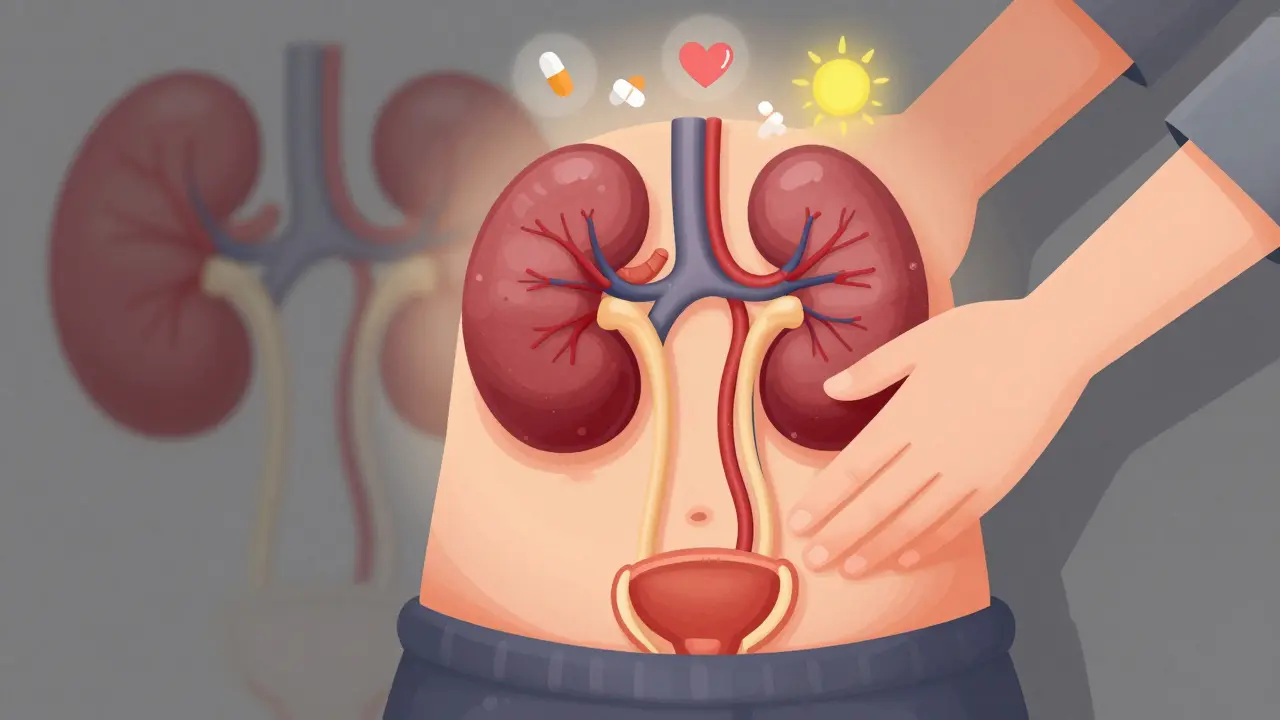
A kidney transplant is when a healthy kidney from a donor is placed into someone whose own kidneys no longer work. This isn’t just a treatment-it’s often the best chance at a longer, more active life for people with end-stage renal disease (ESRD). When kidneys fail, they can’t filter waste or balance fluids anymore. Without a transplant or dialysis, that’s fatal. But unlike dialysis, which keeps you alive, a transplant can help you live better.
Most transplants use kidneys from living donors-family members, friends, or even strangers who volunteer. Others come from people who’ve recently passed away. The surgery doesn’t remove your old kidneys unless they’re causing problems like infection or high blood pressure. The new kidney is placed in your lower belly, connected to your blood vessels and bladder. It usually starts working right away.
Who Is Eligible for a Kidney Transplant?
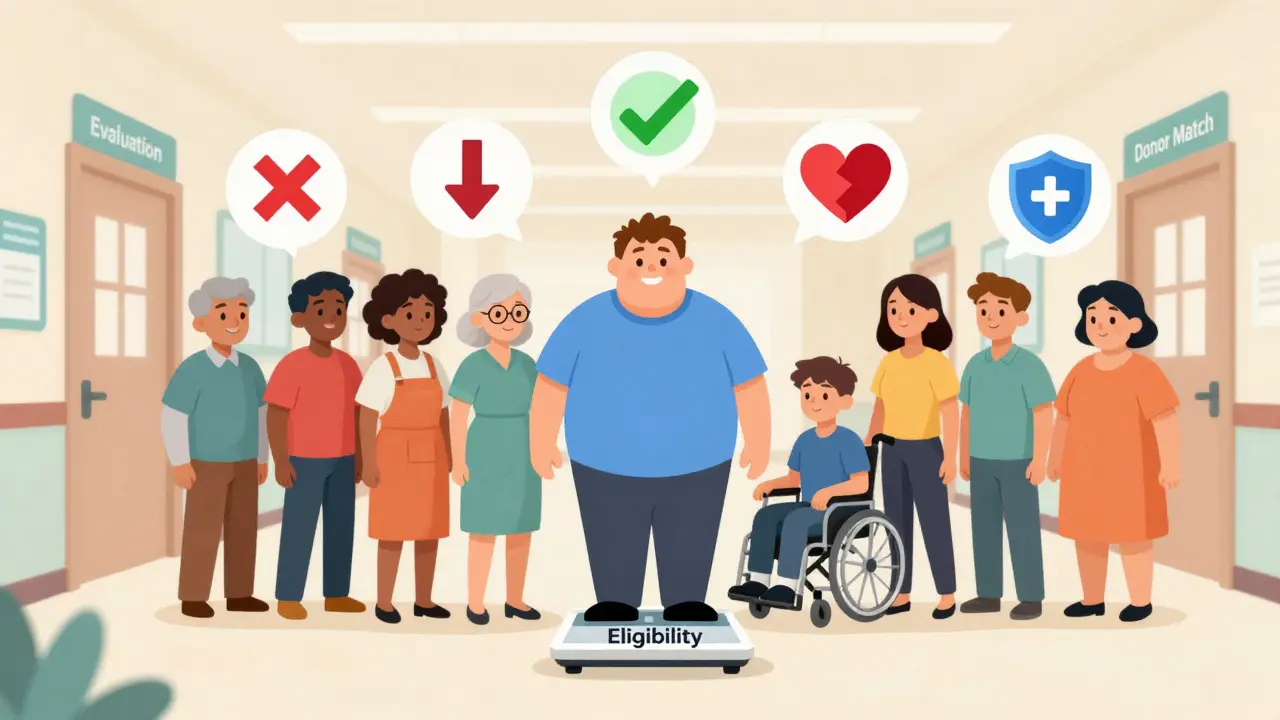
Not everyone with kidney failure qualifies. Transplant centers look at more than just how bad your kidney function is. They ask: Can you survive the surgery? Will you stick with the lifelong care plan? Are there hidden health risks that could kill the new kidney-or you?
To start, your kidney function must be very low. Most centers require a glomerular filtration rate (GFR) of 20 mL/min or less. Some will consider you earlier if your kidneys are failing fast-like dropping more than 10 mL/min each year-or if you have a living donor ready. You don’t need to be on dialysis yet, but you’re usually close.
Age isn’t a hard cutoff. A 78-year-old in great shape might qualify. A 50-year-old with heart disease and diabetes might not. Centers like Vanderbilt and UCLA evaluate each person based on overall health, not just their birth year.
What Blocks a Transplant?
Some conditions make a transplant too risky. These aren’t just preferences-they’re safety rules.
- Active cancer: If you’ve had cancer, you usually need to be in remission for 2-5 years, depending on the type. A transplant weakens your immune system, so cancer could come back fast.
- Untreated infections: HIV with a low CD4 count or uncontrolled hepatitis B or C disqualifies you. But if those are managed well with medication, you may still qualify. In 2023, over 1,000 HIV-positive patients in the U.S. received kidney transplants.
- Severe heart or lung disease: If your heart can’t handle surgery or you need oxygen 24/7, you’re not a candidate. Right ventricle pressure over 50 mm Hg or pulmonary artery pressure over 70 mm Hg are common red flags.
- Obesity: A BMI over 35 raises surgical risks. Over 45? Most centers won’t operate. Losing weight isn’t just a suggestion-it’s often a requirement to get on the list.
- Substance abuse: Ongoing alcohol or drug use is an automatic disqualifier. You must be sober for at least 6 months and show you have a plan to stay that way.
- Mental health issues: Severe depression, psychosis, or dementia that prevents you from taking pills daily? That’s a problem. Transplant meds are non-negotiable. Miss one, and your body might reject the kidney.
The Evaluation Process: More Than Just Blood Tests
Getting approved isn’t a quick visit. It’s a multi-week process with dozens of appointments. You’ll meet with a nephrologist, transplant surgeon, social worker, psychologist, pharmacist, and nutritionist.
Tests include:
- Blood work to check for infections and match your tissue type with donors
- Heart tests: EKG, echocardiogram, stress test-especially if you’re over 50 or have diabetes
- Cancer screening: Colonoscopy, mammogram, skin exam, and more
- Chest X-ray and lung function tests
- Frailty assessments: For people over 60, they check grip strength, walking speed, and energy levels
They’ll also ask about your home life. Do you have someone to help you take your pills? Can you get to appointments? Do you understand the risks? This isn’t about being perfect-it’s about being realistic. If you’re alone, overwhelmed, or unsure, they’ll help you build a support system before moving forward.
What Happens During Surgery?
The operation takes 3 to 4 hours. You’re asleep under general anesthesia. The surgeon places the new kidney in your lower belly, connects its artery and vein to your own blood vessels, and attaches the ureter to your bladder. Your old kidneys stay in place unless they’re infected, bleeding, or causing high blood pressure.
The new kidney usually starts making urine right away. But in about 1 in 5 cases-especially with kidneys from deceased donors-it takes a few days to wake up. That’s called delayed graft function. You might need dialysis for a short time after surgery. It’s not failure. It’s just a slow start.
Most people leave the hospital in 4 to 7 days. You’ll be on pain meds, antibiotics, and the first doses of anti-rejection drugs.
Life After Transplant: The Real Work Begins
Getting a new kidney isn’t the end. It’s the beginning of a lifelong commitment.
You’ll take immunosuppressants every single day-no exceptions. These drugs stop your immune system from attacking the new kidney. Common ones include tacrolimus, mycophenolate, and steroids. Each has side effects: tremors, high blood sugar, weight gain, increased infection risk, or even higher chances of skin cancer.
You’ll need frequent checkups:
- Weekly for the first month
- Monthly for the next 3-6 months
- Every 3 months after that
- Annual blood tests and kidney ultrasounds for life
Your doctor will watch for signs of rejection-like swelling, fever, or sudden weight gain. Blood tests measure creatinine levels. If it starts rising, it could mean your body is fighting the new kidney. Catching it early often means you can adjust meds and save the transplant.
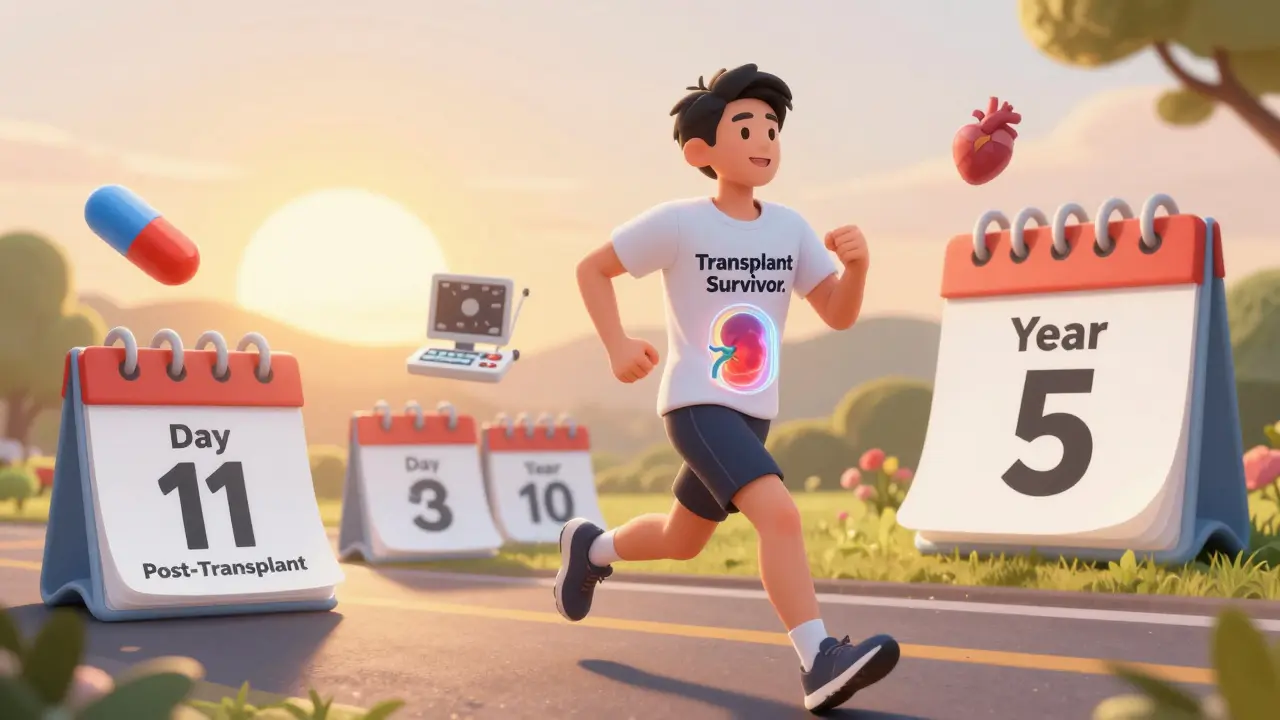
Studies show that 95% of living donor kidneys are still working after one year. After five years, 85% are still going strong. For deceased donor kidneys, those numbers drop to 92% and 78%. But even the lower end is far better than staying on dialysis, where only about half survive five years.
What’s New in Kidney Transplants?
Technology and science are changing this field fast.
The Kidney Donor Profile Index (KDPI), used since 2014, helps match kidneys to the right patients. A kidney from a 70-year-old with high blood pressure might have a KDPI of 85%. That sounds bad-but for someone who’s been on dialysis for 8 years, it’s still better than waiting another 3 years for a perfect match. Many centers now use these “higher-risk” kidneys safely.
Living donation is growing. More people are choosing to donate to strangers. Some are even doing paired exchanges-where two incompatible donor-recipient pairs swap kidneys. The National Kidney Registry reports a 97% one-year survival rate for living donor transplants.
Researchers are testing ways to reduce or eliminate lifelong drugs. Early trials at Stanford and the University of Minnesota are using special cell therapies to train the immune system to accept the new kidney. If this works, patients might stop taking immunosuppressants within 5-10 years.
What If the Transplant Fails?
Transplants don’t last forever. Most last 10-15 years. Some last 20 or more. If it fails, you go back to dialysis. You can get on the transplant list again. Many people get a second transplant. Some get a third. It’s not the end. It’s just another step.
But the longer you wait after failure, the harder it gets. Your body builds antibodies that make finding a match harder. That’s why sticking with your meds and follow-ups matters so much. Protecting your transplant protects your future options.
Can You Live Normally After a Transplant?
Yes. Most people return to work, travel, exercise, and even have children. You’ll need to avoid crowds during flu season. You’ll need to wear sunscreen every day. You’ll need to avoid raw fish and undercooked meat. But you can still live a full life.
One patient I know, a teacher from Sydney, got her transplant in 2021. She ran her first 10K last year. She’s off disability. She’s back in the classroom. That’s what this is for-not just to survive, but to live again.
Can I get a kidney transplant if I’m over 70?
Yes, age alone doesn’t disqualify you. Many centers, including UCLA and Johns Hopkins, evaluate older patients based on overall health-not age. If you’re active, have strong heart and lung function, and a good support system, you can be a candidate. Frailty tests, not birth certificates, determine eligibility.
What happens if I miss a dose of my anti-rejection medication?
Missing even one dose can trigger rejection. These drugs need to stay at steady levels in your blood. If you miss a dose, call your transplant team immediately. Don’t wait. They may adjust your dose or run blood tests to check for early signs of rejection. Setting phone alarms and using pill organizers are essential.
Can I donate a kidney if I’m not related to the recipient?
Absolutely. Living donors don’t have to be family. Spouses, friends, coworkers, and even strangers can donate. Many transplant centers have paired exchange programs that match incompatible donor-recipient pairs. Donating a kidney doesn’t shorten your life, and most donors return to normal activities within 4-6 weeks.
Why do some transplants fail even when the patient takes all their meds?
Even with perfect adherence, rejection can still happen. Your immune system is complex. Sometimes, antibodies develop slowly over time, or the kidney was already damaged before transplant. High-KDPI kidneys, while life-saving, may not last as long. Regular monitoring catches problems early, but not all rejection is preventable.
Is it safer to get a kidney from a living donor or a deceased donor?
Living donor kidneys last longer and work better. One-year survival is 97% for living donor transplants versus 93% for deceased. Five-year survival is 85% vs. 78%. Living kidneys also start working immediately. Deceased donor kidneys often need temporary dialysis after transplant. If you have a healthy living donor, that’s the best option.
Can I drink alcohol after a kidney transplant?
Moderate alcohol is usually okay-like one drink a day. But heavy drinking damages the liver, raises blood pressure, and interferes with medications. Many transplant teams recommend avoiding alcohol entirely, especially in the first year. Always check with your doctor before drinking.
Do I need to follow a special diet after a transplant?
Yes, but it’s not as strict as dialysis. You’ll need to limit salt, avoid grapefruit (it interferes with meds), and watch your sugar and fat intake because some immunosuppressants cause weight gain and diabetes. A dietitian will help you build a plan that protects your new kidney and keeps your heart healthy.
How long is the wait for a deceased donor kidney?
In the U.S., the average wait is 3-5 years. But it varies by blood type, location, and how sensitized your immune system is. Type O patients wait longer. People in rural areas may wait more than those in big cities. Having a living donor can cut that wait to zero.
Next Steps: What to Do If You’re Considering a Transplant
If you’re on dialysis or your GFR is below 20, talk to your nephrologist about a referral to a transplant center. Don’t wait until you’re desperate. The evaluation takes time. So does finding a donor.
If you’re healthy and want to donate, contact your local transplant center. They’ll guide you through testing. No one should feel pressured. But if you’re considering it, now is the time to learn.
Transplant isn’t a miracle. It’s hard work. But for thousands of people, it’s the difference between surviving and living.


January 5, 2026 AT 07:04 AM
I've been on the list for 3 years. The evaluation was brutal, but worth it. My sister donated, and now I'm running 5Ks. This post nailed the reality: it's not magic, it's maintenance.
January 6, 2026 AT 09:23 AM
In India, we don’t have the luxury of waiting 3-5 years… many just give up. My uncle got a kidney from a stranger in Chennai-paid under the table. Not legal, but life-saving. This system? Broken.
January 6, 2026 AT 14:47 PM
I'm absolutely blown away by the sheer depth of this post-like, wow. The way it breaks down KDPI, delayed graft function, and even frailty assessments? That’s not just info-that’s a love letter to medical precision. Honestly, I cried reading the part about the teacher from Sydney. That’s the real win.
January 7, 2026 AT 06:20 AM
So you're telling me I can't get a transplant if I'm fat? That's just ableist. My body is my business. Also, why do they care if I drink? I'm not hurting anyone.
January 8, 2026 AT 04:03 AM
The immunosuppressant regimens are so nuanced-tacrolimus troughs, mycophenolate MPA exposure, steroid tapering protocols. I’m a nurse and even I get overwhelmed. The real hero here is the transplant pharmacist-no one talks about them enough.
January 9, 2026 AT 19:46 PM
OMG I JUST GOT MY TRANSPLANT LAST YEAR AND I'M SO HAPPY 😭💖 I WAS ON DIALYSIS FOR 4 YEARS AND THOUGHT I'D NEVER WALK WITHOUT A CART AGAIN-NOW I’M HIKING WITH MY KIDS!! DON’T GIVE UP. THE MEDS ARE A PAIN BUT THE FREEDOM? PRICELESS. YOU GOT THIS 🌈💪
January 11, 2026 AT 06:38 AM
So let me get this straight. You need to be sober, thin, mentally stable, and rich enough to take off work for months just to get a new kidney. And if you’re old? Too bad. Cool.
January 12, 2026 AT 16:02 PM
I work in transplant coordination. People think it’s just about the surgery. Nah. It’s the 3am panic calls, the insurance denials, the family fights over who gets to be donor. The real miracle? The fact that any of this works at all.
January 13, 2026 AT 08:06 AM
Isn't it ironic? We take a living organ and call it a gift, yet we make the recipient beg for it like a criminal. The body is sacred, but only if you're 'deserving'. Who decides that?
January 14, 2026 AT 00:38 AM
I used to think transplants were like sci-fi. Now I know they’re just… messy human stuff. Pills, panic, paperwork. But still better than the machine.
January 15, 2026 AT 08:45 AM
America lets rich people live longer. That’s the real takeaway. My cousin’s kidney came from a dead guy in Texas. Meanwhile, my uncle in Delhi died waiting. Guess who’s more valuable?
January 16, 2026 AT 11:27 AM
The KDPI score is fundamentally flawed-it doesn’t account for donor metabolic health or mitochondrial function in the nephron. A 70-year-old donor with controlled HTN but elevated urinary NGAL? That’s a ticking time bomb.
January 18, 2026 AT 09:17 AM
I donated to my best friend back in '19. He was my ride-or-die through chemo. The surgery? Easy. The recovery? Barely a blip. But seeing him laugh again? That’s the real high. Don’t let fear stop you. Talk to your center. They’ll hold your hand through it.
January 20, 2026 AT 00:16 AM
i think people dont reallllly get how hard it is to take meds every day for life. like, its not just forgettin once. its every. single. day. for 20 years. and if you mess up? boom. rejection. its a prison of pills.
January 21, 2026 AT 09:32 AM
Exactly. I missed one dose in year 2. Got a biopsy. Turned out fine, but the scare? I still have nightmares. Now I have alarms set for 7am and 7pm. No exceptions. It’s not a suggestion-it’s survival.