
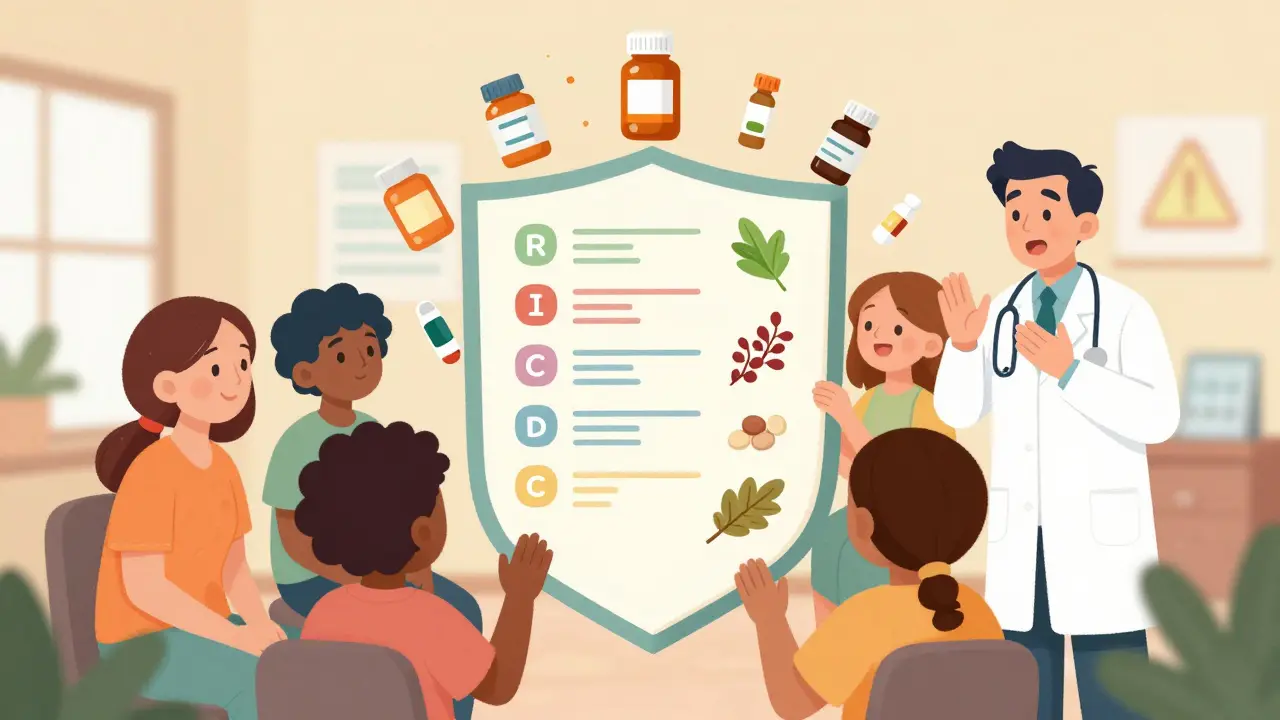
Every year, over 100,000 people in the U.S. die from preventable drug reactions. Many of these deaths happen because someone took a new pill, supplement, or even a common painkiller without telling their doctor what else they were already taking. It’s not always a mistake - sometimes, no one asks. And often, the patient forgets. But it doesn’t have to be this way. Sharing a complete, up-to-date medication list isn’t just good practice - it’s a lifesaver.
What Goes on a Complete Medication List?
A medication list isn’t just a reminder of your prescriptions. It’s a full picture of everything you put into your body. That includes:- Prescription drugs - brand name and generic (e.g., "Lisinopril 10 mg" not just "blood pressure pill")
- Over-the-counter medicines - Tylenol, ibuprofen, antacids, sleep aids, allergy pills
- Vitamins and minerals - Vitamin D3 2000 IU, magnesium, iron, B12
- Herbal supplements - St. John’s Wort, ginkgo biloba, turmeric, echinacea
- Supplements for specific conditions - CoQ10 for statin users, melatonin for sleep, probiotics for gut health
- Allergies and reactions - "Penicillin - hives and trouble breathing," not just "allergic to penicillin"
- Dosage and timing - "Take 1 tablet daily with breakfast," "Take 500 mg twice daily with food"
- Reason for taking it - "For high blood pressure," "For arthritis pain," "For depression"
- Start date and prescriber - "Started Jan 2024, Dr. Lee, GP"
Don’t skip the OTCs or supplements. They’re not harmless. St. John’s Wort can make blood thinners like warfarin useless. Calcium supplements can block thyroid meds. Even grapefruit juice can turn a normal dose of a statin into a dangerous one. The FDA says 30% of serious drug interactions involve something you can buy without a prescription.
Why Paper Lists Fail - and What Works Better
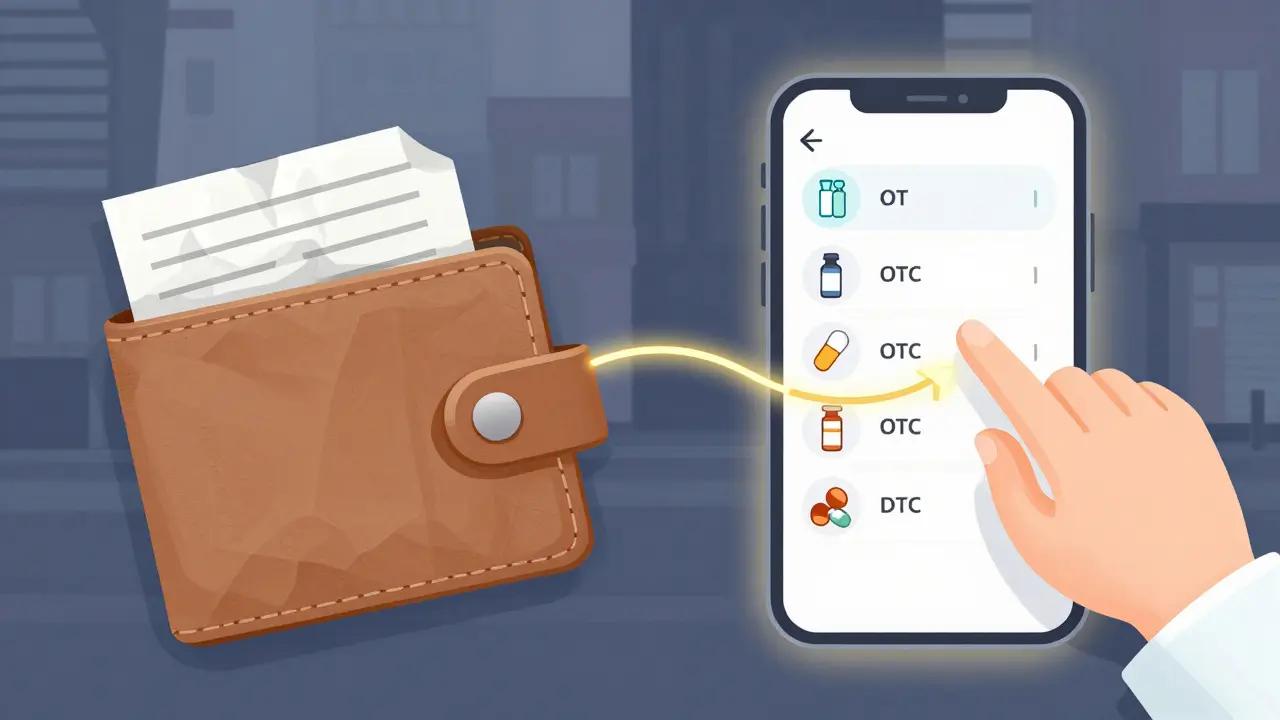
A folded-up list in your wallet? It’s better than nothing. But studies show only 62% of these paper lists are accurate during emergencies. People forget to update them. They lose them. They write "aspirin" but don’t specify if it’s 81 mg or 325 mg.Digital lists are more accurate - 78% in one study - but only if you actually use them. The problem? Many older adults don’t own smartphones. That’s a 23% gap, according to Pew Research.
The best approach? Combine methods.
- Use a single pharmacy for all your prescriptions. Pharmacies run automatic interaction checks - they catch 92% of major risks.
- Take a photo of every pill bottle. Store them in a folder on your phone. When you see a new doctor, say: "Here’s what I’m taking - I snapped pictures of all the bottles."
- Print a clean, updated copy. Keep it in your wallet, purse, or car. Update it within 24 hours of any change.
Apps like Medisafe and MyMeds help with reminders and tracking. But they’re only as good as the data you enter. If you don’t add your fish oil or melatonin, the app won’t warn you. And if you don’t update it monthly, it becomes useless.
Who Needs to See Your List - and When
You don’t wait for your doctor to ask. You hand it to them before they even sit down.Every time you see:
- Your primary care doctor
- A specialist (cardiologist, neurologist, rheumatologist)
- The ER or urgent care
- The pharmacist filling a new prescription
- A hospital admission or discharge
That’s not optional. The American Medical Association says 43% of medication errors happen during transitions - like when you move from hospital to home, or from one doctor to another.
If you see three or more specialists, pick one person - usually your primary care provider - to be your medication coordinator. They’re the one who keeps the master list and talks to the others.
And don’t forget your dentist. Some antibiotics interact with blood thinners. Even local anesthetics can affect heart meds.
Common Mistakes That Put You at Risk
Here’s what goes wrong - and how to fix it:- Missing OTCs and supplements - 37% of errors. Fix: Write down every bottle in your medicine cabinet.
- Forgetting discontinued meds - 28% of errors. Fix: Cross out old meds with a line and write "stopped: June 2023."
- Wrong dosage or timing - 22% of errors. Fix: Don’t say "take once a day." Say "take 10 mg at 8 a.m. on an empty stomach."
- Outdated list - 52% of lists are more than a month old. Fix: Review it every Sunday night. Update it the same day you change anything.
- No allergy details - 19% of errors. Fix: Don’t just say "allergic to penicillin." Say what happened: "hives, swelling, trouble breathing."
At Johns Hopkins, a simple protocol - pharmacists verifying every patient’s list before appointments - cut adverse events by 41%. It’s not magic. It’s just attention to detail.
How to Make It Stick
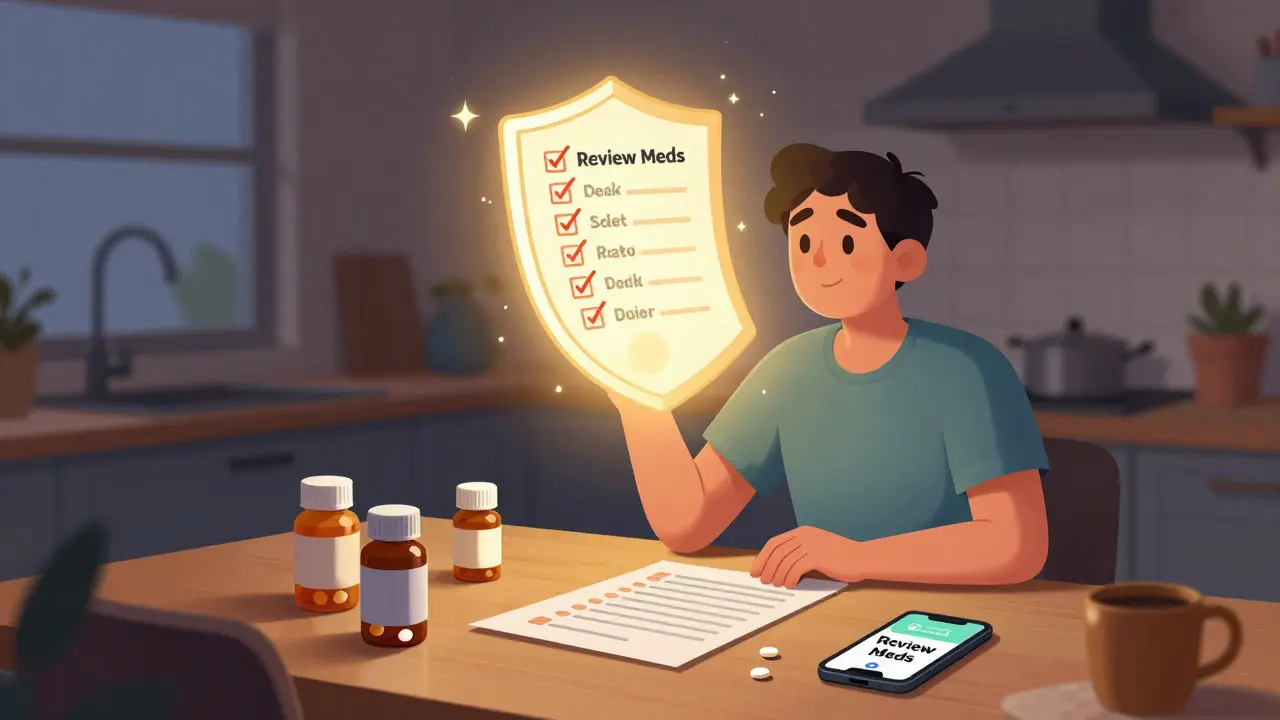
Changing habits is hard. Here’s how to make medication list updates part of your routine:- Use your phone’s notes app or a free template from the FDA’s "My Medicine Record" tool.
- Set a weekly reminder: "Sunday 8 p.m. - Review meds."
- Ask a family member to help. Especially if you’re over 65 or managing multiple conditions.
- When you get a new prescription, ask: "Will this interact with anything else I’m taking?"
- When the pharmacist hands you a new bottle, ask: "Is this safe with my other meds?"
And if you’re on five or more medications - which 40% of adults over 65 are - consider a pharmacist-led medication review. Medicare Part D covers this for people with chronic conditions on eight or more drugs. These reviews cut inappropriate prescribing by 32%.
What to Say at Your Appointment
Don’t just hand over the list. Talk with it.Use these exact phrases:
- "Here’s my full list - I’ve included everything I take, even supplements."
- "Could any of these interact with each other?"
- "Are there any foods or drinks I should avoid?"
- "Is there a simpler way to take these? I’m worried about missing doses."
- "Can we go over this together? I want to make sure I’m not at risk."
Most providers don’t ask. But if you bring it up, they’ll listen. A 2022 Medscape survey found that 76% of patients kept a list - but only 32% included all supplements. That’s the gap. You can close it.
What’s Changing in 2026
The system is catching up. The Office of the National Coordinator for Health IT launched "My Health Record" in early 2023, letting you pull your meds from multiple pharmacies into one digital record. AI tools like IBM Watson Health now detect 94% of serious interactions. By 2026, most digital health platforms will automatically ask you: "Are you taking any vitamins, herbs, or OTC meds?"But technology won’t fix this alone. The real change happens when you - the patient - take control. You’re the only one who knows every pill you’ve taken. You’re the only one who can make sure nothing slips through.
Final Checklist: Your Medication Safety Plan
Use this before your next appointment:- Collect every pill bottle, supplement box, and OTC package.
- Take a photo of each one.
- Write down: name, dose, frequency, reason, prescriber, start date.
- Include everything - even the gummy vitamins and the melatonin you only take when you can’t sleep.
- Update the list the same day you stop, start, or change a med.
- Print one copy. Keep it in your wallet.
- Save a digital copy on your phone.
- At your appointment: hand it over before the doctor sits down.
- Ask: "Could these interact?" and "Should I avoid anything?"
Medication safety isn’t about trust. It’s about verification. Your doctor isn’t mind-reading. They can’t guess what you took last Tuesday. But you can give them the truth. And that truth might save your life.
What if I forget to update my medication list?
Set a weekly reminder on your phone - Sunday evenings work well. If you miss a week, don’t panic. Just update it the next time you see a pharmacist or doctor. But never go to an appointment without at least a rough list. Even an incomplete list is better than none. Pharmacies can often pull your prescription history, but they won’t know about supplements or OTCs unless you tell them.
Do I need to include vitamins and herbal supplements?
Yes - absolutely. Supplements aren’t regulated like drugs, so they can interact dangerously. St. John’s Wort can make birth control, antidepressants, and blood thinners ineffective. High-dose vitamin K can cancel out warfarin. Turmeric can increase bleeding risk with aspirin or clopidogrel. If you take it, write it down. Don’t assume it’s "too natural" to matter.
Can my pharmacist help me with my medication list?
Yes - and they’re often better at spotting interactions than doctors. Pharmacists run automated checks every time you pick up a new prescription. They know what’s in your bottle, what’s in your other bottles, and what happens when they mix. Ask them: "Can you review my full list?" Many offer free medication reviews, especially if you’re on multiple drugs. Medicare Part D covers this for people with chronic conditions taking eight or more medications.
What if my doctor doesn’t look at my list?
Politely insist. Say: "I spent time putting this together because I’m worried about interactions. Can we go over it together?" If they dismiss it, ask for a referral to a pharmacist or a medication therapy management program. If you’re in a hospital, ask for a clinical pharmacist. Your safety isn’t optional - and you have the right to be heard.
How often should I update my list?
Update it within 24 hours of any change - adding, stopping, or changing a dose. Then do a full review every month. Even if nothing changed, check that your notes are still accurate. Sometimes, you forget why you started a med, or you stopped it without telling anyone. Monthly reviews catch those gaps.
Is there a free template I can use?
Yes. The FDA offers a free "My Medicine Record" form you can download and print. The American Academy of Family Physicians also has a simple template. Use either one. Don’t rely on sticky notes or random apps unless they let you export the data. You need something you can hand to a provider - not just something you see on your phone.

January 15, 2026 AT 23:15 PM
Every time I go to the pharmacy, I hand them my printed list before they even ask. Last month, they caught that my fish oil and blood thinner were a risky combo I didn’t even know about. I used to think supplements were harmless. Turns out, they’re the quiet killers.
Now I update it every Sunday. It’s a habit, not a chore.
January 17, 2026 AT 05:41 AM
In India, we often rely on traditional remedies-turmeric paste for inflammation, neem tablets for digestion-but doctors rarely ask. I once saw a patient on warfarin take neem daily because his cousin swore it purified the blood. He bled internally. No one connected the dots.
What we need is not just lists, but cultural literacy in pharmacology. The same pill, the same herb, the same belief-it all changes meaning across borders. Your list isn’t just medical data. It’s a story. Tell it fully.
January 18, 2026 AT 08:43 AM
If you’re not managing your meds like your life depends on it then you’re already dead inside. No one’s coming to save you. Your doctor has 12 minutes with you. Your pharmacist isn’t your friend. You think the system cares? It doesn’t. You think tech will fix it? AI can’t read your mind. You’re the only one who knows what’s in your cabinet. So update the damn list or die quietly. This isn’t advice. It’s a warning.
Stop being lazy. Start being alive.
January 19, 2026 AT 16:20 PM
It is imperative to underscore the critical importance of maintaining an accurate, comprehensive, and contemporaneously updated pharmaceutical inventory. The inclusion of over-the-counter agents, dietary supplements, and herbal preparations is not merely advisable-it is a non-negotiable component of patient safety.
Furthermore, the practice of photographing medication containers and maintaining both digital and physical copies constitutes a best-practice protocol endorsed by multiple clinical guidelines. The omission of any such element introduces a measurable increase in the risk of iatrogenic harm.
It is recommended that patients engage in monthly reconciliation with their primary care provider, ideally in conjunction with a clinical pharmacist, to ensure therapeutic alignment and mitigate polypharmacy risks.
January 20, 2026 AT 09:06 AM
Why are we letting Big Pharma and the government control what we take? They don’t want you to know what’s really in your meds. They profit off confusion. The real solution? Stop trusting doctors. Stop trusting pills. Go back to nature. Eat real food. Take nothing but water, sunlight, and garlic. That’s what our ancestors did. They didn’t need a list. They didn’t need apps. They didn’t need 12 pills a day.
This whole system is rigged. And you’re playing right into it.
January 20, 2026 AT 10:23 AM
I used to forget my supplements until my mom had a stroke. Now I write everything down. Even the gummy vitamins. Even the melatonin I only take when I can’t sleep. It’s not about trust. It’s about making sure someone else can save you if you can’t speak.
January 21, 2026 AT 14:38 PM
They say update your list but who’s really checking? The FDA? The DEA? Nah. They’re too busy chasing people who vape. Meanwhile, your grandma’s mixing aspirin with turmeric and nobody’s saying a word. This is how people die quietly. And they’ll keep dying because no one wants to admit the system’s broken.
Just take your meds and shut up. That’s the real American way.
January 23, 2026 AT 00:49 AM
As a longtime advocate for patient-centered care, I must emphasize that the systematic implementation of a standardized, multi-modal medication reconciliation protocol-encompassing both digital and analog formats-is not merely prudent, but ethically imperative.
Furthermore, the integration of pharmacist-led medication therapy management, particularly within the context of Medicare Part D, represents a transformative opportunity to reduce adverse drug events by up to 41%, as demonstrated by the Johns Hopkins study cited herein.
It is therefore incumbent upon all stakeholders-patients, providers, and payers-to prioritize this initiative with the urgency and rigor it warrants.
Thank you for raising this vital issue.
January 24, 2026 AT 19:06 PM
You people are so obsessed with lists. You think writing down your vitamins is going to save you? You’re still taking the same pills. Still letting doctors decide for you. Still letting pharmacies profit off your dependence.
I’ve seen people with 27 pills a day. They’re not safe. They’re just numb.
What you need isn’t a list. You need to ask: why do I need any of this? And then walk away.
But you won’t. You’re too scared to be healthy.
January 25, 2026 AT 11:29 AM
Let’s be real-how many of these lists are even accurate? I’ve seen patients bring lists with meds they stopped two years ago. I’ve seen people list ‘aspirin’ but not say if it’s 81 or 325. I’ve seen people write ‘vitamin C’ and mean 500mg or 1000mg or 2000mg. And you think this system works?
The real problem isn’t the list. It’s that we treat patients like data-entry clerks. We don’t fix the system. We just make them work harder to survive it.