

Birth Control Risk Calculator
How Carbamazepine Affects Your Birth Control
Carbamazepine (Tegretol) significantly reduces birth control effectiveness. This calculator shows your pregnancy risk based on your current method.
Your Pregnancy Risk
Normal use failure rate:
With carbamazepine:
- Copper IUD (Paragard)
- Hormonal IUD (Mirena, Kyleena)
- Contraceptive implant (Nexplanon)
- Depo-Provera shot
When you’re taking carbamazepine for seizures or nerve pain, the last thing you expect is that your birth control could stop working-even if you never miss a pill. But here’s the hard truth: carbamazepine can cut the effectiveness of oral contraceptives by more than half. This isn’t a rare side effect. It’s a well-documented, dangerous interaction that affects tens of thousands of women every year. And the first sign? Breakthrough bleeding.
Why Your Pill Stops Working With Carbamazepine
Carbamazepine (sold as Tegretol, Carbatrol, or Equetro) doesn’t just calm your nerves or stop seizures. It also turns your liver into a hormone-processing machine. Specifically, it switches on enzymes-mainly CYP3A4-that break down the hormones in birth control pills: ethinyl estradiol and progestins. These hormones are what keep your ovaries from releasing an egg. When carbamazepine speeds up their breakdown, your body doesn’t have enough of them left to do the job.
Studies show this isn’t theoretical. One 1987 trial found that carbamazepine reduced ethinyl estradiol levels by 42% and levonorgestrel by 40%. That’s not a small drop. Those levels fall below the threshold needed to prevent ovulation. Even if you take your pill at the exact same time every day, your body is still being starved of hormones. The result? Your cycle gets unpredictable. Spotting between periods. Light bleeding. Sometimes, no period at all. And sometimes-far too often-pregnancy.
Breakthrough Bleeding Isn’t Just a Nuisance. It’s a Warning Sign.
Many women think breakthrough bleeding is just a side effect, something to grin and bear until your body adjusts. But with carbamazepine, it’s not. It’s a red flag. Research shows 25-35% of women on carbamazepine and birth control pills report spotting or irregular bleeding within the first three months. And according to patient forums like MyEpilepsyTeam, 65% of women who kept using oral contraceptives while starting carbamazepine experienced this exact issue.
Here’s what’s scary: the absence of breakthrough bleeding doesn’t mean you’re safe. Ovulation can still happen without any visible signs. The hormone levels just dip low enough to trigger an egg release, but not low enough to cause bleeding. That’s why relying on bleeding as your only indicator is like checking the fuel gauge on a car with a broken sensor. You might be running on empty and not even know it.
The Real Risk: Pregnancy, and Worse
The failure rate for oral contraceptives under normal use is about 7%. With carbamazepine? It jumps to 20-30% per year. That means 1 in 3-5 women using the pill while on carbamazepine will get pregnant-not because they forgot a pill, but because the drug they’re taking for their brain is sabotaging their birth control.
And if you do get pregnant? There’s another layer of risk. Carbamazepine is a known teratogen. It increases the chance of neural tube defects like spina bifida by about 1%, compared to 0.1% in the general population. That’s a tenfold increase. This isn’t just about avoiding pregnancy. It’s about protecting a future baby from serious, lifelong disabilities. That’s why experts say: if you’re on carbamazepine and you’re sexually active, you need a backup plan. Now.
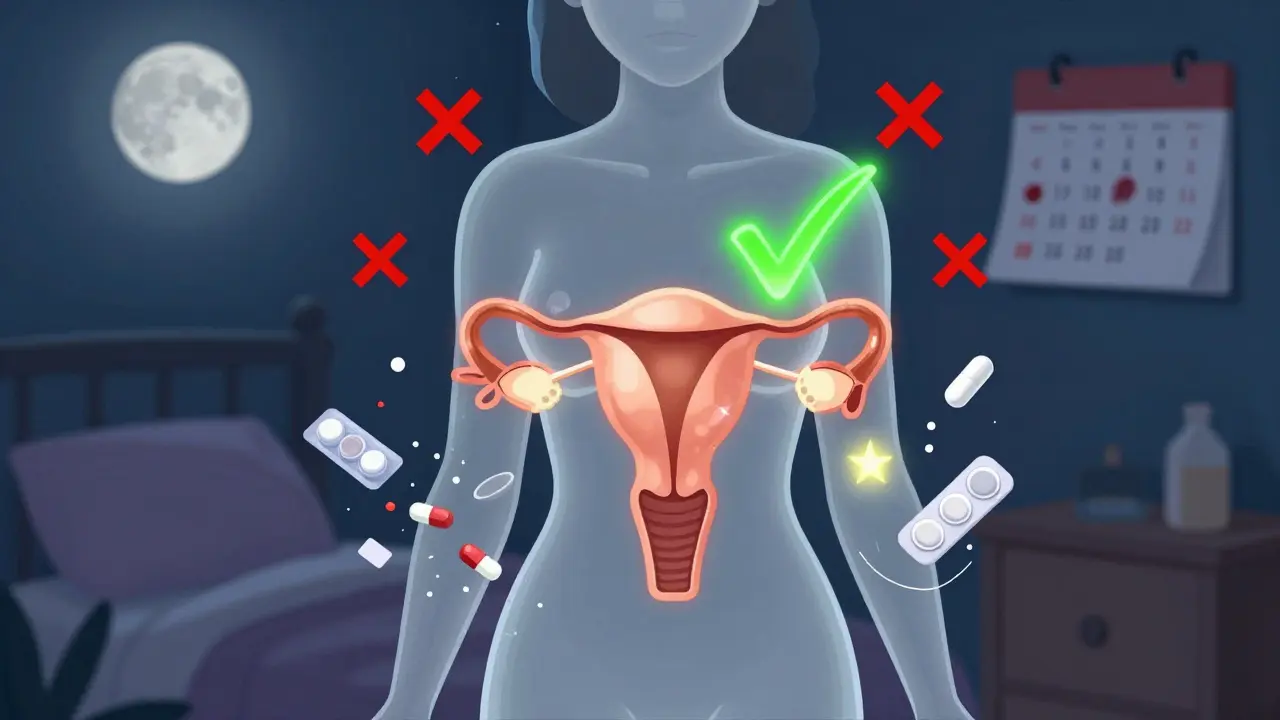
What Actually Works? The Only Reliable Options
Not all birth control methods are created equal when carbamazepine is in the picture. Here’s what the guidelines say works-and what doesn’t.
- Don’t use: Combined oral contraceptives (the pill), vaginal rings, or contraceptive patches. Even though patches absorb hormones through the skin, they still get processed by the liver and lose 20-25% of their effectiveness.
- Don’t use: Progestin-only pills (mini-pills). Carbamazepine breaks those down too. They’re already less effective than combined pills-this interaction makes them unreliable.
- Do use: Copper IUD (Paragard). It’s hormone-free. Works for up to 12 years. 99.2% effective. Zero interaction with carbamazepine.
- Do use: Hormonal IUDs (Mirena, Kyleena, Liletta). They release progestin directly into the uterus. Very little enters your bloodstream, so liver enzymes barely touch them. Less than 0.1% failure rate.
- Do use: Contraceptive implant (Nexplanon). A tiny rod placed under your skin that releases progestin slowly. Also unaffected by carbamazepine. 99.9% effective for up to 5 years.
- Do use: Depo-Provera shots. The injectable form of progestin. Still works fine with carbamazepine. Less than 1% failure rate per year.
Some doctors still suggest switching to a higher-dose pill-50 mcg of estrogen instead of 30 mcg-to fight the enzyme effect. But that’s a dangerous gamble. Higher estrogen increases your risk of blood clots by 2.5 times. For women over 35, smokers, or anyone with a history of migraines or high blood pressure, that risk jumps to 4.3 times higher for venous thromboembolism. The American Academy of Neurology and other major groups now strongly advise against this approach.
What About Newer Seizure Medications?
If you’re newly diagnosed with epilepsy or your current seizure meds aren’t working well, you might have another option. Newer anti-seizure drugs like lacosamide (Vimpat) and brivaracetam (Briviact) don’t induce liver enzymes the way carbamazepine does. That means they don’t interfere with birth control. If you’re on carbamazepine and want to start a family-or just want reliable contraception without switching methods-talk to your neurologist about whether switching medications is possible.
It’s not always an easy call. Carbamazepine works well for some types of seizures. But if you’re a woman of childbearing age, and you’re on it, you need to know: your birth control is compromised. And if you’re not using a reliable backup, you’re playing Russian roulette with your fertility-and your future child’s health.

What You Should Do Right Now
If you’re on carbamazepine and using birth control pills, patches, or rings:
- Stop assuming your current method is working-even if you’ve never missed a pill.
- Make an appointment with your gynecologist or primary care provider. Bring your carbamazepine prescription list.
- Ask: “Is my birth control still effective with this medication?” If they say yes, ask for the evidence.
- Request a copper IUD, hormonal IUD, or implant. These are the gold standard for women on enzyme-inducing drugs.
- If you’re not ready to switch methods yet, use condoms every time. They’re not perfect, but they add a layer of protection while you plan your next steps.
And if you’ve had breakthrough bleeding and didn’t think much of it? That’s not normal. That’s your body telling you something’s wrong. Don’t wait for a pregnancy to realize you were never protected.
Why So Many Women Are Left in the Dark
Here’s the ugly part: 72% of women in a Cleveland Clinic survey said they were never warned about this interaction when they were first prescribed carbamazepine. Not by their neurologist. Not by their pharmacist. Not even by their OB-GYN.
Doctors assume you already know. Pharmacists assume the doctor explained it. And patients assume their birth control is safe because it’s been prescribed together. This gap in communication is deadly. One Reddit user wrote: “I was on 1000mg Tegretol daily and got pregnant on Loestrin despite never missing a pill-my neurologist never warned me about this interaction.”
You don’t have to be that person. You don’t have to wait for a surprise pregnancy or a child born with a preventable birth defect. The science is clear. The solutions exist. You just need to ask the right questions-and act on the answers.
Can I still take the pill if I’m on carbamazepine?
No. Combined oral contraceptives are not reliable when taken with carbamazepine. Even with perfect use, the failure rate jumps from 7% to 20-30% per year because carbamazepine speeds up how fast your body breaks down the hormones. Don’t risk pregnancy-switch to a non-interacting method like an IUD or implant.
Does breakthrough bleeding mean my birth control failed?
Breakthrough bleeding is a strong sign your birth control isn’t working properly with carbamazepine. About 25-35% of women experience it, and it’s caused by unstable hormone levels. But the absence of bleeding doesn’t mean you’re safe-ovulation can still occur. Treat breakthrough bleeding as a warning, not just a side effect.
What’s the safest birth control option with carbamazepine?
The safest options are copper IUDs (Paragard), hormonal IUDs (Mirena, Kyleena), and the contraceptive implant (Nexplanon). All three are over 99% effective and completely unaffected by carbamazepine. They’re long-lasting, low-maintenance, and don’t rely on your liver to process hormones.
Can I use Depo-Provera while on carbamazepine?
Yes. Depo-Provera (the birth control shot) is still effective with carbamazepine. It delivers progestin directly into the bloodstream, bypassing the liver metabolism that carbamazepine interferes with. Failure rates stay below 1% per year, making it a reliable choice if you don’t want an IUD or implant.
Is it safe to get pregnant while taking carbamazepine?
It’s not recommended. Carbamazepine increases the risk of neural tube defects like spina bifida by about 1%, which is ten times higher than the general population. If you’re planning pregnancy, talk to your doctor about switching to a safer anti-seizure medication before conception. Always use reliable contraception until you’re ready.
Why didn’t my doctor tell me about this?
Many doctors assume patients already know, or they don’t prioritize contraceptive counseling when treating epilepsy. A 2021 Cleveland Clinic survey found 72% of women on carbamazepine received no warning about birth control risks. That’s a systemic failure. Don’t wait for your doctor to bring it up-ask directly. Your reproductive health matters just as much as your neurological health.


February 2, 2026 AT 22:44 PM
so like... if your liver is basically a hormone shredder because of carbamazepine, does that mean your brain is also getting less of itself? like, is your seizure control compromised too? or is it just birth control that gets the axe? 🤔
February 4, 2026 AT 22:28 PM
indian women dont even use pills mostly so why even care? also carbamazepine is cheap and works. if you want fancy birth control go to usa and pay 1000$ for iud. here we use rhythm method and pray. also why are you writing like a pharma ad?
February 6, 2026 AT 15:28 PM
breakthrough bleeding = your body screaming. listen to it.
also condoms are free. use them.
and yes your doctor probably forgot. they're busy.
you're not special. you're just alive.
February 8, 2026 AT 13:20 PM
i had no idea this was a thing until i started spotting after switching to tegretol. i thought it was stress or my period being weird. turned out i was 6 weeks along before i even took a test. i had to get a copper iud after the miscarriage. no one told me. no one.
please, if you're on this med and sexually active, just go get an iud. it's not a big deal. it saves your future.
February 10, 2026 AT 13:03 PM
man i read this whole thing and i'm just sitting here thinking how many women are out there right now having panic attacks because they missed a pill and now they're bleeding and they think it's just their cycle but really their body is like hey we're ovulating again and you didn't even notice because you're too busy worrying about your seizures or your job or your kid or your rent or your mental health and no one told you this was coming like bro this is systemic failure not personal failure and i'm so mad i'm crying right now and also i just got my implant last week so if you're reading this and you're on carbamazepine go to the clinic today i'm serious i'll wait
February 11, 2026 AT 01:59 AM
so if i use the shot, does that mean i can't get pregnant even if i'm late by a week? or is there still some risk? 😅
February 12, 2026 AT 11:19 AM
you're all so dramatic. just take the pill and use condoms. if you get pregnant, it's your fault for not being responsible. also why are you all so obsessed with birth control? maybe you should just stop having sex if you're so scared. 🤷♀️
February 12, 2026 AT 17:53 PM
as someone who's been on carbamazepine for 12 years and had two unplanned pregnancies before switching to a hormonal iud, i can confirm: this interaction is real, dangerous, and terrifyingly under-discussed. my first pregnancy happened because my neurologist said 'oh, you're on the pill? that's fine.' my second because i trusted my gyno who said 'you're fine.' both times, i was devastated. the iud changed my life. it's not expensive, it's not painful after the first day, and it doesn't care what your liver is doing. if you're reading this and you're on carbamazepine and not using one of the recommended methods - please, just make the call. your future self will thank you. also, if you're a doctor reading this - stop assuming. start asking. your patient might not know to ask you.