
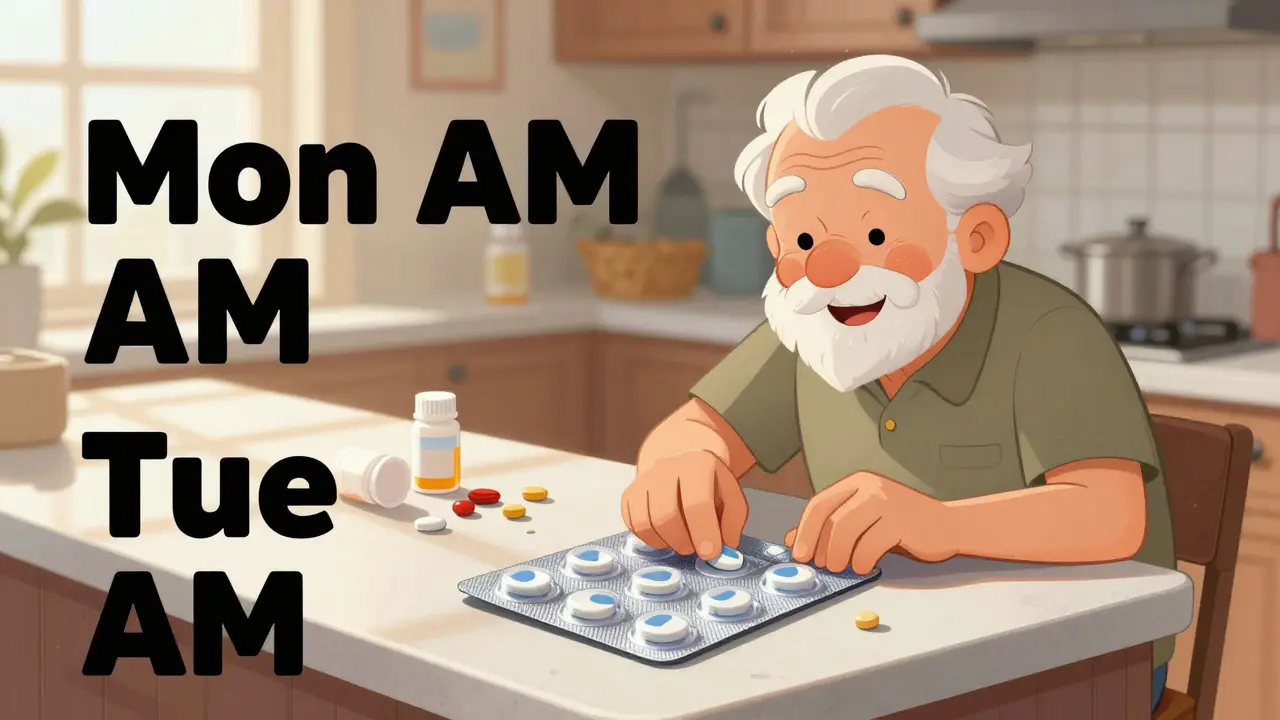
For many seniors, taking medications on time isn’t just inconvenient-it’s dangerous. About half of older adults miss doses or take them at the wrong time, leading to hospital visits, worsening conditions, and even preventable deaths. The problem isn’t laziness or forgetfulness. It’s complexity. Dozens of pills, tiny labels, stiff bottle caps, and confusing schedules make medication management a daily battle. That’s where pill packs and blister packaging come in-not as luxury items, but as essential tools for safety and independence.
What Are Blister Packs and Pill Packs?
Blister packs and pill packs are pre-sorted medication systems made by pharmacies to simplify how seniors take their drugs. They’re not the same as the plastic pill organizers you buy at the drugstore. These are professionally prepared, sealed packages designed for one person’s exact regimen.
A blister pack looks like a flat plastic tray with small, sealed foil compartments. Each compartment holds one dose-morning, afternoon, evening, or bedtime-and is labeled clearly with the day of the week. The foil must be pushed through to release the pill. This makes it impossible to miss a dose without noticing. If the foil is still intact, you haven’t taken it yet.
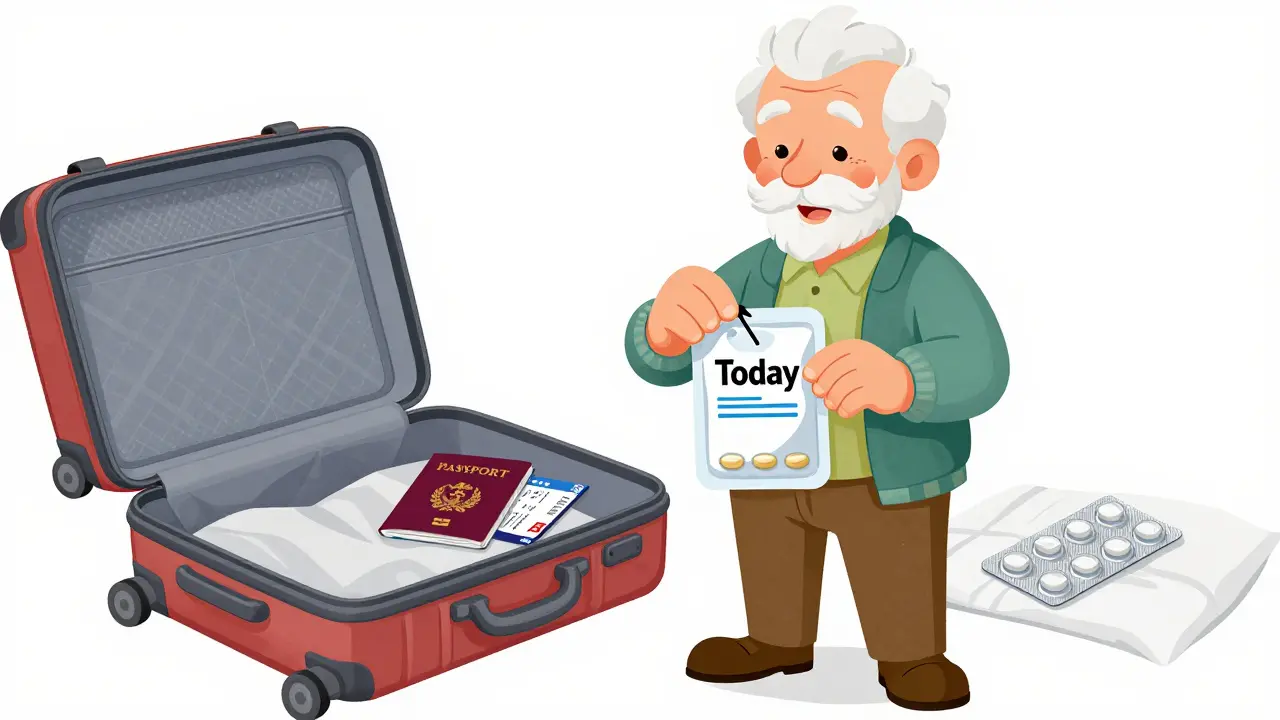
A pill pack (sometimes called a multi-dose pouch) is similar but made of flexible, tear-open pouches connected like a strip. Each pouch holds a full day’s medications. You can tear off just today’s pouch, making it easier to travel with. Unlike blister packs, which come as a full week, pill packs let you carry only what you need.
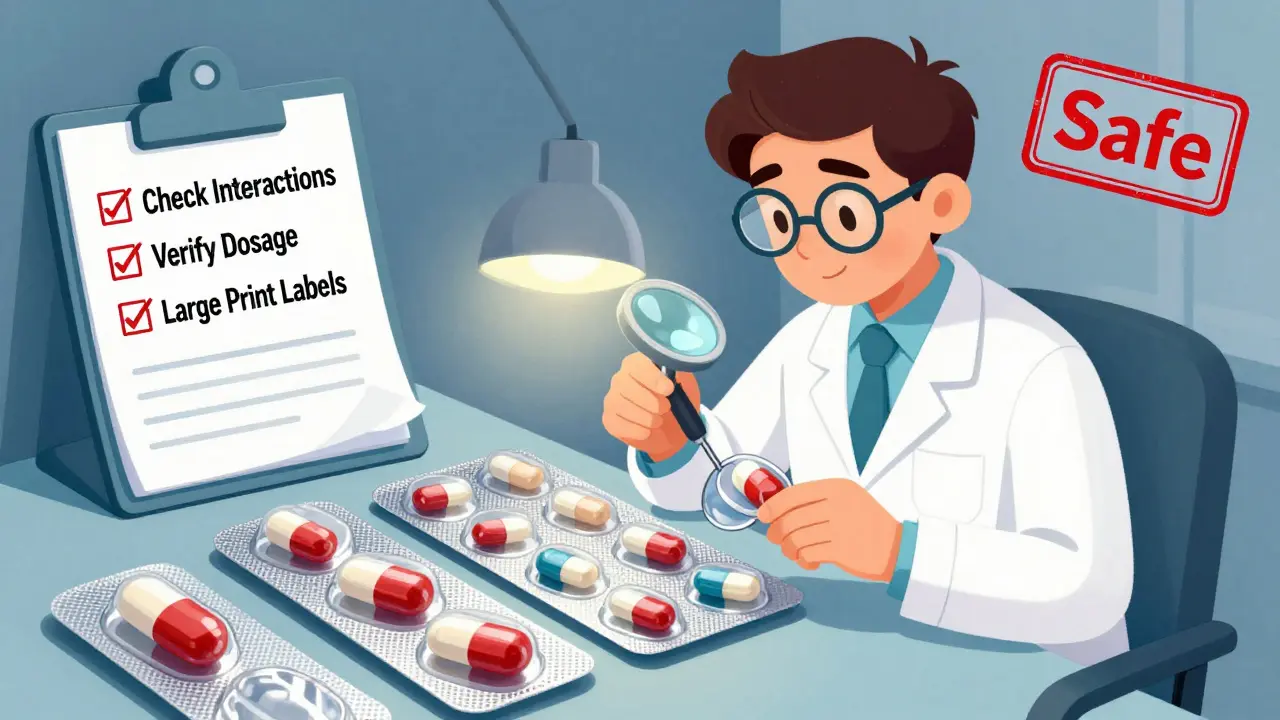
Both are made by pharmacists who review every medication for interactions, check dosages, and label everything in large, high-contrast text. This step alone cuts the risk of dangerous drug mix-ups by 37%, according to Home Instead Belfast’s 2022 report.
Why These Systems Work Better Than Bottles
Traditional pill bottles are a nightmare for seniors. Small print? Hard to read. Twist caps? Nearly impossible for hands with arthritis. And if you forget whether you took your pill, there’s no way to tell-unless you count them, which takes time and causes anxiety.
Blister packs fix this with visual clarity. You see exactly what’s been taken and what’s left. No counting. No guessing. Just a simple press-and-push motion. PharmcareUSA’s 2023 data shows this reduces medication errors in the home by 50%. That’s huge.
They’re also tamper-proof. If someone opens a bottle and puts pills back, you’d never know. But with blister packs, once the foil is broken, it’s broken. That’s a safety feature for seniors living alone or with caregivers who come and go.
Spills? Almost gone. Blister packs cut spill risks by 68% compared to loose pills in bottles. That’s not just about mess-it’s about not losing pills, especially expensive ones.
Blister Packs vs. Pill Packs: Which Is Right?
Choosing between the two depends on lifestyle, not just preference.
Choose blister packs if:
- You take 5 or more medications daily (39% of seniors over 65 do)
- You have memory issues or get confused about times
- You live at home and don’t travel often
- You need the most visual confirmation of doses taken
Choose pill packs if:
- You travel frequently-even for a weekend
- You prefer to carry only what you need for the day
- You have trouble opening rigid plastic trays
- You’re okay with slightly less rigid structure (pouches can tear or get crumpled)
Here’s a quick comparison:
| Feature | Blister Pack | Pill Pack |
|---|---|---|
| Structure | Rigid plastic with foil seals | Flexible tear-open pouches |
| Travel-Friendly | No-must carry full week | Yes-detach daily pouches |
| Visual Clarity | High-each dose clearly marked | High-each day labeled |
| Medication Changes | Difficult-requires full re-pack | Easier-swap out daily pouch |
| Hand Strength Needed | Higher-must press through foil | Lower-tear open pouch |
| Cost (Avg.) | $4.99/week (CAD, Canada) | Similar-often included in dispensing fee |
Most pharmacies charge around $5 per week for blister packs in Canada. In the U.S., many include the cost in standard dispensing fees-no extra charge. Medicare Part D is increasingly covering this as part of medication therapy management, especially for seniors with chronic conditions.
How to Use Them-Simple Steps
There’s no complicated setup. Once the pharmacy prepares your pack, you just follow these steps:
- Look at the label: Each compartment shows the day and time (e.g., "Mon AM", "Wed PM").
- Find today’s date and time: Match it to your schedule.
- Press firmly on the foil: Use your thumb or a pill pusher (often included) to push the pill through.
- Take the pill: Don’t skip this step-even if you think you already took it.
- Check the compartment: If the pill is gone and the foil is dented, you’re good.
Most seniors adapt in 2-3 days. No training needed. The key is consistency. Keep the pack in the same spot-next to the coffee maker, on the bathroom counter, or by the TV. Repetition builds habit.
Who Benefits the Most?
These systems aren’t for everyone-but they’re life-changing for many.
They’re ideal for seniors who:
- Take 4 or more medications daily
- Have memory problems from aging, dementia, or other conditions
- Struggle with arthritis or weak grip
- Have poor eyesight (large print helps)
- Live alone or have caregivers who aren’t always present
One Reddit user, u/SeniorCaregiver2023, shared: "My mom used to call me three times a day asking if she’d taken her pills. Now she just looks at the pack. The anxiety is gone." Family caregivers report a 42% drop in medication-related stress after switching to these systems.
But they’re not perfect. About 28% of users in PharmcareUSA’s 2023 survey said pressing through the foil was hard if they had severe hand weakness. In those cases, a pill pack with tear-open pouches may be better. Or ask your pharmacist for a pill pusher tool-some are designed for low grip strength.
What to Watch Out For
Blister packs are great-but they’re not flexible. If your doctor changes a medication mid-week, you can’t just swap a pill. You have to wait for the pharmacy to re-make the entire pack. That’s why it’s important to:
- Call the pharmacy 3-5 days before your pack runs out
- Let them know about any new prescriptions or dosage changes
- Keep a backup list of all meds (including over-the-counter ones) in case of emergency
Also, not all pharmacies offer this. Only 62% of rural pharmacies provide blister packaging, compared to 89% in cities. If your local pharmacy doesn’t offer it, ask them to order it for you-or check with a nearby chain pharmacy. Many independent pharmacies will set it up if you ask.
What’s Next? Smart Packaging
The future is getting smarter. New blister packs now include tiny sensors that track when a dose is taken. These aren’t just for fun-they send alerts to caregivers or pharmacists if a dose is missed. A 2022 study in PMC 8782488 followed seniors using these smart packs for eight weeks. Users averaged 78.4 years old and rated them easy to use, with high satisfaction scores.
By 2028, Grand View Research predicts 45% of senior medication packaging will include digital monitoring. That means fewer hospital visits, better outcomes, and less burden on families.
For now, the basic versions still work wonders. You don’t need tech to get results. You just need the right system-and the support to use it.
How to Get Started
Here’s how to get blister or pill packaging for a senior:
- Ask the senior’s pharmacist if they offer pre-sorted packaging.
- Bring a complete list of all medications-prescription, OTC, vitamins, supplements.
- Confirm the dosing schedule: morning, noon, evening, bedtime.
- Decide between blister pack (for home) or pill pack (for travel).
- Ask about cost and insurance coverage (Medicare Part D may cover it).
- Set up a refill reminder-call the pharmacy 3-5 days before running out.
It’s not a one-time fix. It’s a system that keeps working. And for seniors who want to stay independent, it’s one of the most effective tools available.
Can I make my own blister pack at home?
No. Making your own blister pack isn’t safe or legal. Pharmacies are licensed to sort and verify medications for interactions, dosages, and allergies. Doing this at home risks dangerous drug conflicts, incorrect doses, or missed pills. Always use pharmacy-prepared systems.
Do insurance plans cover blister packaging?
Many Medicare Part D plans now cover blister or pill packaging as part of Medication Therapy Management (MTM). Private insurers may also cover it, especially for seniors with chronic conditions like diabetes or heart disease. Call your plan or ask your pharmacist-they can check eligibility.
What if my senior has trouble pushing pills through the foil?
Ask the pharmacy for a pill pusher tool-some are designed with ergonomic grips for weak hands. You can also use the back of a spoon or a bottle cap opener. If pressure is still too hard, switch to pill packs with tear-open pouches. They require less hand strength.
How long does it take to get a blister pack ready?
Most pharmacies need 3-5 business days to prepare a blister pack. That’s because they must review all medications, check for interactions, sort each pill, and label everything. Plan ahead-don’t wait until the last day to refill.
Can I use these systems if I only take a few pills?
Yes-even if you take just two or three pills a day, these systems help if you forget doses or get confused about timing. The visual check reduces anxiety. Many seniors with simple regimens still benefit from the clarity these packs provide.
Are blister packs safe for travel by air?
Blister packs are TSA-approved and safe to carry on planes. But if you’re traveling, pill packs are easier-you can take just today’s pouch. Keep the original pharmacy label with the pack in case security asks. Never put pills in a different container unless it’s labeled.


December 21, 2025 AT 02:03 AM
I wish my mom had this when she was managing her meds. She used to mix up her blood pressure pills with her thyroid meds. Now she uses a blister pack and hasn't missed a dose in 8 months. Life-changing.
December 21, 2025 AT 12:49 PM
You know what's really dangerous? Letting pharmacies control your medication schedule like some kind of corporate nanny state. Who gave them the right to decide what you take and when? I've been taking my pills since 1978 without any 'packs' and I'm still alive. This is just another way for Big Pharma to upsell you on overpriced convenience.
December 23, 2025 AT 02:18 AM
My grandma switched to pill packs last year and she actually started going out more. She wasn't afraid to visit us in another state anymore. I didn't realize how much anxiety she was carrying until it was gone. Simple things matter.
December 23, 2025 AT 17:07 PM
Let's be real-this whole system is just a Band-Aid. The real issue is that our healthcare system doesn't prioritize aging in place. Why are we spending $5 a week on foil packs when we could be funding home nurses or better telehealth? This feels like letting the system off the hook by making seniors adapt instead of fixing the root problem.
December 24, 2025 AT 04:59 AM
I live in the US and I've never heard of this being covered by Medicare. You're telling me Canadians get this for $5 a week and we're still paying out the nose? This is why I hate how broken our system is. They're selling us snake oil and calling it 'medication therapy management'.
December 24, 2025 AT 11:35 AM
i used to help my uncle in india with his meds he had like 7 different ones and no one to remind him i made him a little chart with colored pens and he still uses it every day but i wish he had something like this its just hard to get good pharmacy help here
December 25, 2025 AT 22:47 PM
The underlying epistemological framework here assumes that pharmacological compliance is primarily a cognitive or perceptual deficit-when in fact, it's often a structural failure of healthcare delivery systems to accommodate neurodiverse, geriatric, or physically compromised populations. The blister pack is a symptom, not a solution.
December 26, 2025 AT 11:19 AM
I heard this is how the government tracks what seniors are taking. They put microchips in the foil now. I read it on a forum. My cousin’s friend’s neighbor said the feds are using it to ration meds based on age. I’m not saying it’s true… but why would they make it so easy to track if they weren’t planning something?
December 27, 2025 AT 14:47 PM
The 37% reduction stat is from a single study funded by a pharmacy chain. The sample size was 120 people. They didn’t control for caregiver involvement. Also, most seniors don’t take 5+ meds. This whole thing feels like marketing dressed as public health.
December 28, 2025 AT 12:15 PM
I'm a pharmacist in Ohio and I can tell you-most seniors don't know this even exists. We offer it for free with Part D, but 8 out of 10 patients don't ask. You gotta push it. I keep sample packs on the counter. If you're reading this, ask your pharmacist. Don't wait for them to come to you.
December 29, 2025 AT 07:56 AM
just had a guy from nigeria ask me about this last week-he’s helping his dad here in texas and i showed him how to get it done. pharmacy in dallas does it for free if you’re on medicaid. he cried. said his dad finally slept through the night. this stuff matters more than you think.