
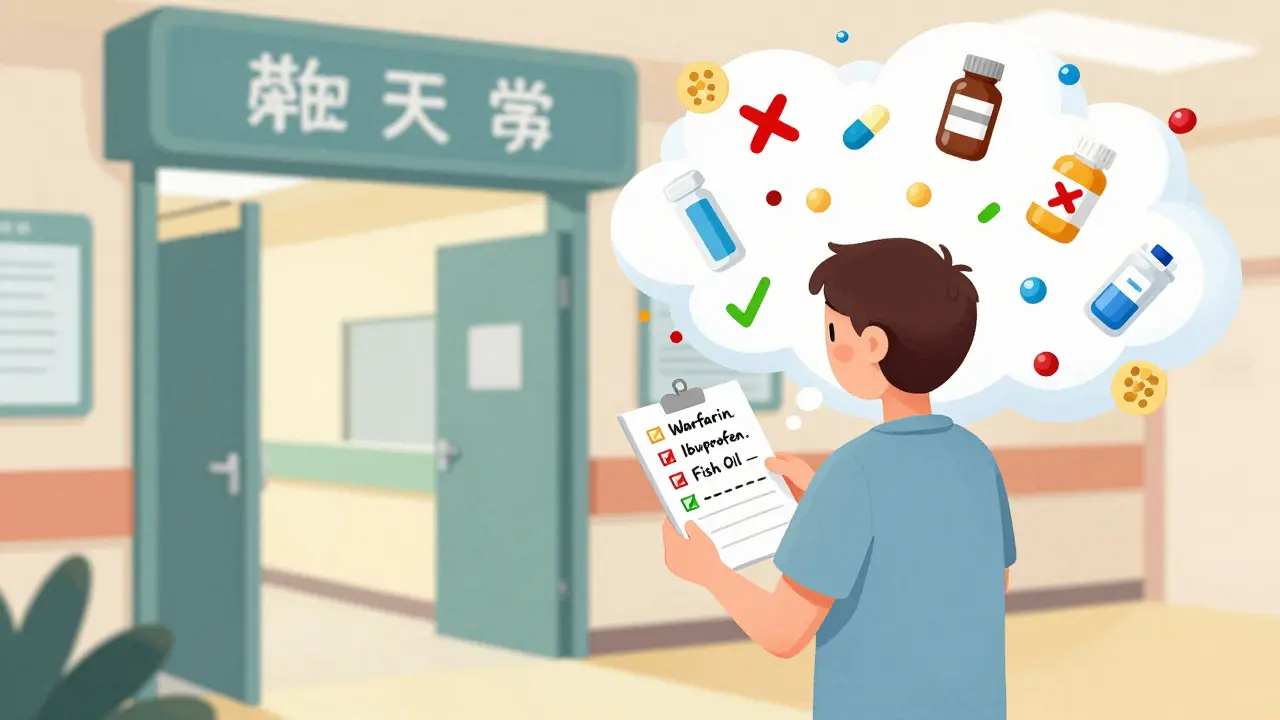
When you leave the hospital, your body is still healing. But the real danger often isn’t the illness-it’s the medication list you walk out with. A 2022 study found that nearly 43% of patients discharged from the hospital received a medication plan that didn’t match what they were actually taking at home. That mismatch? It’s what leads to dangerous drug interactions, missed doses, or even preventable readmissions.
Medication reconciliation isn’t just paperwork. It’s the process of comparing every medication you were taking before the hospital, what you got while you were there, and what you’re supposed to take when you go home. The goal? Make sure nothing gets dropped, duplicated, or mixed up in a way that harms you.
Why Medication Reconciliation Matters
Think about this: 82% of U.S. adults take at least one medication. Nearly 30% take five or more. Add in vitamins, herbal supplements, and over-the-counter painkillers, and you’ve got a cocktail that’s easy to mess up. During a hospital stay, your meds are often adjusted-anticoagulants paused before surgery, blood pressure drugs changed, antibiotics added. When you leave, those changes need to be clearly understood and properly restarted-or stopped.
Without proper reconciliation, you’re at risk. A 2020 study found that 42.7% of discharge errors were simple omissions-medications that were taken at home but never written into the discharge plan. Another 24.6% were extra drugs added during hospitalization that never got removed. One patient in a Harvard study had warfarin stopped before surgery and never restarted. Three weeks later, they had a pulmonary embolism. That’s not rare. It’s common.
The consequences are measurable. The Agency for Healthcare Research and Quality estimates that good medication reconciliation prevents 836,000 adverse drug events each year in the U.S.-and saves $2.1 billion in avoidable hospital costs. Yet only 65% of hospitals consistently get it right at discharge.
The Three Critical Steps to Reconcile Your Medications
Reconciliation isn’t something that just happens. It’s a process. And if you’re not involved, you’re at risk. Here’s what you need to do, step by step.
- Before Admission: Make a Complete List
Don’t wait until you’re admitted. Go through your medicine cabinet, bathroom, and kitchen. Write down every pill, patch, liquid, or supplement. Include the name, dose, how often you take it, and why. Don’t forget aspirin, ibuprofen, melatonin, fish oil, or St. John’s wort. These aren’t ‘just vitamins’-they interact with prescription drugs. Bring this list to the hospital. Hand it to the nurse or pharmacist. Ask them to compare it with what’s in your chart. - At Discharge: Get the New List in Writing
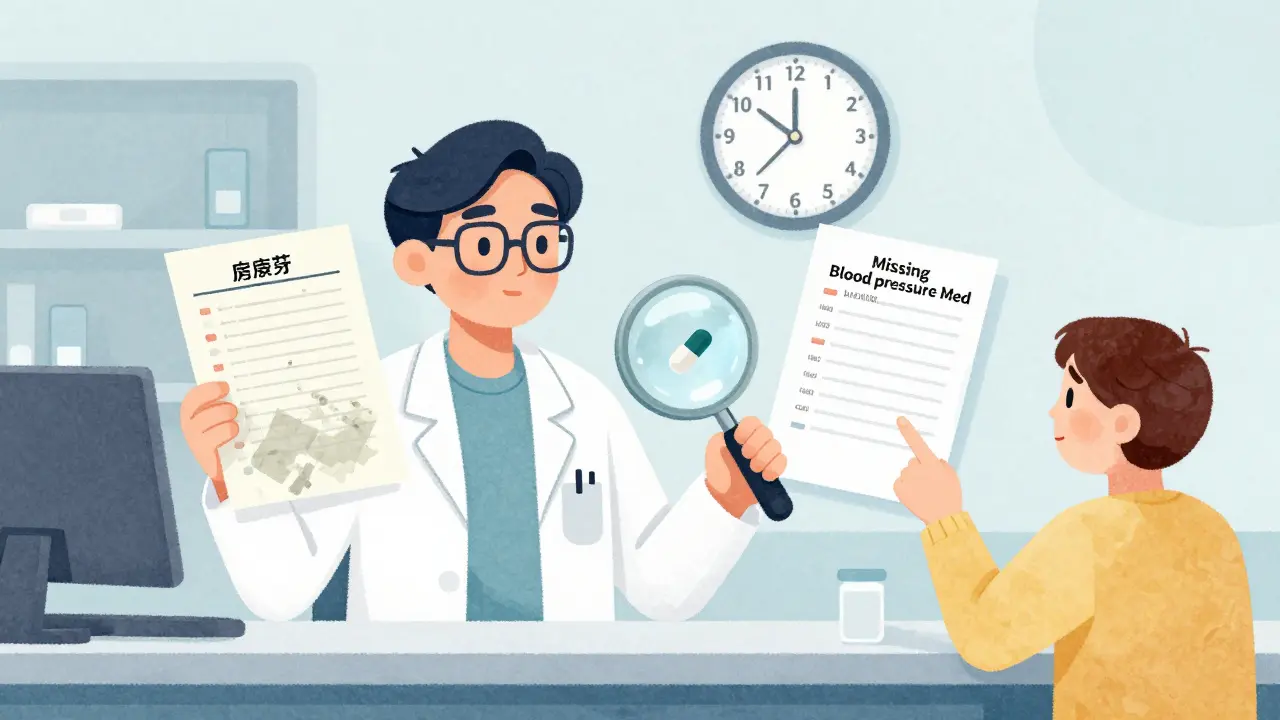
Before you leave, ask for a printed copy of your updated medication list. It should clearly show what was added, removed, or changed since you came in. Compare it to your pre-hospital list. If something’s missing-like your blood pressure pill or your diabetes med-ask why. If something’s new, ask: What is this for? What side effects should I watch for? What should I stop? Don’t leave without this. If they say it’ll be sent to your doctor, ask for a copy anyway. Paper is your backup. - Within 72 Hours: Call Your Pharmacist
Your pharmacist is your best ally. They see all your prescriptions, check for interactions, and know what’s changed. Call them within three days of discharge. Say: ‘I was just discharged from the hospital. Here’s my new medication list. Can you check for interactions or mistakes?’ Most pharmacies offer this service for free. In fact, hospitals with pharmacist-led discharge programs reduce 30-day readmissions by nearly 15%. Don’t assume your doctor will catch it. Pharmacists are trained to spot these errors.
Who’s Responsible? The Reality
Legally, hospitals are required to do medication reconciliation. But in practice, it’s often rushed. The average time spent on reconciliation is just 7.3 minutes. The recommended time? 15 to 20 minutes. That’s not an accident. It’s a system failure.
Patients on five or more medications are three times more likely to have a reconciliation error. ICU patients? Their risk doubles. Why? Because they often get complex, changing regimens-and discharge happens faster than the paperwork can catch up.
Even the best hospital systems struggle. A 2023 survey found that 41% of patients couldn’t explain their discharge meds. Only 58% recalled getting clear instructions. And here’s the worst part: the most reliable source for your home meds? Your own list. Not your memory. Not the nurse’s notes. Not the hospital’s EMR. You.
That’s why your involvement isn’t optional-it’s essential. You’re the only person who knows what you actually took before you went in.
Red Flags: When Reconciliation Goes Wrong
Here are the warning signs you’re not getting proper reconciliation:
- You’re given a new medication without knowing why.
- Your old meds disappeared from the list, and no one explained why.
- You’re told to ‘take it as needed’ without clear instructions on when.
- You get multiple prescriptions from different doctors with overlapping doses.
- You’re discharged on a weekend, and no pharmacist is available to review.
- You’re handed a stack of papers with no one to walk you through them.
If any of these happen, speak up. Ask for a pharmacist. Ask for a second review. Say: ‘I’ve had this medication for years. Why is it gone?’ or ‘I’m not sure what this new pill is for.’ You have the right to understand your meds.
What Happens After You Leave
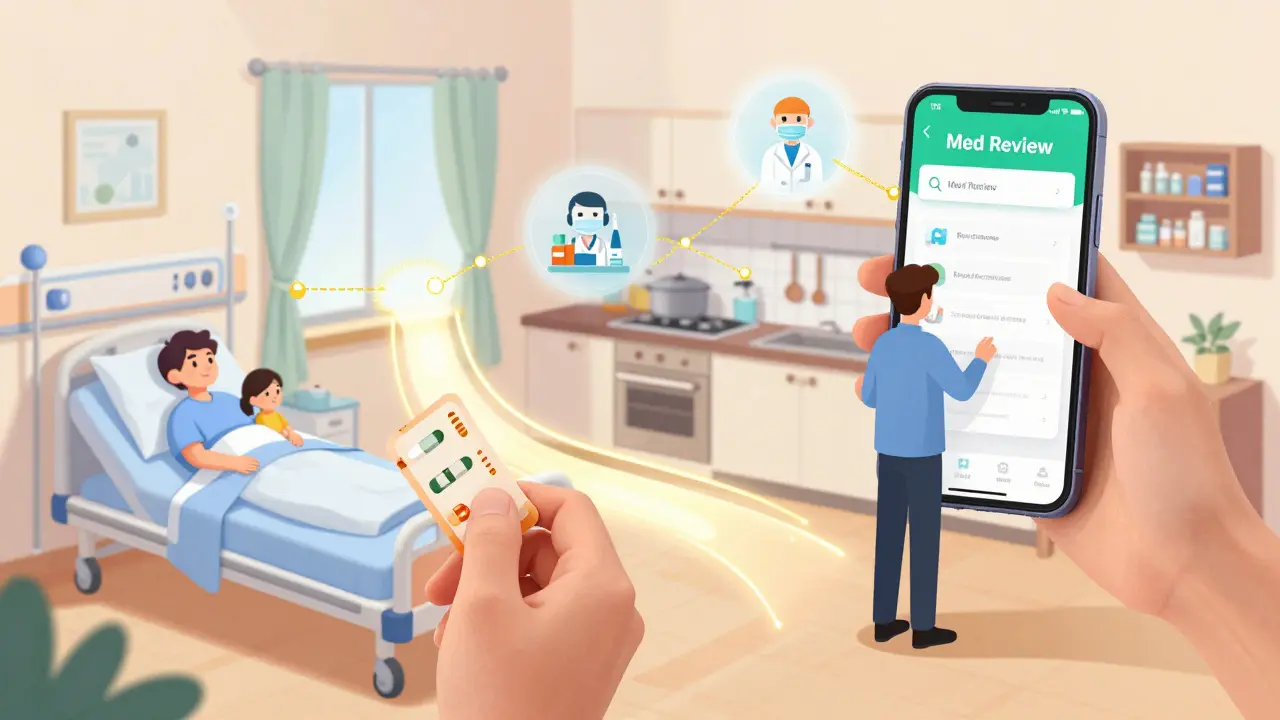
Medication reconciliation doesn’t end at the hospital door. It continues in your home and with your doctor. That’s why the new CMS rule (effective January 2024) requires hospitals to send your discharge medication list electronically to your primary care provider within 24 hours. It’s a big step-but it’s not foolproof.
Even with digital sharing, you still need to:
- Confirm your PCP received the list.
- Bring your discharge meds list to your first follow-up appointment.
- Ask your doctor: ‘Did you get the list from the hospital? Does it match what you expect?’
And if you have specialists? They may not even know you were hospitalized. That’s why keeping a physical copy of your updated list is critical. Carry it in your wallet. Save it on your phone. Give a copy to a family member.
What You Can Do Right Now
You don’t need to wait for the next hospital stay. Start today:
- Make your current medication list. Include everything-even supplements.
- Take it to your next doctor’s appointment. Ask them to review it.
- Call your pharmacy and ask them to flag potential interactions.
- Set a reminder on your phone: ‘Review meds every 3 months.’
- Teach a family member how to read your list. They might be the one helping you if you’re confused later.
Medication reconciliation isn’t about trust. It’s about verification. Hospitals aren’t perfect. Systems break. People make mistakes. But you? You know what’s in your body. Use that knowledge. Protect yourself.
Don’t assume. Don’t wait. Ask. Confirm. Repeat.

March 17, 2026 AT 07:15 AM
I've worked in hospital pharmacy for 12 years. This post nails it. The biggest gap isn't the list-it's the handoff. Nurses are overloaded. Pharmacists aren't always on the floor. Patients get discharged with 12 new meds and no one explains why half of them were added. I've seen patients on warfarin get switched to apixaban without a transition plan. That's not care. That's negligence. Always bring your own list. Always ask for the pharmacist. Always confirm the changes in writing. Your life depends on it.
March 17, 2026 AT 20:55 PM
I was in the hospital last year. They gave me a new list. I didn't question it. Two days later I felt dizzy. Called my pharmacy. Turns out they dropped my blood pressure med and added a new one that made me pass out. I almost went back. Don't trust the paper. Call your pharmacist. It's free. It saves lives.
March 18, 2026 AT 14:30 PM
I love how this post makes it sound like patients are just lazy for not catching errors. Meanwhile, the system is designed to fail. You get discharged on a Friday night. No pharmacist on duty. You're still groggy from surgery. You're handed a stack of papers with tiny print. And now you're supposed to be the expert? Come on. The real problem is hospitals treating this like a checkbox. Not a life-or-death step. If they spent 15 minutes on reconciliation like they're supposed to, we wouldn't need patients to be pharmacists.
March 19, 2026 AT 10:18 AM
I am from India and I have seen this happen to my mother. She was hospitalized for pneumonia and came home with six new medicines. The doctor said, 'Take this for your heart.' I asked, 'What heart?' He said, 'You know, the one that's weak.' We had no idea what the pills were for. We didn't even know how to pronounce half the names. We called the hospital and they said, 'It's on the discharge paper.' The paper was in English. She reads only Hindi. We went to a local chemist who translated it. He said two of the pills were for depression. She had never been depressed. We almost gave her something that could have made her worse. Please, if you're reading this and you're not from a Western country, you need to be twice as careful. Language, culture, access-it all matters. Don't just follow the paper. Find someone who can help you understand.
March 19, 2026 AT 23:57 PM
Oh wow. A post that doesn't blame the patient. Revolutionary. I'm so used to being told 'you should have asked more questions' like we're all medical school dropouts with time to memorize drug interactions. Meanwhile, the hospital staff acts like we're a minor inconvenience between their lunch break and their next shift. I love how the article says 'you're the only one who knows what you took.' Yes. And yet, you're the only one who doesn't get paid to know. The system is built on the assumption that patients are unpaid medical interns. And we're supposed to be grateful for the pamphlet?
March 21, 2026 AT 13:39 PM
This is exactly why I carry my meds list on my phone and in my wallet. I got discharged last year with a new anticoagulant. Didn't know why. Didn't ask. Two days later I was in the ER with a GI bleed. Turns out they added it and forgot to take off my aspirin. Simple mistake. Cost me three days in the hospital. Now I ask every single time. No exceptions. No trust. Just verification. It's not paranoia. It's survival.
March 22, 2026 AT 14:11 PM
I work as a pharmacist in Mumbai and we do this for free every day. Patients come with discharge papers. We cross-check everything. We call the hospital if something doesn't add up. We teach them how to read the list. We don't charge. Why? Because we know what happens when this fails. I had a woman come in last month. Her husband was discharged with two new heart meds. She didn't know what they were. We found out they were both beta blockers. One was already on her list. She was taking four times the dose. We caught it. She cried. I cried. This isn't just about hospitals. It's about community. We have to help each other.
March 23, 2026 AT 18:30 PM
The systemic challenges surrounding medication reconciliation are deeply entrenched within the current healthcare infrastructure. While patient advocacy is undoubtedly valuable and necessary, the primary responsibility must rest with institutional accountability. The recommended 15 to 20 minute reconciliation window is not a suggestion-it is a clinical standard. The fact that it is routinely circumvented reflects a failure of resource allocation, training protocols, and quality assurance mechanisms. Until hospitals are financially incentivized to prioritize accurate discharge communication over throughput metrics, this issue will persist. The burden should not be placed on the vulnerable. The solution requires policy, not personal diligence.