
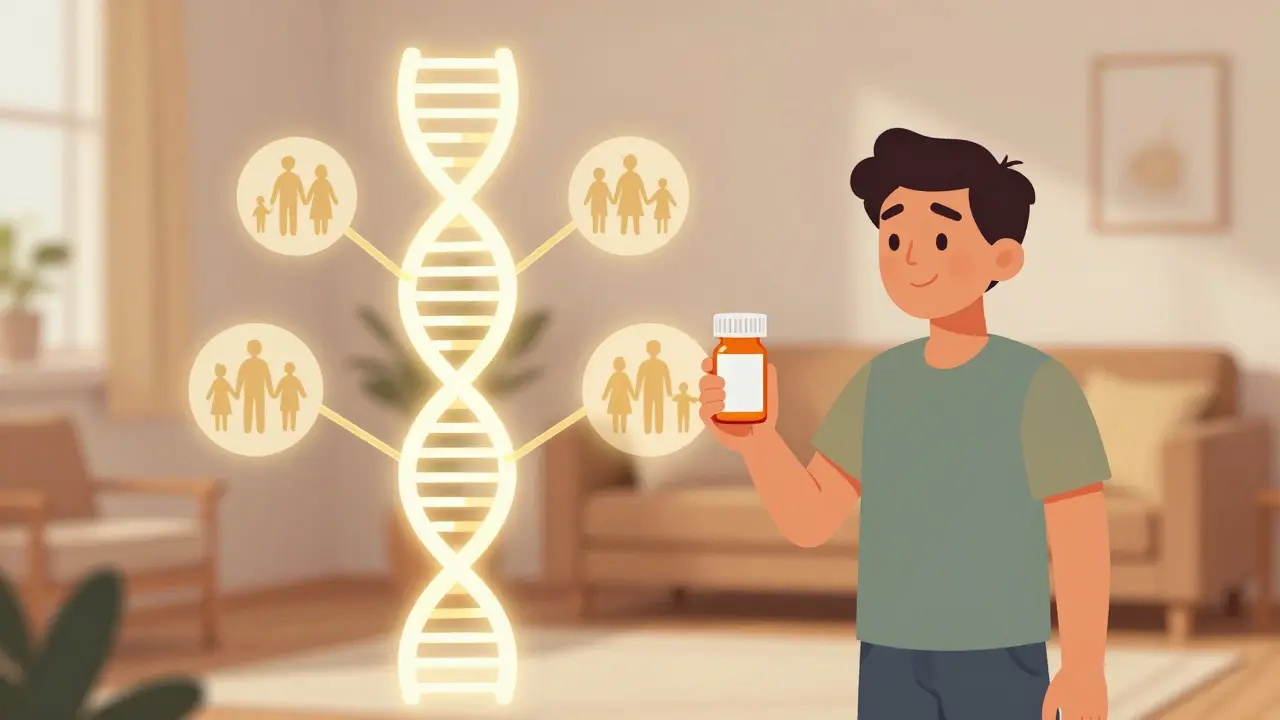
Have you ever switched to a cheaper version of a prescription and felt like it just didn't work the same way? You're definitely not alone. Many people swear by brand names and get nervous when their pharmacist hands them a generic equivalent. While quality controls usually guarantee generics act the same chemically, your body's internal machinery tells a different story. Your DNA isn't a one-size-fits-all blueprint; it influences how you process nearly every pill you swallow.
This reality hits hard when you consider your family tree. If your father struggled with blood thinners or your mother had severe reactions to pain relief, those experiences aren't just random bad luck. They are often signals of inherited biological mechanisms called polymorphisms. Understanding how these genetic factors interact with generic medications can help you avoid adverse side effects and find treatments that actually stick. Let's break down what's happening under the hood so you can take charge of your medical decisions.
What Is Pharmacogenetics?
At its core, pharmacogenetics is the study of how your unique genetic makeup affects your reaction to medications. Think of it as the instruction manual for your liver. Most drugs pass through organs like the liver before doing their job, relying on enzymes to break them down. Some of us have fast-working engines that burn through medication too quickly, rendering it useless. Others have sluggish motors that let the drug pile up until it becomes toxic.
This field of study explains why two identical twins on the same dosage might have opposite outcomes. While clinical trials average out results across thousands of people, your individual experience depends on specific genes. As of 2024, the U.S. Food and Drug Administration includes pharmacogenomic information on hundreds of drug labels. This means official guidelines now acknowledge that genetic testing shouldn't just be for rare diseases; it impacts standard prescriptions used by everyday people.
The Connection Between Family History and Drug Safety
You cannot fully separate drug response from your lineage. Genetic variants responsible for metabolizing drugs are hereditary. If a close relative experienced severe toxicity or treatment failure, there is a high statistical probability you share similar genetic markers. Family history serves as a low-cost screening tool before you even step into a lab.
For example, look at anticoagulants. If a parent needed drastically lower doses of blood thinners to avoid bleeding risks, you might be a slow metabolizer as well. Similarly, if family members struggled with depression because antidepressants never kicked in, you could inherit variants in the CYP2D6 gene. Ignoring these family signals often leads to a frustrating trial-and-error process where doctors switch medications repeatedly without solving the root issue. Recognizing these patterns early gives you leverage in conversations with healthcare providers.
Why Do Generics Seem Different?
Switching from a brand name to a generic drug a lower-cost version of a medication that contains the same active ingredients as the brand-name product often triggers immediate feedback about changes in effectiveness. Strict regulations require generics to be "bioequivalent," meaning the amount of drug reaching your bloodstream must match the brand closely. However, non-active ingredients-fillers and binders-can vary slightly.
While these differences matter for some, they are rarely the reason a drug fails completely. True failure usually stems from genetic metabolism rates. If you are a rapid metabolizer, the generic might work fine initially, but your liver clears it faster than the therapeutic window allows. Conversely, poor metabolizers might accumulate the drug to dangerous levels regardless of whether the pill came from Pfizer or a pharmacy house brand. When you feel this change, don't assume the generic is inferior; it might be your biology reacting to the cumulative load.
Key Enzymes That Change Everything
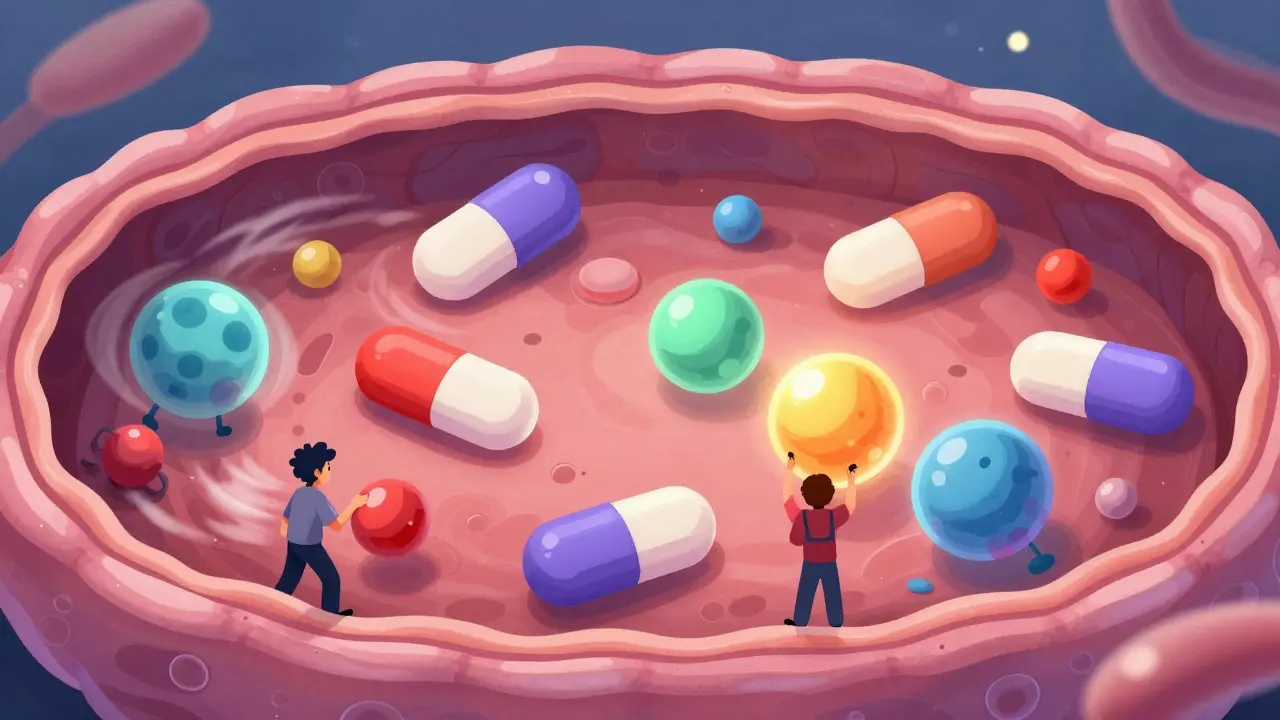
Most medication processing happens thanks to the Cytochrome P450 a super-family of enzymes found primarily in the liver that helps break down drugs. These proteins determine the speed of your metabolism. Variations in specific genes like CYP2D6 and CYP2C9 dictate how safely you handle common classes of drugs ranging from heart medicines to pain killers.
The following table outlines the most critical enzyme interactions you should discuss with your doctor if you have concerns about your medication regimen:
| Gene Variant | Drug Class Impact | Potential Outcome |
|---|---|---|
| CYP2D6 | Antidepressants, Opioids | Poor metabolism leads to higher risk of sedation and toxicity. |
| CYP2C9 | Blood Thinners (Warfarin) | Requires significantly lower dosing to prevent hemorrhaging. |
| TPMT | Immunosuppressants | Deficiency causes severe bone marrow suppression. |
| CYP2C19 | Proton Pump Inhibitors, Clopidogrel | Affects activation of antiplatelet agents and acid reducers. |
Real-World Scenarios of Genetic Influence
Consider the case of blood thinners. For years, doctors guessed the right dose of Warfarin based on age and weight. Now, we know that African American populations often require higher doses due to VKORC1 variants compared to European populations. If you switch generic suppliers, you might notice bleeding changes if you were on a marginal dose to begin with. This is not a fault of the drug manufacturer; it reflects the narrow therapeutic index of the molecule combined with your specific enzymatic capacity.
Pain management offers another stark example. Codeine relies on CYP2D6 to convert into morphoxide inside the body. If you lack this function, the painkiller does nothing. On the flip side, ultra-rapid metabolizers turn codeine into morphine too fast, risking respiratory depression. Switching a generic opioid formulation might expose you to these underlying risks sooner because fillers may alter absorption rates slightly, amplifying the genetic mismatch.

Actionable Steps for Better Medication Outcomes
If you suspect genetics or family history plays a role in your drug struggles, you need a concrete plan. First, organize your family medical records specifically noting adverse reactions. Was your aunt hospitalized after starting a mood stabilizer? Was your grandfather's stroke treated with an ineffective statin? Bring this list to your next appointment.
- Request Pharmacogenetic Testing: Ask your provider if a panel test makes sense. Services like OneOme or Color Genomics offer panels that screen multiple genes simultaneously.
- Check Drug Labels: Look up current FDA prescribing information for any major drugs you take. Search for terms like "metabolized by" or "genetic polymorphism." This puts evidence-based context on your requests.
- Maintain Consistency: Once you find a brand or generic that works without side effects, ask your pharmacy to lock the National Drug Code (NDC) for that specific supplier to prevent automatic switches.
- Evaluate Timing: If you take generic alternatives, pay attention to when symptoms flare. A spike in side effects right after a refill suggests sensitivity to inactive ingredients.
Frequently Asked Questions
Does having a genetic variant mean I can never take a certain drug?
Not necessarily. Many variants just mean you need a different starting dose or a slower titration schedule. Poor metabolizers of CYP2D6 drugs can often still take the medication if the doctor prescribes half the usual strength.
Is genetic testing covered by insurance in 2026?
Coverage varies widely depending on your region and provider. Medicare in the US and private insurers increasingly recognize testing for high-risk drugs like Warfarin or Clopidogrel as medically necessary, but lifestyle panels may still require out-of-pocket payment.
Can my diet change how my genetics respond to medication?
Absolutely. Foods like grapefruit juice inhibit the very same Cytochrome P450 enzymes your liver uses for drugs. Cruciferous vegetables can induce enzyme activity, potentially speeding up drug clearance. Both actions interact with your baseline genetic profile.
Should I stop switching brands to see if I feel better?
Yes, consistency is key during troubleshooting. Stabilize on one manufacturer (brand or generic) for at least four weeks before declaring the drug ineffective. This removes formulation variance as a variable.
Will knowing my genes help me save money on prescriptions?
Potentially, yes. Avoiding ineffective medications prevents wasted money on refills that don't work. Plus, identifying the right drug earlier reduces hospital visits related to adverse events, which drives significant costs.
Your health journey involves much more than a pill bottle; it involves decoding your own biological script. By linking family history to modern pharmacological data, you gain control over the unpredictable nature of drug response. Next time you pick up a prescription, remember that the real interaction happens inside your cells.

March 30, 2026 AT 17:24 PM
The integration of familial data into pharmacological prescriptions represents a necessary evolution in healthcare protocols. It is evident that current practices rely too heavily on generalized trial data rather than individual metabolic variances. The implication of CYP450 enzyme activity levels suggests we are missing critical diagnostic windows during routine prescribing events. Patients require more transparency regarding the biochemical pathways involved in their medication regimens. Standardizing genetic screening could reduce adverse events significantly across the population.
March 31, 2026 AT 20:20 PM
Finally someone acknowledges the elephant in the room!!!
April 2, 2026 AT 00:09 AM
Oh wonderful, now we get to pay extra for a DNA test just to fix mistakes we already made paying attention to the pharmacy label. Doctors love telling us our family tree matters when they prescribe ten different pills that interact poorly anyway. We are supposed to trust that checking a gene variant prevents toxicity better than actual clinical observation ever did. The industry benefits most from these new panels while patients foot the bill for unnecessary anxiety about their blood work. At least admit that generics still have formulation issues regardless of what your liver enzymes decide today.
April 3, 2026 AT 01:04 AM
We need to understand the nuance. Family history provides clues. These clues save lives potentially. Genetic testing helps clarify doubts. The liver processes chemicals daily. Enzymes dictate speed here. Variants cause different results. One person burns through drugs fast. Another retains levels too high. Toxicity risks increase quickly. Bleeding risks drop sharply. Dosing requires careful adjustment. Trial and error wastes money. Insurance plans cover tests rarely. We must advocate for ourselves now. Better information helps everyone succeed.
April 3, 2026 AT 03:22 AM
The bioequivalence window typically ranges between eighty percent and one hundred twenty percent of the brand reference standard which creates overlap in area under curve metrics. However, peak plasma concentration variations can exceed these bounds when enteric coating dissolution differs between manufacturers affecting the rate of absorption kinetics significantly. Pharmacokinetic modeling suggests that ultra-rapid metabolizers utilize CYP2D6 pathways to clear opioids much faster than normal metabolizers possess capability for. This variance dictates dosage titration strategies required to maintain therapeutic serum concentrations without reaching toxic thresholds defined by the safety margin. Clinicians should review pharmacovigilance reports to identify specific NDC codes associated with adverse event clusters in poor metabolizer populations before switching formularies.
April 3, 2026 AT 08:10 AM
Biology is a journey of self discovery we often ignore until pain forces us to listen to our own cells instead of trusting external labels on bottles because the true medicine lies within the interaction of matter and energy and we must respect that ancient wisdom encoded in our dna strands rather than letting corporations decide our fate through mass produced chemical compounds that do not account for individual soul vibrations manifesting as enzyme activity levels which fluctuate with diet and stress and environment so we become slaves to the system instead of masters of our own physiology and health outcomes depend on internal alignment not just external intake.
April 3, 2026 AT 22:42 PM
It makes sense to track this.
April 4, 2026 AT 22:13 PM
I disagree completely because genetics only plays a small role compared to environmental toxins and lifestyle choices people ignore constantly while focusing on inherited traits which is fear mongering by pharma companies wanting to sell more tests to unsuspecting customers who lack financial resources for proper screening tools available only to wealthy demographics in urban areas with high cost of living expenses overall.
April 5, 2026 AT 22:18 PM
Families deal with this hardship every day without support from providers who claim everything works perfectly fine for everyone equally regardless of background. It hurts to hear others struggle silently because they cannot afford testing options that reveal why medications fail them repeatedly during treatment cycles intended to restore basic health function.
April 6, 2026 AT 01:09 AM
Insurance companies need to mandate coverage immediately or face lawsuits from patients denied care due to lack of genetic profiling which determines basic safety parameters for essential life saving drugs currently prescribed off label or based on guesswork alone without scientific backing for individual risk assessment protocols mandated by federal regulations protecting consumers.
April 7, 2026 AT 01:27 AM
The future of personalized medicine depends on us demanding better access to these crucial insights rather than accepting the status quo of reactive healthcare models designed to manage symptoms after damage occurs instead of preventing biological incompatibility upfront through proactive screening measures that align treatment with intrinsic physiological design specifications found within our genetic code waiting to be unlocked and utilized fully.