
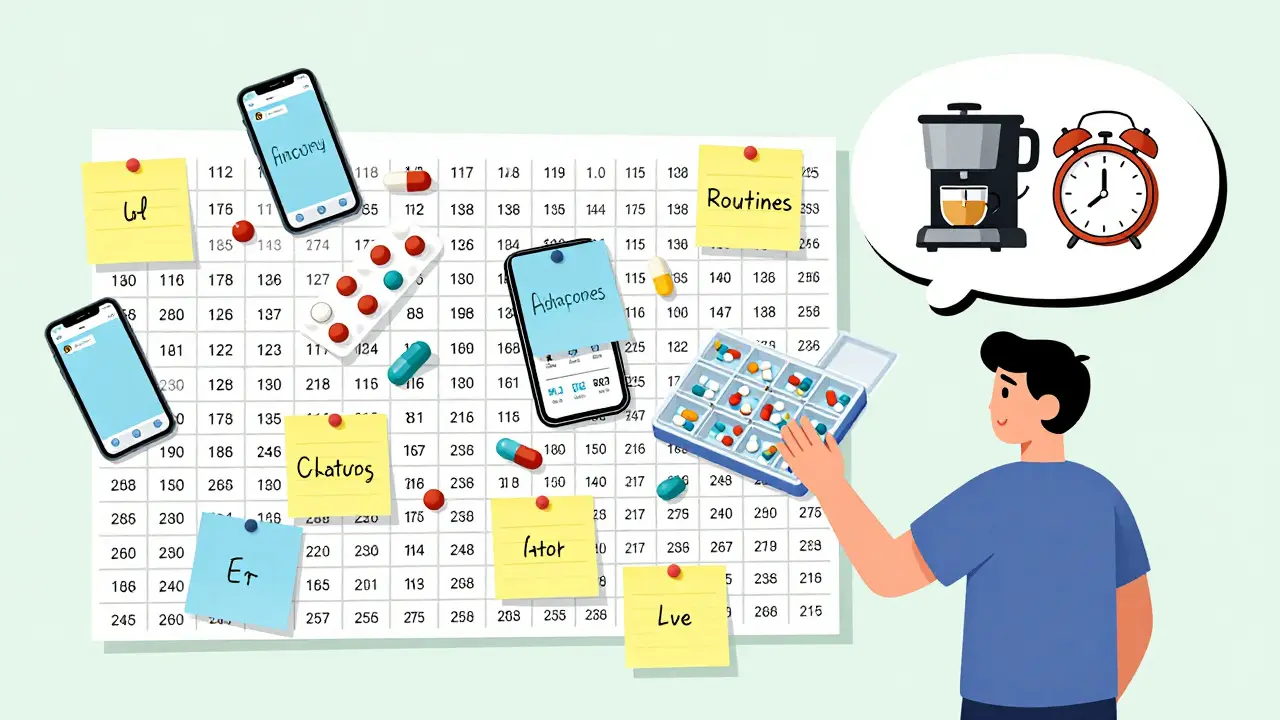
Taking medication every day for years - sometimes for life - sounds simple until you try it. You forget. You get tired of it. You worry about side effects. Maybe the cost adds up. Or you just feel fine and wonder if you really need it anymore. This isn’t laziness. It’s human. And for millions living with conditions like high blood pressure, diabetes, rheumatoid arthritis, or heart failure, the daily reality of sticking to a drug schedule is one of the biggest barriers to staying healthy.
Research shows that medication adherence is one of the most powerful factors in preventing hospitalizations, slowing disease progression, and even saving lives. Yet, studies estimate that fewer than half of people with chronic conditions take their meds as prescribed. The good news? There are proven ways to cope - not just with the pills, but with the emotional and practical weight they carry.
Problem-Solving: The Most Effective Strategy
If you want one strategy to focus on, make it problem-solving. Also called active coping, this approach doesn’t just mean "try harder." It means identifying exactly what’s getting in your way and fixing it - step by step.
Let’s say you keep forgetting your afternoon pill. Instead of blaming yourself, ask: What’s really happening? Are you busy at work? Do you eat lunch at your desk? Is your pill bottle hidden in a drawer? Now, build a solution: Set a phone alarm labeled "3 PM Meds". Put the bottle next to your coffee maker. Use a pill organizer with labeled compartments. These aren’t tricks - they’re evidence-based fixes.
Studies tracking over 9 different chronic conditions found that 78% of people who used problem-solving strategies improved their adherence. That’s not a small boost - it’s the highest success rate of any coping method. It works because it turns a vague feeling of "I should take this" into a clear, doable action.
Emotion-Focused Coping: Managing the Mental Load
Chronic illness doesn’t just affect your body. It wears on your mind. You might feel angry, scared, or just plain defeated. That’s normal. Emotion-focused coping helps you handle those feelings so they don’t sabotage your meds.
This includes things like journaling about how you feel taking your pills, talking to someone who gets it, or using mindfulness to reduce anxiety around side effects. One study with rheumatoid arthritis patients found that those who used self-encouragement - like saying "I’ve got this" or "I’m doing my part" - were significantly more likely to stick with their regimen.
Importantly, this isn’t about positive thinking. It’s about emotional regulation. If you’re overwhelmed, trying to "just be positive" won’t help. But naming the emotion - "I’m frustrated because this costs too much" - and then addressing it? That changes everything. 69% of studies showed emotion-focused coping improved adherence. That’s nearly as strong as problem-solving.
Seeking Support and Understanding
You don’t have to do this alone. In fact, research says you shouldn’t.
Seeking understanding means asking questions: "Why is this pill important?" "What happens if I skip it?" "Are there cheaper options?" Many people stop taking meds because they don’t understand why they’re prescribed. A simple conversation with a pharmacist - not just a doctor - can make a huge difference.
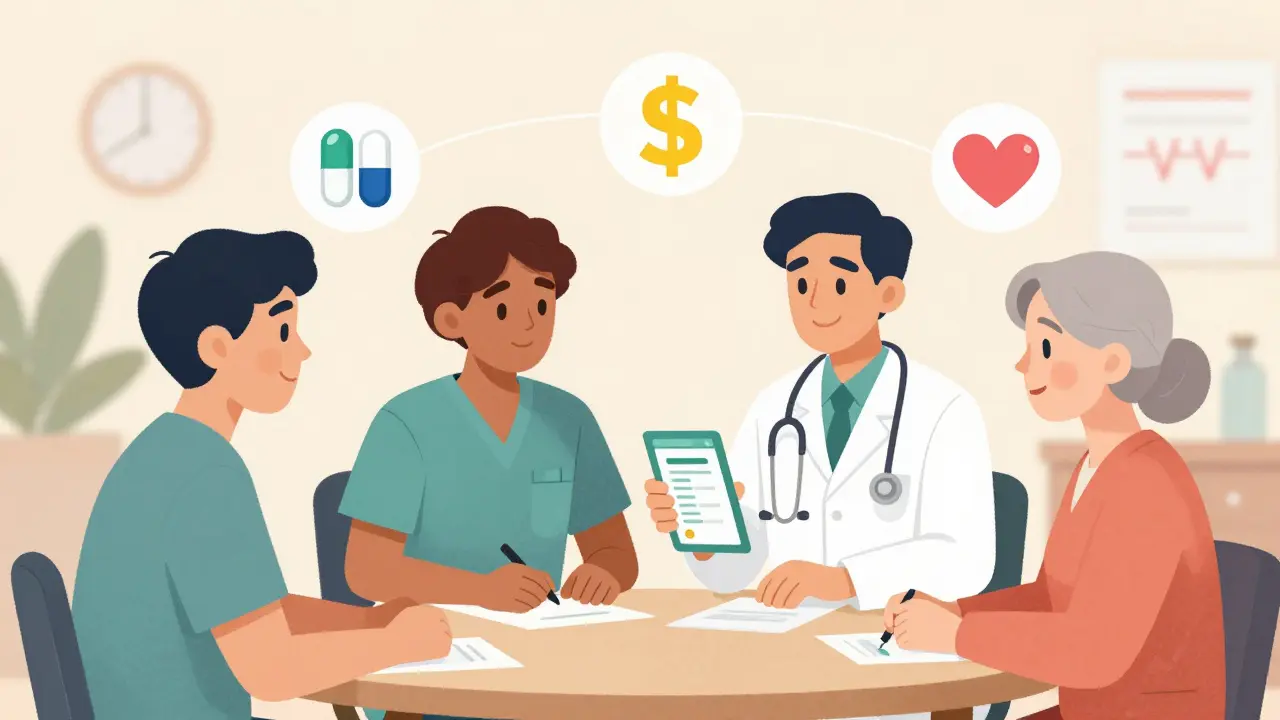
Support-seeking is about leaning on your circle. A spouse who reminds you. A friend who checks in. A support group for people with your condition. One CDC report found that patients who received team-based care - including pharmacists, nurses, and social workers - had 89% adherence rates after 12 months, compared to just 74% in standard care.
And it’s not just about getting help. It’s about feeling heard. When patients felt comfortable asking, "This side effect is scaring me," or "I can’t afford this," their adherence went up. That’s the power of trust.
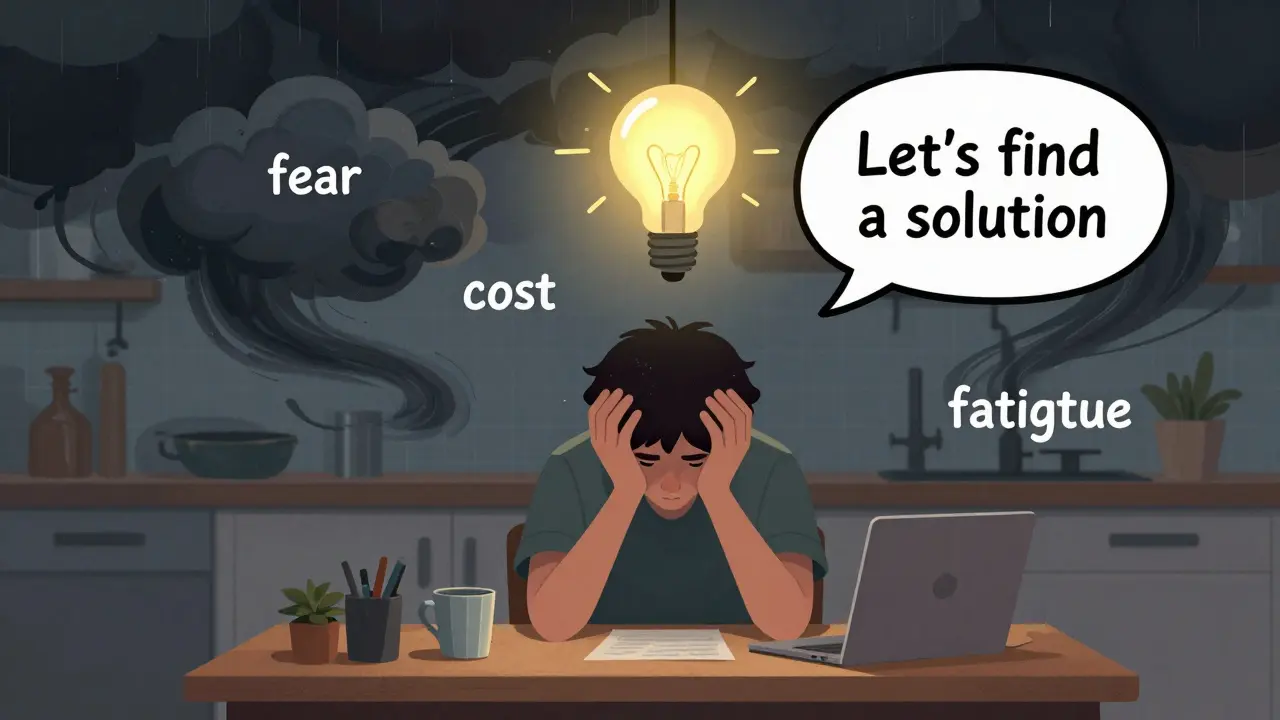
What Doesn’t Work - And Why
Not all coping styles help. In fact, one common approach can hurt you.
Problem avoidance - ignoring the problem, hoping it goes away, or telling yourself "I’ll take it tomorrow" - showed negative effects in 50% of studies. It might feel easier in the moment, but it’s a trap. Skipping a dose because "I’m too tired" or "I don’t feel sick today" might seem harmless. But over time, it adds up. For conditions like heart failure or epilepsy, even one missed dose can trigger a crisis.
Some people use avoidance as a form of self-protection. "If I don’t think about it, I won’t feel so trapped." But the cost is your health. The key is recognizing when you’re avoiding - and gently shifting toward problem-solving or emotional support instead.
Real-World Barriers and How to Beat Them
Here’s what really stops people:
- Complex regimens - 5 pills at 3 different times a day? No wonder people forget. Ask your doctor if you can switch to once-daily or combination pills.
- Cost - A $500 monthly prescription is impossible for many. Talk to your pharmacist about generics, patient assistance programs like RxAssist.org, or step-therapy options through your insurer.
- Side effects - Nausea, dizziness, fatigue? Don’t stop cold. Call your provider. There may be a different drug, a lower dose, or a way to manage the side effect.
- Stigma - Some people feel ashamed taking meds for mental health, HIV, or addiction. You’re not alone. Support groups and peer counselors can help you feel less isolated.
The CDC recommends four practical fixes:
- Use tech: Medication reminder apps, smart pill dispensers, or automated refill calls.
- Simplify: Ask for once-daily dosing or combination pills.
- Reduce cost: Ask about generics, coupons, or patient assistance programs.
- Build a team: Involve your pharmacist, nurse, or social worker. They’re trained to help with adherence.
Who’s Most at Risk - And What to Do
Research shows some groups struggle more:
- Men - In one rheumatoid arthritis study, women were over 4 times more likely to adhere than men. Why? Cultural norms around "toughing it out" may play a role. If you’re a man, challenge the idea that asking for help is weakness.
- Younger people - Those with shorter disease duration often feel fine and underestimate the long-term risk. Remember: This isn’t about how you feel today - it’s about protecting your future.
- Low-income patients - Cost is a huge barrier. Don’t be afraid to ask: "Is there a cheaper option?" Pharmacists have access to resources most patients don’t know about.
The takeaway? If you’re in one of these groups, be extra intentional. Set reminders. Talk to your pharmacist. Bring a friend to appointments. Small steps make a big difference.
What’s Next? The Future of Adherence
Experts agree: We need better tools. Right now, most studies are observational - they show a link between coping and adherence, but not proof that one causes the other. That’s changing. Researchers are now testing personalized plans: matching your coping style to your condition, your lifestyle, and your budget.
Imagine a future where your doctor doesn’t just prescribe a pill - they ask: "What’s been hard for you?" Then, they help you build a plan that fits you. That’s the goal. And it’s closer than you think.
For now, start here: Pick one strategy. Problem-solving? Emotion-focused? Support-seeking? Try it for two weeks. Track what works. Adjust. You’re not failing. You’re learning. And that’s how you win.
Why do I keep forgetting my pills even though I know they’re important?
Forgetting isn’t about memory - it’s about routine. Your brain doesn’t treat pills like a habit unless they’re tied to something you already do daily - like brushing your teeth, eating breakfast, or turning off your alarm. Try linking your pill to one of those actions. Use a pillbox with labeled days. Set multiple alarms. The goal isn’t to remember - it’s to make taking your pill automatic.
Can I stop taking my meds if I feel fine?
No - not without talking to your doctor. Many chronic conditions like high blood pressure or high cholesterol don’t cause symptoms until they’ve already damaged your organs. Feeling fine doesn’t mean the disease is gone. Stopping meds can lead to sudden, dangerous spikes in blood pressure, blood sugar, or inflammation. Always consult your provider before making any changes.
Are generic drugs as good as brand-name ones?
Yes. The FDA requires generics to have the same active ingredient, strength, dosage form, and route of administration as the brand-name drug. They’re tested to be just as effective and safe. The only differences are inactive ingredients - like fillers or dyes - which rarely affect how the drug works. Switching to generics can cut your cost by 80% or more.
What if I can’t afford my medication?
You’re not alone. Many pharmaceutical companies offer patient assistance programs. Pharmacies like CVS, Walgreens, and Walmart have $4 generic lists. Websites like RxAssist.org and NeedyMeds.org help you find free or low-cost options. Talk to your pharmacist - they’re trained to help you navigate these programs. Don’t skip doses because of cost. There’s always a solution.
Do coping strategies really work for everyone?
Not every strategy works for every person. Problem-solving helps 78% of people, but some respond better to emotional support or peer connection. The key is experimentation. Try one strategy for two weeks. If it doesn’t click, try another. Your needs change over time - what worked last year might not work now. Stay flexible. And remember: even small improvements in adherence can lead to big health gains.

March 7, 2026 AT 18:21 PM
For years I struggled with my blood pressure meds. I’d forget, then feel guilty. Then I started tying it to brushing my teeth-just one extra stroke of the toothbrush after I swallowed the pill. Now it’s automatic. No willpower needed. Just habit. Simple. But it works.
Don’t overthink it. Link it to something you already do without thinking. That’s the secret.
March 8, 2026 AT 20:42 PM
Problem-solving? That’s just behavioral conditioning disguised as self-help. You’re not solving anything-you’re reinforcing a system designed to keep you dependent. The real issue? Pharmaceutical capitalism. The real solution? Systemic change. But no one wants to talk about that, because then they’d have to confront the fact that your ‘adherence’ is a product of economic coercion, not personal discipline.
78%? That’s not a victory-it’s a symptom. You’re being managed, not healed.
March 9, 2026 AT 07:04 AM
Everyone’s talking about problem-solving like it’s magic, but nobody’s admitting that 80% of people who ‘improve adherence’ are just getting more surveillance. Smart pill dispensers? Automated calls? That’s not support-that’s monitoring.
And don’t get me started on ‘emotional coping.’ Journaling? Self-encouragement? That’s just corporate wellness propaganda. Real mental health isn’t about saying ‘I’ve got this’-it’s about asking why you’re forced to take five pills a day just to survive a system that doesn’t care if you live or die.
Also, generics? They’re not always bioequivalent. The FDA allows up to 20% variance. You think that’s safe? I’ve seen people crash after switching. You’re being told to trust the system-but the system doesn’t trust you.
And why are men 4x less likely to adhere? Because they’re not stupid. They know the numbers are manipulated. They’ve seen the studies funded by Big Pharma. They’re not lazy-they’re skeptical.
And yes, I’ve been on 7 different chronic meds. I know what I’m talking about.
March 10, 2026 AT 09:25 AM
Y’all are overcomplicating this
Take your damn pills
It’s not a philosophy problem
It’s a you problem
Stop making it about trauma and capitalism and systemic oppression
It’s a damn pill
You don’t need a journal
You don’t need a support group
You need a habit
Put it next to your damn coffee
Set an alarm
Done
Stop making it a goddamn TED Talk
March 11, 2026 AT 06:38 AM
Adherence is a performance metric, not a moral imperative. But let’s reframe: it’s not about compliance-it’s about agency. When you align your medication routine with your personal values-health, longevity, independence-you transform obligation into empowerment.
Use the 2-week trial method. Track not just adherence, but emotional response. Did taking the pill make you feel more in control? Less anxious? That’s the real KPI.
And yes-pharmacists are underutilized assets. They’re the frontline of medication literacy. Engage them. Ask them to map your regimen. They’ve seen 100 versions of your story. Let them help you rewrite it.
March 12, 2026 AT 13:41 PM
you ever notice how every article about this stuff always says "you're not lazy" like that's some revelation? like we're all just trying our best and society is just so mean for making us take pills?
no. i'm lazy. and i'm tired. and sometimes i just don't want to be a person who takes pills for the rest of my life. and that's okay.
the system doesn't care about my feelings. but i do. and sometimes i need to feel like i'm not just a medical case.
so yeah. i skip. sometimes. and i don't feel guilty. i feel human.
and if you're telling me to "solve" this like it's a puzzle... you're missing the point.
it's not a puzzle. it's grief.
March 12, 2026 AT 22:57 PM
So much of this feels like blaming the patient instead of fixing the system. I’ve watched my mom take 14 pills a day. She’s 72. She can’t read the labels anymore. Her hands shake. The pharmacy won’t send someone to help. The doctor won’t simplify it. And we’re supposed to cheer her on for "problem-solving"?
What about when your body can’t even hold the pill bottle? What about when the cost forces you to choose between meds and groceries?
It’s not about willpower. It’s about access.
And if you’re not talking about that-you’re not talking about the real problem.
March 14, 2026 AT 15:59 PM
78% success rate? That’s not a win-that’s a failure. 22% of people still can’t stick to it. That’s millions. And we’re celebrating a 78% failure rate? That’s like saying "our parachute works 78% of the time" and calling it a success.
Also-why is everyone ignoring the fact that most of these studies are done on people who already have insurance, a doctor, and a phone? What about the homeless? The undocumented? The ones without Wi-Fi?
Real solution: free meds. Free care. No strings. Not "reminders." Not "pills next to coffee." Just give people the medicine and stop pretending this is a personal failure.
March 15, 2026 AT 20:09 PM
I just want to say-this post made me feel seen. For years I thought I was broken because I couldn’t take my pills. I felt ashamed. But reading this? I realized I wasn’t failing. I was surviving.
My therapist helped me start journaling one sentence a day about how I felt when I took them. Some days it was "I hate this." Some days it was "I’m proud of myself."
That’s all I needed. Not a system. Not a reminder app. Just permission to feel it.
You’re not alone.
March 15, 2026 AT 23:33 PM
my dog reminds me to take my meds. literally. he sits there staring at me at 8am like i’m a terrible person if i don’t. 🐶💊
he’s the best accountability partner i’ve ever had. no judgment. just vibes.
if you don’t have a dog? get a plant. talk to it. tell it you’re gonna take the pill. it’ll hold you accountable. 🌱