
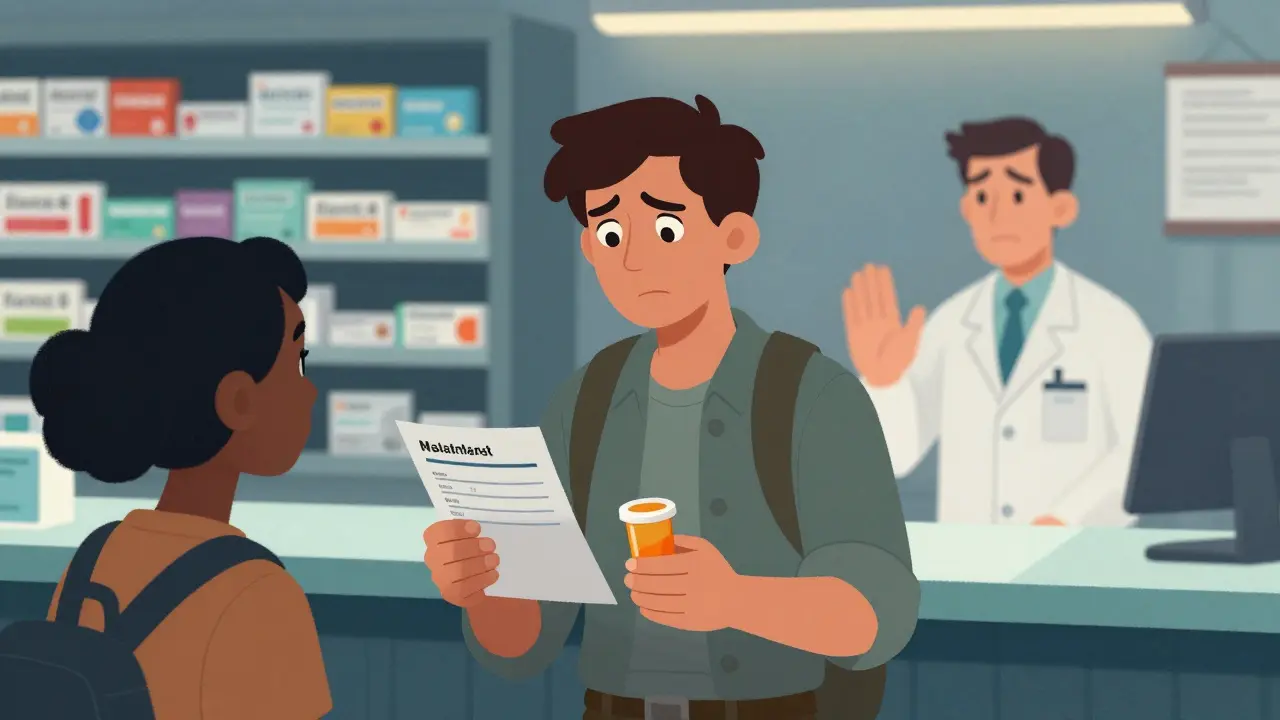
Imagine landing in a new country only to realize you have two weeks left on your antidepressant or insulin. You walk into a local pharmacy with your American prescription in hand, ready to refill. The pharmacist shakes their head. Your script isn’t worth the paper it’s printed on here. This frustrating reality is the daily struggle for millions of travelers and expats. Handling prescription transfers across borders isn’t as simple as mailing an envelope; it involves navigating complex legal frameworks, varying medical standards, and strict customs regulations. If you don’t prepare correctly, you risk being stranded without life-sustaining medicine.
The core issue is that medical licensing is national, not global. A prescription written by a licensed physician in New York holds zero legal weight in Tokyo, London, or Toronto unless specific protocols are followed. While some regions like the European Union share mutual recognition systems, most of the world operates in silos. This creates a fragmented landscape where “transfer” often means starting a new prescribing relationship rather than moving an existing order. Understanding the difference between carrying meds for travel versus trying to establish a new supply chain abroad is the first step to avoiding health crises while overseas.
Understanding the Regulatory Landscape
You cannot rely on general assumptions when moving medication rights across borders. In the United States, the Drug Enforcement Administration (DEA) sets the baseline for how prescriptions are handled domestically. In August 2023, they implemented rules allowing electronic transfers of controlled substances between U.S. pharmacies. However, this explicitly excludes cross-border transactions. This means if you live in Texas but your pharmacy is in Mexico, there is no automatic system to bridge the gap.
Spanning the Atlantic or Pacific Ocean adds layers of bureaucracy governed by agencies like the Food and Drug Administration (FDA) and Customs and Border Protection (CBP). For instance, U.S. federal law technically prohibits importing prescription drugs under Section 384 of Title 21. Yet, enforcement discretion allows foreign nationals to bring a 90-day supply for personal use. This gray area creates confusion. Patients often think they can mail a bottle from home to a friend in Europe, but doing so risks seizure of goods if the package doesn’t match strict criteria.
Different countries prioritize safety differently. In the European Union, the mutual recognition framework technically validates prescriptions across 27 member states. A script issued in France should be honorably filled in Germany. However, this assumes the medication exists locally. Brand names change. Dosage forms vary. Even if the law permits it, practical availability becomes the bottleneck. Conversely, in regions like the Middle East or China, officials demand explicit medical diagnoses attached to scripts, creating a higher documentation threshold than typical Western nations expect.
The regulatory environment for cross-border prescription transfers remains fragmented globally, with significant restrictions imposed by national drug laws and border security protocols. Also known as International Medication Regulations, this system requires patients to adapt their travel planning around medical needs well in advance.Essential Documentation Checklist
Before booking flights, you need to assemble a physical dossier. A plastic ID card won’t cut it. Most international pharmacists and customs officers require specific proof that the medication is legitimately yours and medically necessary. Start by gathering the original prescription bottle, keeping the label intact with your name and the doctor’s signature clearly visible.
- Certificate of Medical Necessity: A letter signed by your prescribing physician stating your diagnosis, the medication name (preferably the generic common name, not just the brand), dosage, and why you need it during travel.
- Patient Identification: Carry a copy of your passport. Many countries cross-reference the medication holder with travel documents.
- Pharmacist Contact Info: Include the contact details of your home pharmacist. Some destination clinics will call them to verify authenticity before dispensing.
- Translation Service: If traveling to non-English speaking countries, get this letter translated into the local language. In places like Japan or Russia, having official translations can speed up clearance significantly.
For destinations like Canada, the process shifts slightly toward “cosigning.” You cannot simply show a U.S. script to a Canadian pharmacy. Instead, the Canadian pharmacy must forward your records to a local doctor who reviews your history and writes a new Canadian prescription. This requires submitting health history surveys along with your original prescription copies. Preparation time for this is usually 2 to 3 weeks, so you cannot wait until the day of your trip to begin contacting providers.
Navigating Regional Specifics
Rules change dramatically depending on where you land. Treating every country the same way is a recipe for rejection. Here is how three major zones handle things differently.
| Region | Transfer Method | Key Requirement | Timeframe |
|---|---|---|---|
| European Union | Mutual Recognition | Common Drug Name Required | Immediate |
| United States | No Direct International | Doctor Re-issue Needed | Varies |
| Canada | Cosigning Process | Local Physician Approval | 2-3 Weeks |
| Middle East/Asia | Certified Translation | Diagnosis Proof Mandatory | 4+ Weeks |
When traveling within the European Union, the friction is lowest. Because the bloc shares a pharmaceutical strategy, a German script works in Spain, provided the medicine is on the local formulary. If it isn’t available, the pharmacist may offer a substitute with identical active ingredients. Success rates here hover around 87 percent according to EU surveys. Outside the EU, however, that convenience evaporates. Attempting to use an American prescription in the UK requires visiting a GP or paying for private telehealth services to generate a local script.
In North America, the barrier is often regulatory alignment. U.S. pharmacies generally refuse to send records directly to Canada due to liability concerns. The Canadian side requires a practitioner’s sign-off. This effectively means your old script dies at the border, and a new one begins. For patients on controlled substances like ADHD medication, this delay can be dangerous. It requires scheduling appointments months ahead of time, especially for restricted compounds.
Traveling to Asia or the Middle East introduces stricter controls. Authorities in China have historically demanded explicit statements regarding travel necessity alongside the prescription. Customs agents look for red flags like large quantities or lack of packaging labels. Carrying unmarked blister packs might trigger an inspection. Keeping medicines in their original containers with pharmacy stamps helps avoid unnecessary delays at security checkpoints.

Customs and Border Security Guidelines
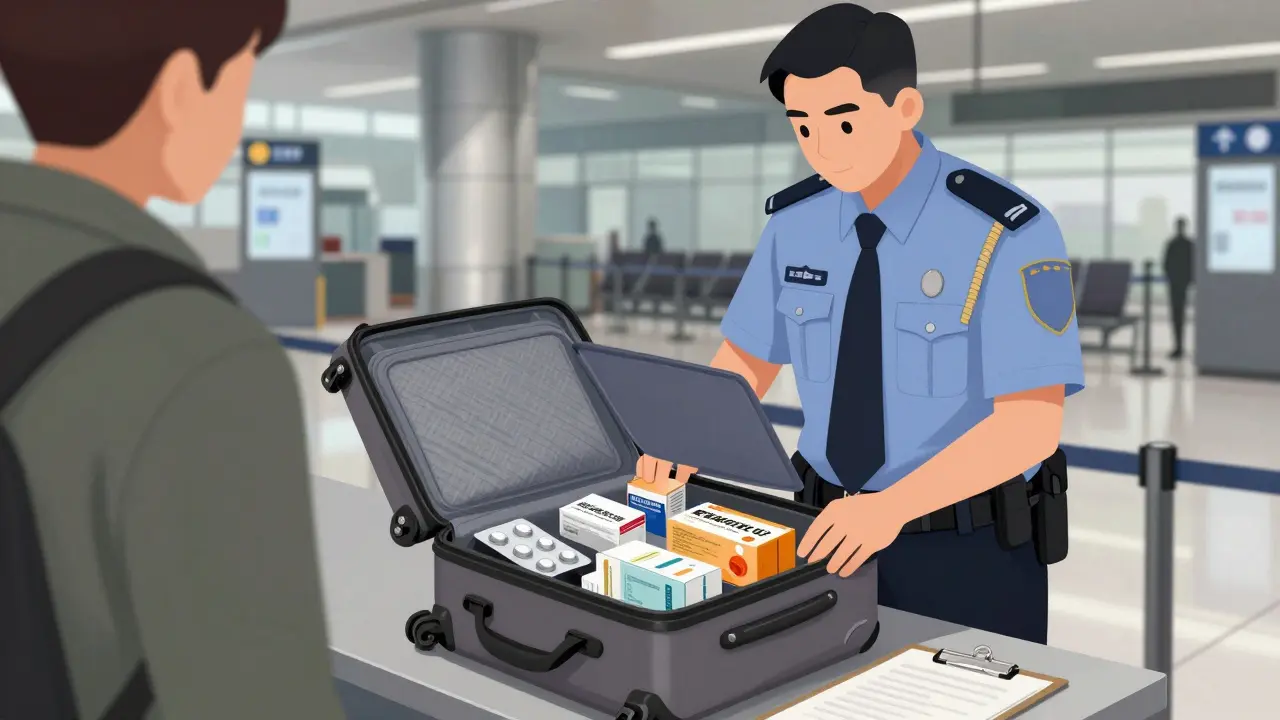
Crossing physical borders with your medication brings you into the jurisdiction of Customs and Border Protection. Regardless of whether you are flying or driving, you fall under scrutiny. The golden rule is never pack prescription drugs in checked luggage. If bags are lost, you lose your lifeline. Always carry them in your carry-on bag in their original containers.
There is a limit to how much you can bring. Federal guidelines suggest that for personal use, the quantity should not exceed a 90-day supply. Bringing six months' worth of opioids or stimulants raises immediate alarms about trafficking intent. Even if the volume is legal, declaring the medications is mandatory upon entry in many jurisdictions. Failure to declare can result in fines or confiscation.
Customs and Border Protection requires travelers to keep medication accessible for inspection. Carrying a doctor's letter helps clarify the situation quickly.Some countries prohibit specific ingredients entirely. What is common in the U.S. might be banned elsewhere. For example, codeine-containing cough syrups are illegal in parts of the Middle East. Before packing, check the specific import restrictions of your destination country. A quick search of the embassy website or a consultation with a service like MedAire can save days of stress. Don't assume what worked last trip will work this year; regulations shift frequently based on public health concerns.
Alternative Strategies When Transfers Fail
Sometimes, despite perfect paperwork, a direct transfer won’t happen. Maybe the pharmacy refuses to talk to your foreign provider, or the clinic is closed. You need a Plan B that ensures continuity of care. One effective method is telehealth verification. Services now exist that connect you to doctors licensed in the country you are visiting. They review your imported records and issue a local script within hours.
Another option is medical tourism facilitators. Organizations specializing in patient travel can pre-authorize medications at clinics near your accommodation. While this costs money, it buys peace of mind. If you anticipate staying longer than 90 days, plan to see a local doctor upon arrival to establish a permanent record there. Don't try to hoard supplies indefinitely; reliance on foreign imports eventually stops working due to postal laws.
If you run low unexpectedly, do not buy black-market supplements. Unregulated drugs pose severe health risks. Instead, contact local emergency services or hospital triage units. Hospitals often have protocols for short-term bridging treatment until you sort out the administrative issues. Keep a copy of your medical history with a trusted contact back home who can fax records if needed while you are waiting.
Proactive Preparation Steps
Success comes from anticipation. Start the conversation with your doctor 60 days before departure. Ask specifically about international compatibility of your meds. Get extra refills authorized just in case. Document everything digitally and physically. Cloud storage of your medical letter ensures you have it even if papers get lost.
Join online communities of long-term expats. Forums dedicated to specific countries often contain up-to-date hacks that government sites miss. Real-world reports from travelers who successfully navigated a specific pharmacy queue provide insights no regulation manual offers. Listen to their timelines. If others say it took three weeks to get cosigned, assume it will take you four. Over-preparation beats last-minute panic every time.
Frequently Asked Questions
Can I mail my prescription medication internationally?
Generally, no. Mailing controlled substances or prescription drugs across international borders is illegal in most jurisdictions. Exceptions exist for certain commercial import services, but individual shipping is heavily regulated and often results in seizure by customs authorities.
Does a US prescription work in Canada?
Not directly. Canadian law requires a prescription to be issued by a Canadian practitioner. You will likely need to undergo a "cosigning" process where a local doctor reviews your US records and writes a new Canadian script. Allow several weeks for this administrative process.
What is the maximum amount of medication I can carry?
Most countries allow a 90-day supply for personal use. Carrying significantly more suggests commercial intent and invites confiscation. Always keep medication in its original labeled container to prove it was legally dispensed.
Do I need to translate my prescription letter?
It is highly recommended for non-English speaking destinations. While not always strictly mandatory in every location, having a professional translation speeds up verification with local pharmacists and reduces misunderstandings at customs checkpoints.
What happens if my medication is banned in the destination country?
If a drug contains ingredients prohibited in that nation, you must leave it behind or seek prior approval. Entering with banned substances can lead to arrest or deportation. Research local import bans thoroughly before packing your luggage.


March 28, 2026 AT 04:12 AM
I completely understand the panic you feel when realizing your script isn't recognized abroad. It is genuinely terrifying to know that a simple bureaucratic hurdle could cut off your insulin or antidepressants. Many people do not realize how fragmented global medical licensing actually is until they are already stuck at a border control desk. You mentioned the European Union mutual recognition which is great for those zones but sadly most places operate in silos. Carrying the original bottle helps immensely though because it proves the medication was legally dispensed. People often think they can just mail stuff home or to friends overseas without thinking about customs seizures. The documentation checklist you outlined seems exhaustive but absolutely necessary for peace of mind. I hope everyone reading this takes the time to get those letters translated before heading out.
March 30, 2026 AT 02:18 AM
just got back from japan and yeah they really checked my box at security.
March 31, 2026 AT 13:17 PM
It is amusing how many travelers expect their domestic rights to translate seamlessly to foreign jurisdictions. Most individuals simply refuse to accept the reality that national sovereignty dictates pharmaceutical access rather than convenience. The notion that one should prepare weeks in advance is common sense yet ignored by the majority who prefer last-minute panic. Your suggestion about keeping records digital is sound although I doubt most people actually maintain a physical dossier properly. Those who rely on general assumptions regarding customs are bound to face significant friction when officers spot inconsistencies. Preparation is not optional if you wish to avoid confiscation or legal trouble entirely.
April 2, 2026 AT 01:08 AM
I almost lost my life at the border bc I had too much stims in my bag!!! They scanned everything and flagged me immediately for carrying excess amounts. My heart was pounding while the agent looked through my passport and my meds separately. It was the worst nightmarish experience I have ever lived through in terms of travel logistics. Just carry the letter and dont put anything in checked bags period!!
April 3, 2026 AT 12:52 PM
The regulatory environment is indeed incredibly complex as detailed in this comprehensive overview. Section 384 of Title 21 is specifically cited regarding import prohibitions which many casual travelers overlook during planning. Federal guidelines allow a ninety day supply but this varies significantly depending on the discretion of local enforcement agents. Brand names differ between regions so a generic name translation is crucial for verification processes at pharmacies abroad. Electronic transfer systems exist domestically but they explicitly exclude cross-border transactions under current DEA mandates. Patients on controlled substances face even stricter hurdles compared to those using standard maintenance medications. Customs and Border Protection scrutinizes quantities exceeding personal use thresholds quite aggressively. Some nations prohibit specific ingredients entirely such as codeine in certain Middle Eastern territories. Having a certified translation service handle your medical necessity letter prevents unnecessary delays during inspections. The cosigning process in Canada requires weeks of lead time for local physician approval. Telehealth options provide a viable bridge when traditional pharmacy networks refuse to communicate directly. Medical tourism facilitators can pre-authorize supplies but obviously involve additional financial expenditure. Relying on black-market supplements introduces severe risks that outweigh potential administrative headaches. Unregulated drugs pose serious threats to personal health stability regardless of destination laws. Hospital triage units serve as an emergency backup protocol if regular channels fail completely.
April 4, 2026 AT 18:28 PM
Excellent analysis; however, the timeline for Canadian approvals is often longer than estimated. One must contact providers weeks in advance; delays are frequent due to administrative backlogs. Verification calls to home pharmacists; are not always answered promptly by staff. Documentation integrity; remains paramount throughout the entire journey. Keep copies digital; cloud storage is vital if papers are lost at checkpoints. Always carry originals; never trust digital screens alone with officials. Compliance ensures safety; deviation invites suspicion.
April 5, 2026 AT 06:32 AM
The average traveler operates with a concerning lack of foresight regarding global medical infrastructure. Competence in navigating these protocols distinguishes the prepared individual from the chaotic masses who complain about bureaucracy. Understanding the distinction between carrying meds versus establishing a new supply chain is elementary logic often missed. Superior preparation involves securing verified translations and maintaining immaculate organizational standards. It is unfortunate that so many require a crisis to learn basic regulatory compliance principles.
April 7, 2026 AT 05:42 AM
I think prep is good but we shouldnt judge people to harshly either. Everyone has thier own reasons for traveling and somethings come up last minute. It is kinda sad that medicine access feels like a privilege instead of a right globally. We need more empathy for folks trying to manage chonic illness while moving around. The sistems are broken but we all try our best to stay healthy. Staying connected with communities online really helps with info sharing and support.
April 7, 2026 AT 06:19 AM
Finding the middle ground between strict regulation and patient needs is essential for smooth travel experiences. Both caution and flexibility play roles in how individuals approach cross-border medication management. Sharing resources within communities creates a safer network for those needing guidance on specific countries. It helps to remember that regulations evolve constantly so checking embassy sites updates frequently is wise. A balanced approach to preparation ensures continuity of care without causing undue stress beforehand.
April 7, 2026 AT 07:57 AM
travel tips matter 😌 prepare early docs