
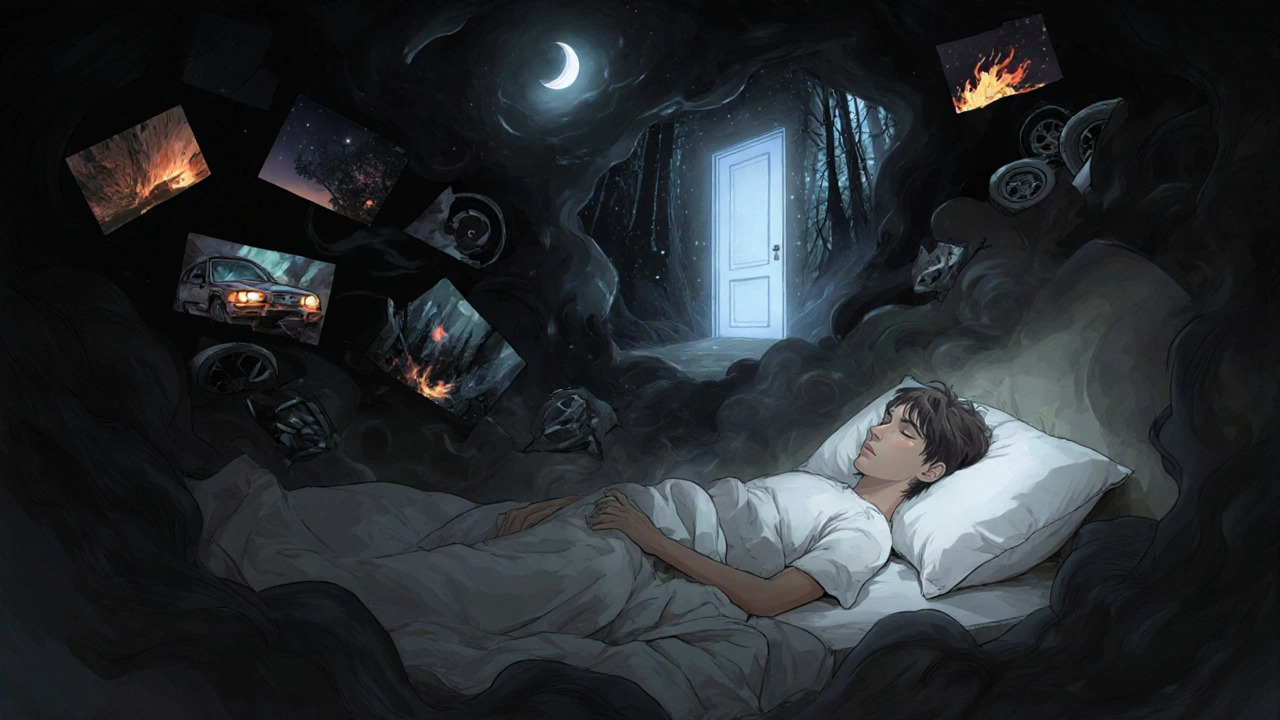
For people living with PTSD, sleep isn’t rest-it’s a battleground. Every night, the same nightmare returns: the sound of screeching tires, the smell of smoke, the feeling of being trapped. No matter how hard they try to forget, the dream replays like a broken record. And it’s not just disturbing-it’s exhausting. After months or years of this, people stop sleeping. They dread bedtime. They feel numb, wired, or completely drained by morning. This isn’t normal bad dreaming. This is PTSD’s silent war on sleep.
Why Nightmares Stick Around in PTSD
Up to 72% of people with PTSD have recurring nightmares. That’s more than seven in ten. These aren’t just scary dreams. They’re replayed memories-distorted, exaggerated, but rooted in real trauma. The brain doesn’t process the event properly. Instead of filing it away, it keeps pulling it back up, especially during REM sleep. That’s when dreams happen. The result? Night after night, the same terror.
Standard PTSD treatments like talk therapy or exposure therapy help with flashbacks and anxiety-but they often don’t touch the nightmares. That’s because nightmares aren’t just a symptom. They’re a separate system in the brain that keeps firing on its own. And when they do, they make everything else harder: depression deepens, anger spikes, concentration vanishes. Sleep deprivation becomes a new kind of trauma.
What Is Imagery Rehearsal Therapy?
Imagery Rehearsal Therapy (IRT) is a simple, evidence-based method designed to break the cycle of trauma nightmares. Developed in the early 2000s and backed by decades of research, it’s now recommended as the first-line treatment for PTSD-related nightmares by the American Academy of Sleep Medicine. Unlike medication, it doesn’t change your brain chemistry. It changes your dream.
Here’s how it works in four steps:
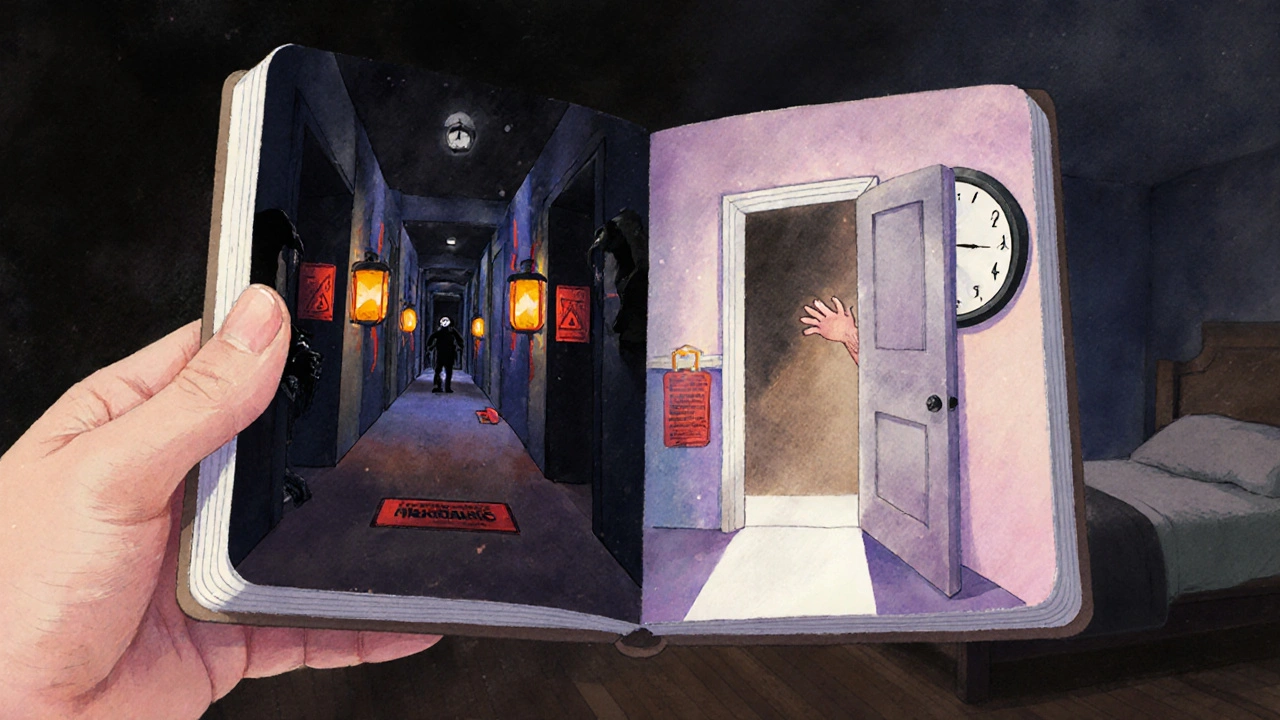
- Write it down-Right after waking from a nightmare, grab a notebook and pen (not your phone-blue light messes with sleep). Write the dream exactly as it happened. Don’t edit. Just record it.
- Change it-The next day, rewrite the dream. Not to make it happy. To make it less scary. Maybe the attacker disappears. Maybe you find a door. Maybe you call for help and someone answers. The goal isn’t to rewrite history-it’s to rewrite the dream’s outcome.
- Rehearse it-Every night before bed, spend 10-15 minutes imagining the new version. Picture it clearly. Feel the new ending. This isn’t daydreaming. It’s mental training.
- Repeat it-Do this every night. Consistency matters more than perfection.
Studies show that after just 4-6 weeks, most people see a 50-70% drop in nightmare frequency. Some stop having them altogether. And it’s not just dreams that improve. Sleep quality goes up. Anxiety drops. People start sleeping through the night again-and that changes everything.
Why It Works (And Why Medication Often Doesn’t)
For years, doctors prescribed prazosin-a blood pressure drug-to treat PTSD nightmares. It seemed to help at first. But in a major 2018 trial with 304 U.S. veterans, prazosin performed no better than a sugar pill. The same results showed up in later studies. The drug didn’t fix the problem-it just masked it.
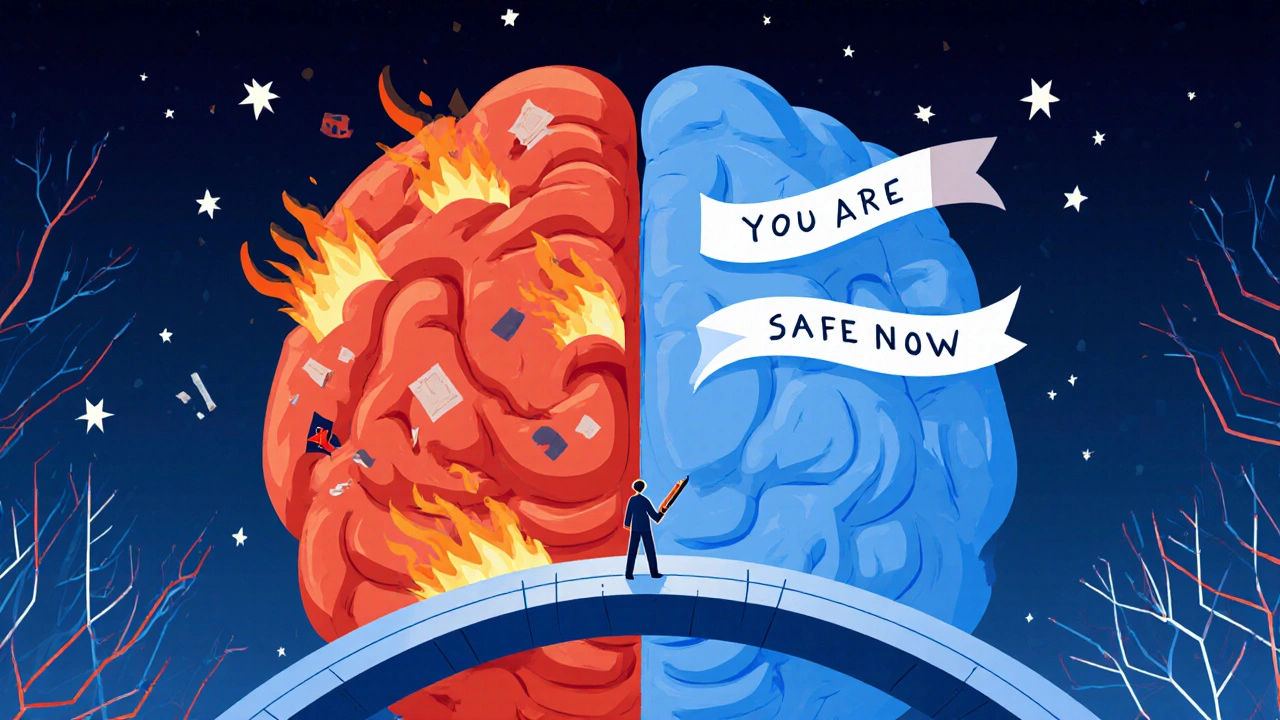
IRT is different. It doesn’t suppress dreams. It reprograms them. Brain imaging shows that when people rehearse a new dream ending, the areas of the brain linked to fear (like the amygdala) quiet down. The same areas that fire during trauma nightmares become less reactive over time. You’re not fighting the dream-you’re teaching your brain a new script.
And the results stick. A 2014 meta-analysis of 13 studies found that IRT produced large, lasting improvements in nightmare frequency, sleep quality, and PTSD symptoms. These gains lasted six to twelve months after treatment ended. That’s rare in mental health interventions.
Who Benefits Most?
IRT works best for people whose nightmares are tied to a single, identifiable trauma: combat, assault, accidents, or natural disasters. Veterans, first responders, survivors of violence-they’ve seen the most success. In VA clinics, 83% of patients who completed IRT reported at least half as many nightmares. Over half stopped having them entirely.
But it’s not a magic fix for everyone. People with complex trauma-multiple events over years, childhood abuse, or ongoing instability-may need more support. IRT can still help, but it often works better alongside other therapies. It also doesn’t fix other sleep problems like insomnia or sleep apnea. If you’re struggling with those too, you’ll need a broader sleep plan.
What to Expect During Treatment
Most people start feeling better within two to three weeks. The biggest changes usually happen between sessions three and five. But progress isn’t always linear. Some nights, the old dream sneaks back. That’s normal. Don’t give up. Keep writing, rewriting, rehearsing.
One common mistake? Trying to make the new dream perfect. You don’t need a heroic ending. You just need a safer one. Maybe you’re not saving anyone. Maybe you’re just running. That’s fine. The goal isn’t control-it’s relief.
Another challenge? Feeling guilty about changing the dream. “Isn’t that denying what happened?” people ask. But IRT doesn’t erase the memory. It separates the memory from the nightmare. The event happened. The dream doesn’t have to keep replaying it the same way.
Clinicians recommend tracking progress: keep a simple sleep diary. Note the nightmare’s frequency (how many times a week), intensity (on a scale of 1-10), and how distressing it felt. After a few weeks, you’ll see the pattern change. That’s motivation.
Can You Do IRT on Your Own?
Yes-but with caution. Many people start IRT using free guides or apps. The basics are simple enough to try alone. But trauma is complex. If your nightmares are intense, frequent, or tied to deep shame or guilt, working with a trained therapist is safer. They can help you navigate the emotional weight of rewriting trauma without getting stuck in it.
Look for clinicians certified in trauma-focused CBT or sleep disorders. The Phoenix Australia and VA guidelines stress that IRT should only be delivered by trained providers. Improper use can accidentally reinforce fear. A good therapist will help you distinguish between memory and dream, and keep you grounded when things get heavy.
The Bigger Picture: Why IRT Matters
PTSD treatment has long focused on talking through trauma. But nightmares? They’re a separate beast. They steal sleep. They erode recovery. IRT fills that gap. It’s not flashy. It doesn’t need fancy tech. Just a notebook, a quiet mind, and the courage to rewrite your dreams.
Today, 92% of VA medical centers in the U.S. offer IRT. It’s now part of official treatment guidelines from the Department of Veterans Affairs and the Department of Defense. The global PTSD treatment market is worth over $4 billion-and IRT is becoming standard care, not just an option.
Even newer versions are emerging. One 2023 pilot study combined IRT with narrative therapy and cut nightmare frequency by 72% in just one session. Telehealth versions are being tested. The future of IRT isn’t just about changing dreams-it’s about making the treatment faster, simpler, and more accessible.
If you or someone you know is trapped in the same nightmare night after night, know this: it’s not your fault. It’s not weakness. It’s a brain stuck in survival mode. And there’s a way out. You don’t need to wait for medication. You don’t need to suffer silently. You can change the dream. And when you do, you start sleeping again. And when you sleep-you start living.
Can Imagery Rehearsal Therapy help with nightmares not caused by trauma?
Yes. While IRT was developed for trauma-related nightmares, it’s also effective for idiopathic nightmares-those without a clear traumatic cause. Studies show it reduces frequency and intensity in both groups. The core mechanism-rewriting the dream script-works whether the fear comes from past trauma or unknown sources.
How long does it take to see results with IRT?
Most people notice improvement within 2-3 weeks of consistent practice. The strongest changes usually happen between weeks 3 and 5. By the end of a 4-6 week course, many report a 50-70% drop in nightmare frequency. Some stop having nightmares altogether.
Do I need to be in therapy to do IRT?
You can start IRT on your own using guided protocols, but working with a trained clinician is recommended-especially if your nightmares are severe or tied to deep trauma. A therapist can help you avoid emotional overwhelm, ensure you’re not reinforcing fear, and tailor the process to your needs.
Is IRT effective for children and teens with PTSD nightmares?
Yes. Modified versions of IRT have been successfully used with children and adolescents. The process is simplified-using drawings, storytelling, or role-play instead of written scripts-but the principle remains the same: help the child rewrite the nightmare into something less frightening. Studies show similar success rates to adults when adapted for age.
Can IRT be combined with other treatments like CBT-I or medication?
Absolutely. IRT works well alongside Cognitive Behavioral Therapy for Insomnia (CBT-I), which targets sleep hygiene and anxiety around sleep. While CBT-I improves overall sleep quality, IRT specifically targets nightmares. Medication like prazosin is no longer recommended as a first-line option due to lack of proven effectiveness. IRT is often used alone or with other non-drug therapies for best results.



November 28, 2025 AT 11:11 AM
Been using IRT for 8 months now. Nightmares dropped from 5 nights a week to maybe once a month. No meds. No fancy tech. Just a notebook and forcing myself to rewrite the ending. Doesn't fix everything but sleep? Finally sleep.
Consistency beats intensity every time.
November 30, 2025 AT 03:29 AM
So you're telling me some guy with a pen can outsmart the military's $4 billion PTSD industry? Cool story bro. I'll stick with my army-issued sleeping pills. At least they knock me out. This sounds like new age fluff wrapped in VA propaganda.
December 1, 2025 AT 10:14 AM
I get that people want simple solutions but this whole thing feels like someone took a trauma therapist's notes and turned them into a self-help TikTok trend. Rewrite your dream? Like that's gonna undo the neural pathways forged by combat or assault? It's not that I'm against it, I just think it's being oversold. What about the people whose nightmares are too chaotic to even write down? Or the ones who can't remember the dream clearly because their brain's still in fight-or-flight? IRT might help some, sure, but calling it first-line treatment feels like ignoring the complexity of real trauma. Also, who writes dreams down with pen and paper anymore? That's so 2003.
December 3, 2025 AT 05:04 AM
Oh wow so now we're rewriting our nightmares like they're fanfiction? That's so deep. I bet if I just imagine my ex walking away smiling, my trauma will just... poof? Gone. Maybe I'll add a unicorn. Or a therapist holding a cup of chamomile. Yeah that'll fix it. Meanwhile, the real issue is no one gave me the space to feel the horror without turning it into a productivity hack. Thanks for the performative healing, Karen.
December 4, 2025 AT 18:31 PM
Everyone's acting like this is some revolutionary breakthrough. Newsflash: people have been doing this since the 80s. The VA just slapped a fancy name on it and started billing insurance. The real problem? Most therapists who offer IRT are undertrained and overworked. You think your 30-minute session with a caseworker who's juggling 40 patients is gonna guide you through rewriting your worst memory? Please. This isn't therapy. It's trauma tourism with a checklist.
December 5, 2025 AT 05:17 AM
It is of considerable interest to note that the empirical evidence supporting Imagery Rehearsal Therapy, as presented herein, is derived predominantly from cohort studies with limited longitudinal follow-up. While the reported effect sizes are statistically significant, the clinical significance remains ambiguous without control for comorbidities such as depression, substance use, and sleep architecture disruption. Furthermore, the absence of randomized double-blind trials undermines its status as a first-line intervention. A more rigorous evidentiary standard is warranted before institutional adoption.
December 6, 2025 AT 19:37 PM
Interesting how we've turned healing into a scriptwriting workshop. I suppose if you can control your dreams, you can control your past? That's a nice fantasy. But here's the thing - the nightmare isn't the problem. The silence after is. The way you stop talking to your wife. The way you flinch at a car backfiring. IRT might quiet the dream, but it doesn't bring back the person you were before the world broke. Still, better than pills that make you feel like a ghost. So I'll take the notebook.
And the quiet.
December 7, 2025 AT 01:23 AM
I've been a veteran case manager for 17 years. I've seen IRT work miracles - not because it's magic, but because it gives people back agency. Trauma steals your sense of control. IRT puts the pen in your hand. No one’s forcing you to rewrite the dream. You get to choose the ending. Even if it’s just you running. Even if it’s just you breathing. That’s not fluff. That’s reclaiming your mind. And for someone who’s spent years feeling powerless? That’s everything.
December 7, 2025 AT 13:01 PM
so i tried this and it worked kinda but i kept forgetting to write it down and then i’d just dream the same thing and feel dumb. also my phone died so i had to use paper and i hate writing by hand. but like… the 3rd time i rewrote it i kinda felt better? idk. maybe i’m just tired. but hey, at least i’m not screaming in my sleep anymore. maybe i’ll keep doing it. maybe not. 🤷♂️
December 9, 2025 AT 11:16 AM
you people are overthinking this. just change the dream. make the guy with the gun turn into a puppy. or make the car explode but you fly away. easy. i did it in 2 days. now i dream about tacos. best thing ever. why are you all making this so hard? its not brain surgery. its just a dream. you dont need a therapist. you need a brain reset. just do it. stop talking. start rewriting.
December 10, 2025 AT 20:27 PM
Just wanted to say - if you’re reading this and you’re scared to try IRT because you think you’re not ‘trauma enough’ or your nightmares aren’t ‘bad enough’ - you’re wrong. Your pain is valid. You don’t need a war story or a police report to deserve peace. I started with a dream about being lost in a mall. It felt silly. But I rewrote it: I found a coffee shop, sat down, and someone brought me tea without asking. That was my victory. And now? I sleep. You can too. No shame. No rush. Just one page at a time.
December 12, 2025 AT 14:29 PM
I’ve been recommending IRT to every friend, client, and stranger on the bus who says they can’t sleep. And honestly? It’s the one thing that actually works without side effects. I’ve had people come back to me crying - not from pain, but from relief - because they slept through the night for the first time in years. One woman said, ‘I didn’t know I could dream about my brother without him dying.’ That’s not therapy. That’s grace. And it’s free. All you need is a notebook, a little courage, and the willingness to try something that feels weird at first. You’re not broken. You’re just stuck. And this? This is the key.
Don’t wait for a therapist. Don’t wait for permission. Start tonight. Write it down. Change it. Rehearse it. You’ve already survived the trauma. Now, let yourself survive the dream.