
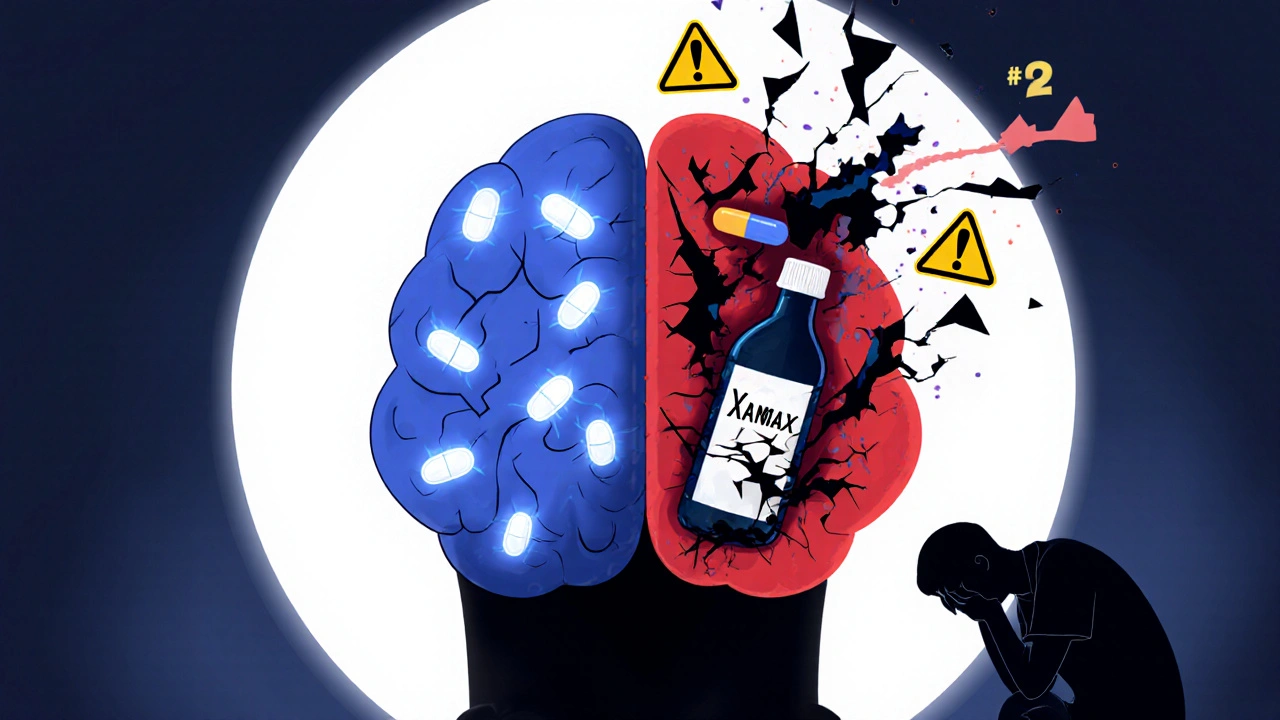
Benzodiazepines like Xanax and Valium offer fast anxiety relief but carry serious risks when mixed with opioids, alcohol, or sleep meds. Learn the dangerous interactions, who's most at risk, and safer alternatives.
Xanax Safety: What You Need to Know About Use, Risks, and Alternatives
When people talk about Xanax, a brand name for the benzodiazepine alprazolam, used to treat anxiety and panic disorders. Also known as alprazolam, it works fast—but its effects don't last long, and that’s part of why it’s so easy to get hooked. Xanax isn’t a cure. It’s a tool. And like any tool, if you use it wrong, it can hurt you more than help.
What most people don’t realize is that benzodiazepines, a class of central nervous system depressants that include Xanax, Valium, and Ativan. Also known as benzos, they’re designed for short-term use—usually no more than a few weeks. Long-term use? That’s where things get risky. Dependence builds quietly. You don’t wake up one day addicted. You just start needing a little more to feel the same. And when you try to stop? Xanax withdrawal, a potentially dangerous set of symptoms including seizures, severe anxiety, and insomnia that can occur after stopping the drug. Also known as benzo withdrawal, it’s not just uncomfortable—it can be life-threatening without medical supervision. Many people don’t know this until it’s too late.
And it’s not just about addiction. Xanax interacts with other meds you might be taking—painkillers, sleep aids, even some cold medicines. Mixing it with alcohol? That’s a fast track to respiratory failure. Even healthy adults can overdose on Xanax if they combine it with other depressants. And here’s the kicker: your doctor might not ask about every supplement or OTC pill you’re using. That’s why OTC medications, over-the-counter drugs like cold remedies, antihistamines, or pain relievers that can interact dangerously with prescription drugs. Also known as non-prescription drugs, they’re often overlooked in drug safety discussions matter just as much as prescriptions.
So what do you do if Xanax isn’t working—or if you’re already stuck on it? There are safer, longer-term options. Therapy, especially CBT, works better than meds for most anxiety disorders over time. Newer antidepressants like SSRIs have fewer risks and aren’t addictive. Even lifestyle changes—better sleep, less caffeine, regular movement—can reduce panic attacks. And if you’re looking for alternatives, some people find relief with herbal supplement interactions, how natural products like valerian, kava, or CBD can affect prescription drugs. Also known as natural remedies, they’re not always safe, even if they’re labeled "natural". But you need to know which ones are risky.
What you’ll find in the posts below isn’t marketing fluff or generic advice. It’s real talk about what happens when meds go wrong, how to spot hidden dangers, and what actually works when Xanax isn’t the answer. You’ll see how people manage withdrawal, what doctors miss, and how to talk to your provider without sounding like you’re just looking for a refill. This isn’t about fear. It’s about control. And if you’re taking Xanax—or thinking about it—you need to know what’s really going on.