
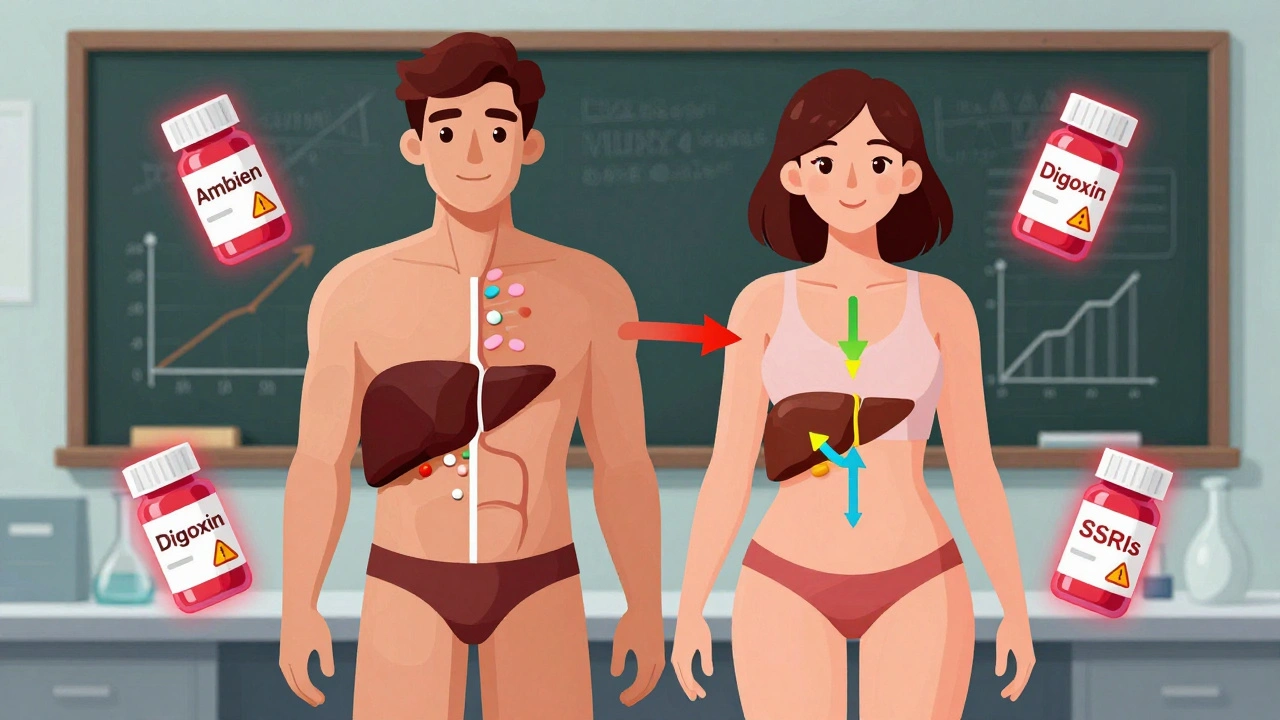
Women experience adverse drug reactions nearly twice as often as men due to biological differences and outdated clinical trial practices. Learn why dosing based on male physiology puts women at risk - and what’s being done to fix it.
Women Medication Side Effects: What You Need to Know About Common Reactions
When it comes to women medication side effects, the unique ways drugs affect female bodies due to biology, hormones, and metabolism. Also known as female-specific drug reactions, these differences aren’t just minor quirks—they can change how safe or effective a drug is for you. Women aren’t just smaller versions of men when it comes to how drugs work. From how quickly your liver processes a pill to how your hormones interact with a medication, your body handles medicines differently—and that changes the risks.
Take hormonal medication side effects, reactions tied to birth control, hormone replacement, or thyroid drugs that interact with estrogen and progesterone levels. These aren’t just about mood swings or weight gain. Studies show women are more likely to experience severe nausea, dizziness, or liver stress from certain drugs because their enzyme activity differs from men’s. Even something as simple as an OTC pain reliever, like acetaminophen or ibuprofen used for headaches or cramps can hit harder or cause more stomach irritation in women due to slower gastric emptying. And don’t forget drug side effects in women, the hidden reactions that show up months after starting a drug, like bone loss from antidepressants or muscle pain from statins. These aren’t rare—they’re underreported because doctors often assume symptoms are "just stress" or "normal aging."
Many women end up switching meds or stopping them altogether because the side effects weren’t explained upfront. That’s why it’s not enough to just know the common ones—you need to know which ones are more likely to hit you. Whether it’s a thyroid pill, an antidepressant, or a simple antibiotic, your body’s response is shaped by your hormones, your weight, your liver health, and even your gut bacteria. The posts below break down real cases: why yeast infections flare up after antibiotics, how statins cause memory fog in some women but not others, why certain painkillers trigger migraines, and how insulin resistance from PCOS changes how your body handles meds. You’ll find clear, no-fluff advice on spotting red flags, talking to your doctor, and choosing safer options. No jargon. No guesswork. Just what actually happens when drugs meet a female body—and what to do about it.