
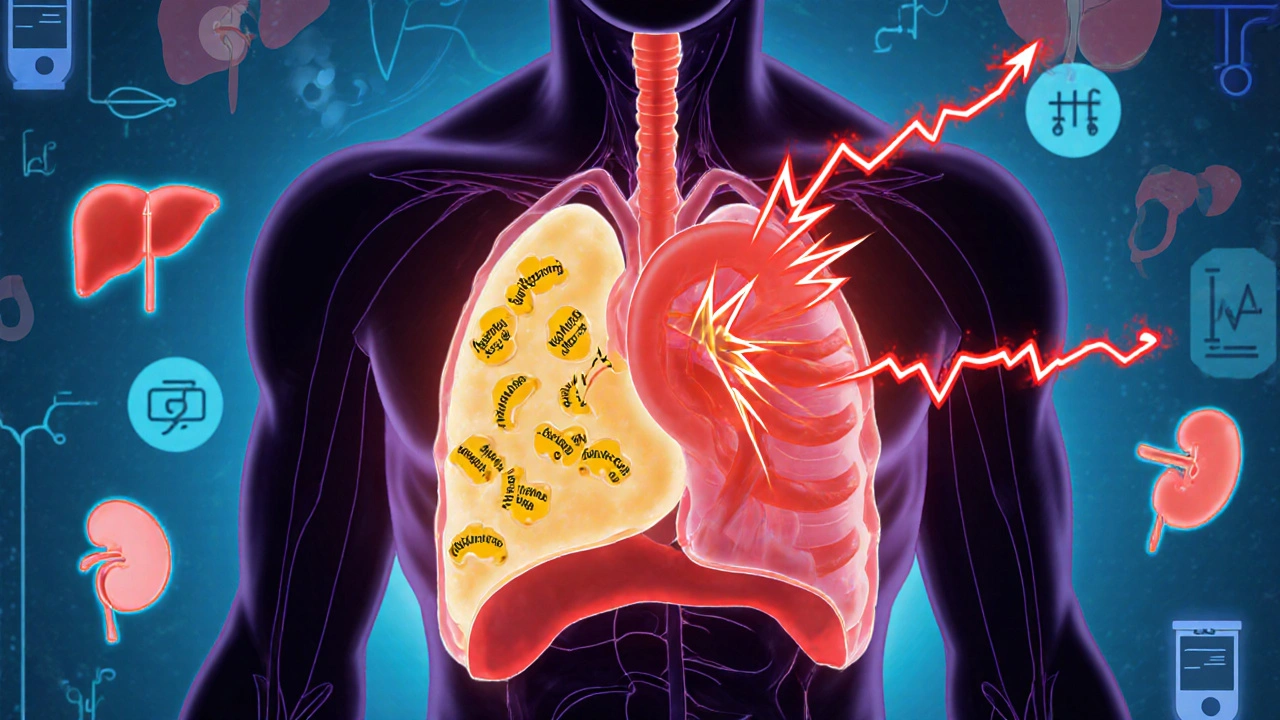
Therapeutic drug monitoring for tricyclic antidepressants prevents deadly toxicity by tracking blood levels and ECG changes. Learn why even prescribed doses can be dangerous and how monitoring saves lives.
Tricyclic Antidepressants: What They Are, How They Work, and What You Need to Know
When doctors talk about tricyclic antidepressants, a class of older antidepressant medications named for their three-ring chemical structure. Also known as TCAs, they were the first widely used drugs for depression, and some are still prescribed today for conditions beyond mood disorders. Unlike newer SSRIs, tricyclics don’t just target serotonin—they affect norepinephrine and even acetylcholine, which is why they work for some people when other meds fail. But that same broad action is also why they come with a heavier side effect list.
These drugs are often used when depression doesn’t respond to first-line treatments, or when someone has chronic pain, nerve damage, or severe insomnia along with their depression. amitriptyline, one of the most common tricyclics, is frequently prescribed off-label for fibromyalgia and neuropathic pain. nortriptyline, a metabolite of amitriptyline, is often preferred because it’s slightly easier on the body. But even the "gentler" ones can cause dry mouth, dizziness, weight gain, or heart rhythm changes—especially in older adults. That’s why blood pressure and EKG monitoring are sometimes part of the treatment plan.
Tricyclics don’t work fast. It often takes 4 to 6 weeks to feel any real change, and if you stop too soon, you might think they didn’t work at all. They also interact dangerously with many other meds—especially opioids, alcohol, and even some over-the-counter cold remedies. If you’re on a TCA, you need to tell every doctor you see, even if they’re just treating a toothache. And because they can be deadly in overdose, they’re rarely the first choice for someone with suicidal thoughts.
What you’ll find in this collection are real, practical posts about how tricyclic antidepressants fit into modern treatment—how they compare to newer drugs, what side effects patients actually report, and how they interact with other meds like heart pills, painkillers, or sleep aids. You’ll also see how liver function affects how your body processes these drugs, why some people need lower doses as they age, and what alternatives exist when TCAs don’t work or become too risky. This isn’t theory. These are the things people need to know before they start, while they’re on them, or when they’re wondering if they should switch.