
TCA Toxicity Risk Calculator
TCA Safety Assessment
Tricyclic antidepressants (TCAs) like amitriptyline, nortriptyline, and desipramine saved lives when they first came out in the 1960s. But they’re not the safe, easy-to-use drugs we expect today. Even a small overdose - sometimes just one extra pill - can be deadly. That’s why therapeutic drug monitoring isn’t optional for TCAs. It’s the difference between healing and hospitalization.
Why TCAs Are Dangerously Unpredictable
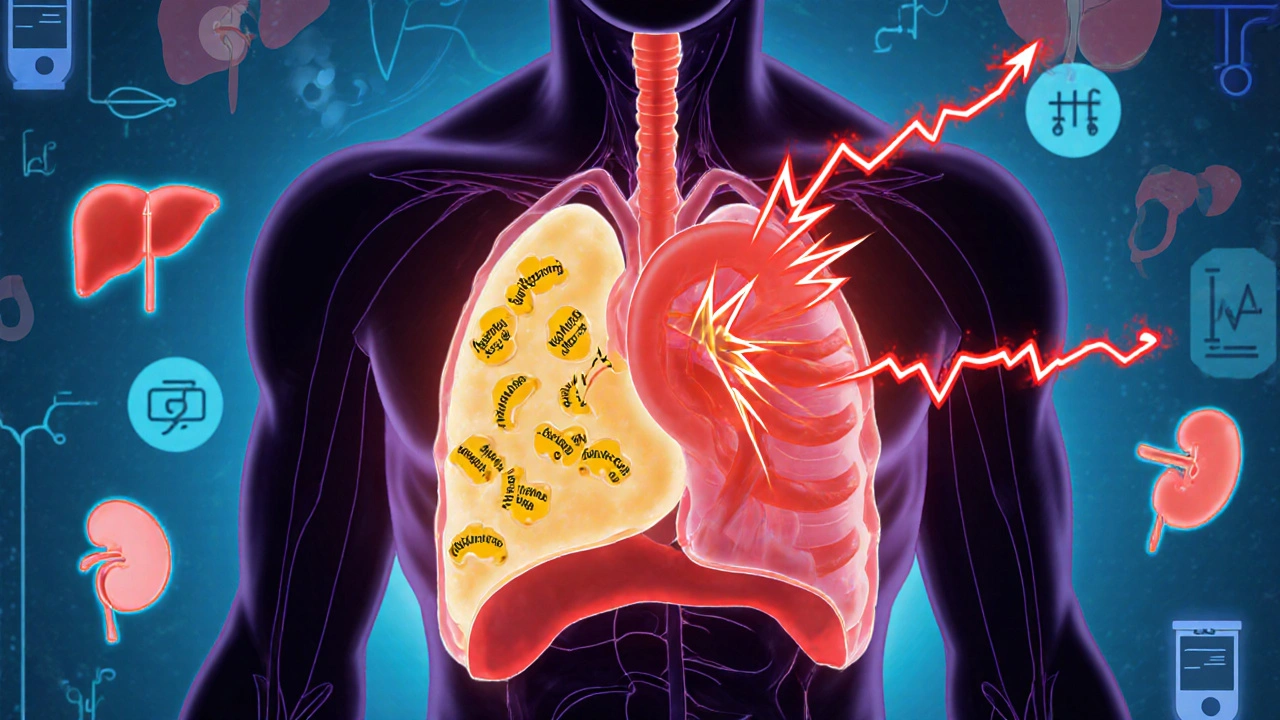
TCAs work by boosting serotonin and norepinephrine in the brain. But they don’t stop there. They also block receptors all over the body - in the heart, gut, and nervous system. That’s why side effects like dry mouth, blurred vision, and constipation are common. But when levels creep too high, things turn dangerous fast. A blood level of 200 ng/mL might be fine for one person. For another, it could trigger a seizure or a heart rhythm so wild it stops the heart. The therapeutic range? Just 80-200 ng/mL for amitriptyline. Cross 500 ng/mL, and you’re in life-threatening territory. And here’s the kicker: people don’t always know they’ve overdosed. They might feel fine, then suddenly collapse. The problem isn’t just intentional overdose. Most cases happen because the dose feels right - until it doesn’t. A 70-year-old with slower liver function might build up toxic levels on a dose that’s perfectly safe for a 30-year-old. Or a patient taking an antibiotic that blocks the enzyme that clears TCAs can accidentally poison themselves.How TDM Works: More Than Just a Blood Test
Therapeutic drug monitoring for TCAs isn’t a one-time check. It’s a process. First, you wait. It takes 5 to 7 days of consistent dosing for the drug to reach a steady state in the blood. Draw the sample right before the next dose - that’s the trough level. That’s the number doctors need. The lab uses high-performance liquid chromatography (HPLC) or mass spectrometry to measure the exact concentration. But it’s not just about the total level. The ratio of metabolites to parent drug matters too. For example, nortriptyline is a metabolite of amitriptyline. If the ratio is off, it might mean the patient is a poor metabolizer - meaning they clear the drug slowly and are at higher risk. ECG readings are just as important. A QRS complex longer than 100 milliseconds on an electrocardiogram is a red flag - even if the blood level looks normal. That’s because TCAs block sodium channels in the heart. That’s what causes arrhythmias. Waiting for a blood test result while the heart goes haywire is a recipe for disaster.Who Needs TDM the Most
Not everyone on TCAs needs regular blood tests. But some groups absolutely do. Elderly patients make up about 40% of TCA users. Their livers don’t process drugs like they used to. They’re more sensitive to anticholinergic effects. A dose that worked at 50 might kill them at 70. People with kidney or liver disease can’t clear TCAs efficiently. Even standard doses can accumulate. Patients on multiple medications - especially those that affect CYP2D6 or CYP2C19 enzymes - are at high risk. Common drugs like fluoxetine, bupropion, or even some heart medications can slow TCA breakdown by up to 30-fold. Those with treatment-resistant depression or chronic pain conditions often rely on TCAs because newer drugs like SSRIs don’t work for them. For these patients, TDM isn’t just safety - it’s the only way to find a dose that helps without killing.
What Happens When TDM Is Ignored
A study across 12 European hospitals found that 37.5% of TDM requests were missing key details - like what other drugs the patient was taking. Another 28% were drawn too early, before steady state. That leads to bad decisions. One case: a 68-year-old man on 100 mg of amitriptyline. His blood level came back at 195 ng/mL - technically in range. He was feeling better, so his doctor kept the dose. Two days later, he had a cardiac arrest. His ECG showed a QRS of 135 ms. He survived, but only because the ER team recognized the pattern fast. Another case: a 42-year-old woman with levels at 190 ng/mL - within range - but her QRS was 140 ms. She had no symptoms. No one connected the dots. She developed torsades de pointes and needed defibrillation. The blood level didn’t lie. But it didn’t tell the full story either. These aren’t rare. The Victorian Poisons Information Centre says 65% of serious TCA poisonings involved either no TDM or misinterpreted results.When TDM Saves Lives
At Johns Hopkins, a geriatric psychiatrist noticed an elderly patient’s nortriptyline level hit 185 ng/mL - above the 150 ng/mL ceiling. The patient was alert, no symptoms. But the doctor lowered the dose from 150 mg to 75 mg. A week later, the level dropped to 120 ng/mL. No arrhythmias. No ICU stay. Another example: a patient on amitriptyline who kept having dizziness and confusion. Blood tests showed levels at 210 ng/mL. The doctor cut the dose. Symptoms vanished. No one knew it was the drug - until the test. Psychiatrists on Reddit report preventing ICU admissions by catching rising levels early. One wrote: “I’ve prevented at least three ICU admissions this year through proactive TDM in elderly patients.”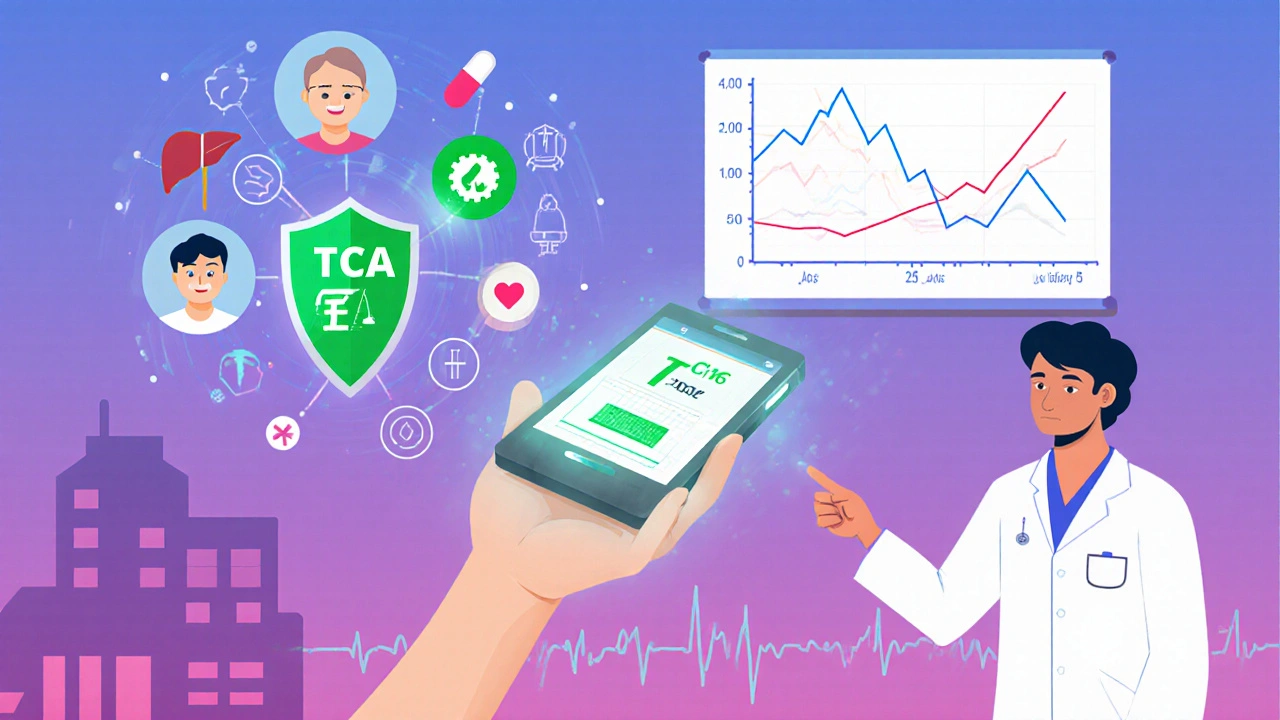
The Real Barriers to Effective Monitoring
TDM works - if it’s done right. But it’s not easy. Turnaround time is 24 to 48 hours. That’s too long if someone’s deteriorating. Labs vary in their reference ranges - one lab says 80-200 ng/mL for amitriptyline, another says 70-180. That causes confusion. Clinicians often don’t know how to interpret the results. A 2023 study found that 20% of dosage changes were wrong because the provider didn’t understand metabolite ratios or enzyme interactions. Cost is another issue. Each test runs $150-$250. Insurance doesn’t always cover it. And patients? They stop coming in for blood draws once they feel better. “The biggest challenge,” says one nurse practitioner, “is getting patients to comply with regular blood draws when they’re feeling better.”The Future: Faster, Smarter Monitoring
The good news? Things are improving. Siemens Healthineers just launched a pilot handheld device in Europe that gives TCA results in 20 minutes. It’s not in U.S. hospitals yet, but it’s coming. AI platforms like PsychX Analytics now combine TDM data with ECG readings, age, weight, and medication lists to predict toxicity risk. They flag high-risk patients before symptoms appear. And now, many academic centers combine TDM with pharmacogenetic testing. If you’re a poor CYP2D6 metabolizer, your starting dose might be half the usual amount. That cuts the number of blood tests needed by 40%, according to Mayo Clinic.Bottom Line: TDM Isn’t Optional - It’s Essential
TCAs aren’t going away. They’re still first-line for neuropathic pain and treatment-resistant depression, especially in older adults. But their narrow window demands precision. Don’t rely on symptoms alone. Don’t assume a “normal” dose is safe. Don’t skip the blood test because it’s inconvenient. TDM saves lives. It’s not about controlling patients. It’s about protecting them. A single blood draw, done right, can prevent a cardiac arrest, a seizure, or a death. If you’re prescribing TCAs - or if you’re taking them - ask: Has my level been checked? When? What was the result? Was the ECG reviewed? If you can’t answer those, you’re flying blind. And with TCAs, that’s not just risky - it’s deadly.What is the therapeutic range for amitriptyline?
The therapeutic blood concentration range for amitriptyline is 80-200 ng/mL. Levels above 500 ng/mL are considered toxic and can cause life-threatening heart rhythm disturbances. Even within the therapeutic range, individual sensitivity varies - some patients show signs of toxicity at 180 ng/mL, especially if they have other risk factors.
Can you overdose on TCAs even at prescribed doses?
Yes. TCAs have a very narrow therapeutic window. Factors like age, liver function, drug interactions, and genetic differences in metabolism (CYP2D6/CYP2C19) can cause toxic buildup even when patients take their exact prescribed dose. Elderly patients and those on multiple medications are especially vulnerable.
How often should TCA blood levels be checked?
Blood levels should be checked after 5-7 days of consistent dosing to reach steady state. Once stabilized, monitoring every 3-6 months is typical. More frequent testing is needed after dose changes, when starting new medications, or if side effects appear. For elderly patients or those with liver disease, testing may be required monthly.
Why is an ECG important with TCA monitoring?
TCAs block sodium channels in the heart, which can cause QRS widening on an ECG. A QRS duration over 100 milliseconds is a critical warning sign of impending cardiac toxicity - even if blood levels are still in the therapeutic range. ECG findings can predict danger faster than blood tests and must guide emergency treatment.
Is TDM covered by insurance?
Many insurance plans cover therapeutic drug monitoring for TCAs, especially for high-risk patients like the elderly or those on multiple medications. However, coverage varies. The test typically costs $150-$250. Always check with your provider and lab ahead of time. Some hospitals offer financial assistance for patients who can’t afford it.
Are there alternatives to TDM for preventing TCA toxicity?
The best alternative is avoiding TCAs altogether and using SSRIs or SNRIs - but these don’t work for everyone. For patients who need TCAs, there’s no reliable substitute for TDM. Pharmacogenetic testing (CYP2D6/CYP2C19) can help predict risk before starting, but it doesn’t replace ongoing monitoring. Clinical observation alone is too slow and unreliable.


December 1, 2025 AT 18:53 PM
Just had my grandma on nortriptyline last year-she was fine until she started taking omeprazole. One day she stumbled, confused, heart racing. We didn’t know it was the drug until her blood level was 210. ECG showed QRS at 120. Scary stuff. TDM saved her life.
December 3, 2025 AT 12:30 PM
Let’s be real-the whole TDM system is a corporate racket. Labs charge $200 for a test that’s basically a glorified chromatogram. Meanwhile, doctors who don’t even understand CYP2D6 are ordering it like it’s a coffee order. And don’t get me started on how insurance denies it unless you’re literally dead.
The real problem? We treat depression like a math equation. You’re not a number on a screen. You’re a person who’s been told for years that their pain isn’t real. Now we’re going to monitor your blood like a lab rat?
December 5, 2025 AT 08:22 AM
Y’all are overcomplicating this. If you’re on TCAs and you’re over 60 or on more than three meds-get the blood test. Period. No excuses. I’ve seen too many people die because someone thought ‘they looked fine.’ Your ECG matters more than your mood journal. Do the damn test. Your heart will thank you.
December 7, 2025 AT 05:26 AM
It is regrettable that the clinical utility of therapeutic drug monitoring for tricyclic antidepressants remains underutilized within primary care settings. The pharmacokinetic variability inherent in this class of compounds necessitates a rigorous, evidence-based approach to dosage titration. To neglect such monitoring is not merely negligent-it is an affront to the ethical principles of beneficence and nonmaleficence.
Furthermore, the assertion that patients ‘feel fine’ prior to cardiac arrest is a dangerous fallacy. Symptomatology is an unreliable indicator of pharmacodynamic toxicity. One must rely upon objective biomarkers, including serum concentrations and electrocardiographic parameters, to mitigate risk.
December 7, 2025 AT 06:29 AM
Oh wow, another ‘TDM saves lives’ sermon from the medical elite. Let me guess-you’re the kind of person who thinks every American should be forced to get a blood test every time they take ibuprofen? You know what’s more dangerous? Trusting a system that charges $250 for a test and then blames the patient for not ‘complying’.
Meanwhile, in countries with real healthcare, doctors just adjust doses based on clinical response-not some lab printout written by a guy who thinks ‘HPLC’ is a new iPhone feature.
And don’t even get me started on ‘pharmacogenetics.’ Next you’ll tell me we need DNA tests before we let people take aspirin. This isn’t medicine. It’s tech bro capitalism with a stethoscope.
December 7, 2025 AT 15:28 PM
As a psychiatric nurse practitioner, I want to say: yes, TDM is essential-but it’s not just about the numbers. It’s about building trust. When I explain to my elderly patients that we’re not trying to ‘control’ them, but to keep them safe from silent cardiac risks, they listen.
I’ve had patients cry because they didn’t know their dizziness was from amitriptyline, not aging. We don’t need more tech-we need better education. Show them the ECG. Show them the numbers. Let them see why it matters.
And yes, the cost sucks. But if your clinic can’t afford it, advocate for grants. Talk to your pharmacy. Many labs offer sliding scale. This isn’t optional. It’s part of the oath we took.
December 8, 2025 AT 02:56 AM
Back home in India we rarely do TDM for TCAs. Too expensive. Too many people don’t even know what a blood test is. We rely on family to watch for dizziness or confusion. Sometimes it works. Sometimes it doesn’t. But we don’t have the luxury of 24-hour labs or AI tools.
Maybe the answer isn’t more testing. Maybe it’s simpler drugs. SSRIs aren’t perfect but they’re safer. Why keep pushing TCAs when we have options?
December 10, 2025 AT 01:27 AM
As someone who’s lived with chronic pain for 15 years, I’ve been on TCAs since I was 22. I’ve had three blood draws. All normal. No ECGs. Never collapsed. I’m still here.
But I also know people who weren’t so lucky. So I get it. I’m not saying TDM is useless. I’m saying-don’t scare people into thinking every TCA user is a ticking bomb. Some of us are fine. Let’s not treat everyone like a statistic.
Maybe the real fix is better access to non-TCA options, not more blood tests. Just saying.
December 11, 2025 AT 13:41 PM
Wow so now we need to test your blood every time you take a pill? What’s next? Mandatory urine screens before you take Tylenol? This is how totalitarian healthcare starts. They call it ‘monitoring’ but it’s control. You think they care if you live? No. They care about liability. And billing codes.
TCAs have been around for 60 years. Millions took them without blood tests. People lived. Now we’re turning a simple treatment into a corporate compliance nightmare.
December 12, 2025 AT 07:27 AM
My doctor never checked my levels. I felt fine. Then I got dizzy and my hands shook. I thought it was stress. Turned out my level was 220. QRS was 115. I almost died. Now I get tested every 3 months. It’s annoying but worth it. Don’t wait until it’s too late.