
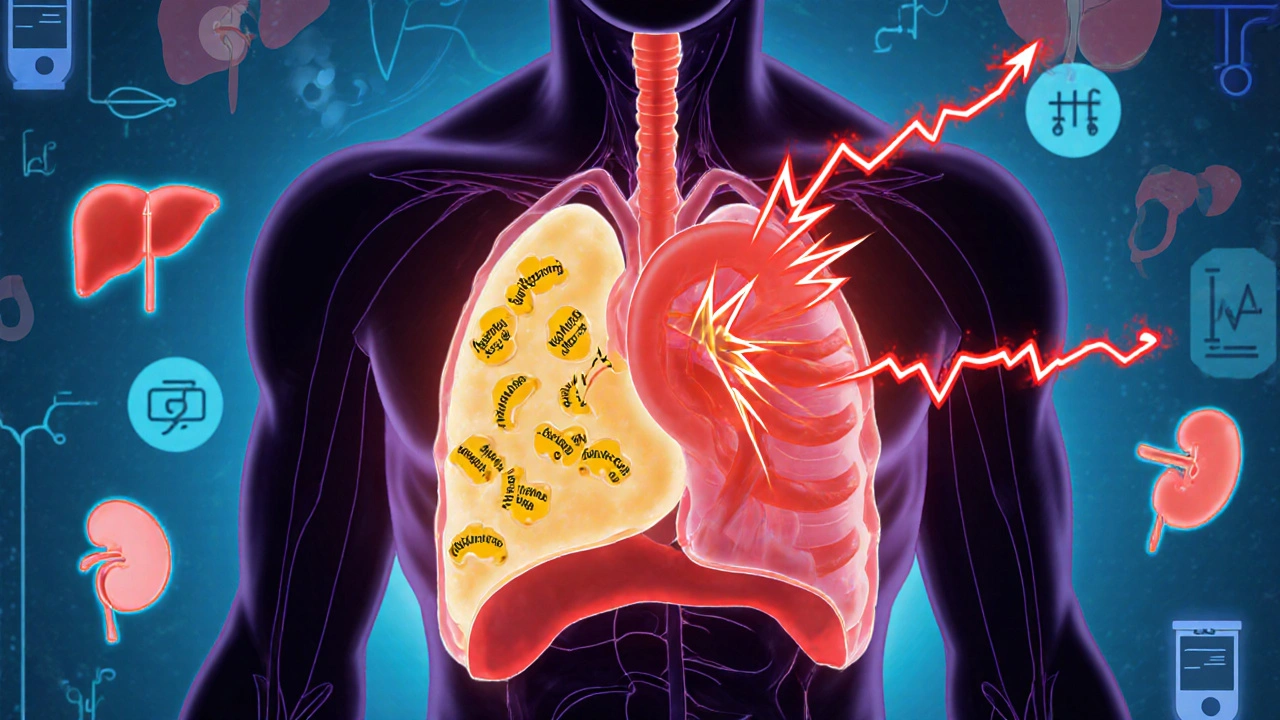
Therapeutic drug monitoring for tricyclic antidepressants prevents deadly toxicity by tracking blood levels and ECG changes. Learn why even prescribed doses can be dangerous and how monitoring saves lives.
Therapeutic Drug Monitoring: How Doctors Track Medication Levels for Safety and Effectiveness
When you take a medicine like therapeutic drug monitoring, the process of measuring drug concentrations in the blood to ensure they stay within a safe and effective range. Also known as TDM, it's not just for fancy hospital cases—it’s a daily tool for managing everything from epilepsy to heart failure and infections. Many drugs work best only within a narrow window: too little and they don’t help; too much and they poison you. That’s why doctors don’t just guess your dose—they check what’s actually in your blood.
This isn’t about random testing. pharmacokinetics, how your body absorbs, moves, and gets rid of a drug over time determines when and how often levels are checked. For example, someone on carbamazepine, an anticonvulsant used for seizures and nerve pain needs regular blood tests because liver damage, other drugs, or even smoking can change how fast their body clears it. Same goes for digoxin, a heart medication with a tiny safety margin—a few nanograms per milliliter can mean the difference between control and life-threatening toxicity.
Therapeutic drug monitoring doesn’t just prevent overdoses. It helps when standard doses fail. If your seizure meds aren’t working, it’s not always about taking them wrong—it could be that your body metabolizes them too fast. Or if you’re on an antibiotic like vancomycin and your infection won’t clear, your doctor might check if the drug level is too low. It’s also critical when you’re on multiple drugs. drug interactions, when one medication changes how another behaves in your body can suddenly push a safe dose into the danger zone. That’s why people on lithium, cyclosporine, or theophylline get monitored regularly—these drugs don’t play nice with changes in diet, kidney function, or other pills.
And it’s not just for adults. Kids, older people, and those with liver or kidney problems often need tighter monitoring because their bodies handle drugs differently. A dose that’s perfect for a healthy 30-year-old could be deadly for someone with reduced kidney function. That’s where therapeutic drug monitoring turns guesswork into precision. It’s the reason some people stay on life-saving meds without side effects, while others end up in the ER from hidden toxicity.
What you’ll find below are real stories and science-backed guides showing how this works in practice—from adjusting opioids after rotation to catching statin side effects before they cause memory issues, and why long-acting injectables demand strict monitoring to avoid deadly complications. These aren’t theory pieces. They’re what happens when doctors stop guessing and start measuring.