
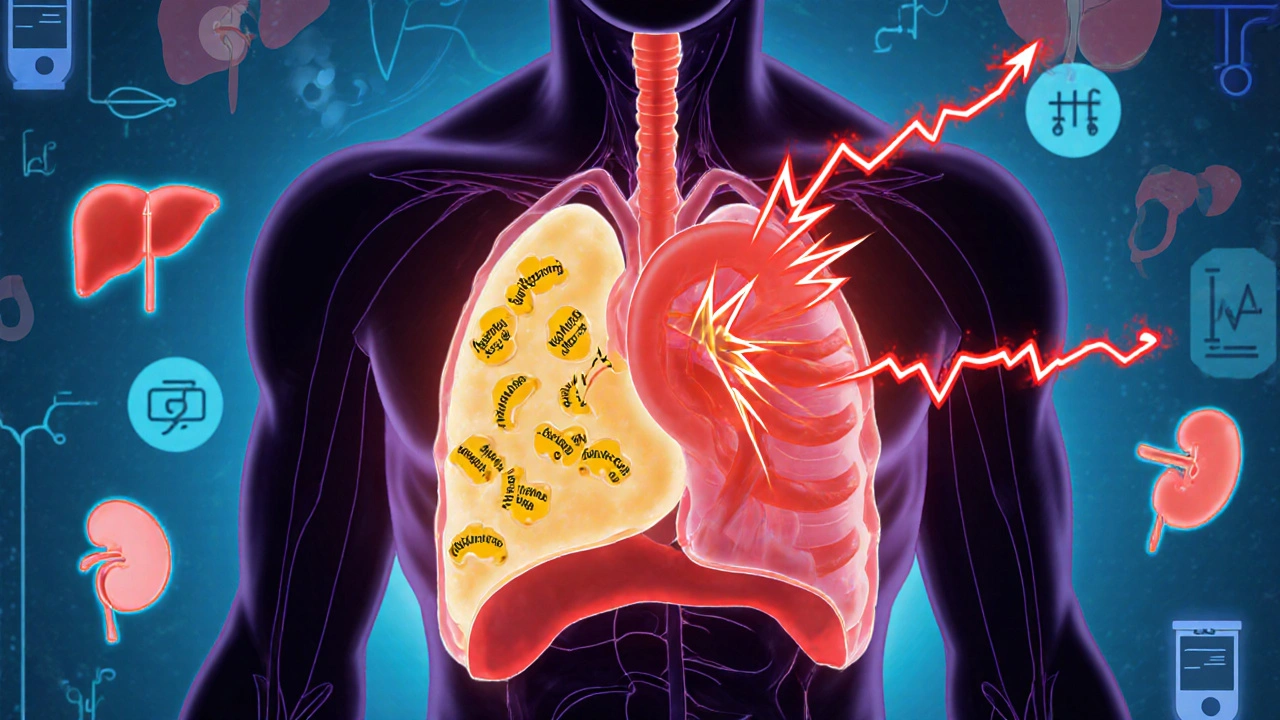
Therapeutic drug monitoring for tricyclic antidepressants prevents deadly toxicity by tracking blood levels and ECG changes. Learn why even prescribed doses can be dangerous and how monitoring saves lives.
TCA Toxicity: Signs, Risks, and What to Do If You Suspect an Overdose
When TCA toxicity, the dangerous buildup of tricyclic antidepressants in the body that can shut down heart and brain function. Also known as tricyclic antidepressant overdose, it's one of the most dangerous drug reactions you can face—even at doses only slightly above prescribed levels. Unlike some other medications, TCAs don’t just make you drowsy. They can stop your heart from beating properly, cause seizures, or trigger a life-threatening condition called serotonin syndrome, a dangerous surge of serotonin that causes high fever, muscle rigidity, and confusion. This isn’t rare. It shows up in emergency rooms every week, often because someone took an extra pill thinking it would help faster, or mixed it with alcohol or other meds.
TCA toxicity doesn’t always come from intentional overdose. Sometimes it’s accidental—like when someone with liver disease can’t clear the drug properly, or when they’re taking another medication that slows down how the body breaks it down. tricyclic antidepressants, a class of older antidepressants including amitriptyline, nortriptyline, and imipramine are still used because they work, but their narrow safety window makes them risky. The same dose that helps one person can poison another. And because these drugs affect sodium channels in the heart, they can cause arrhythmias even before other symptoms show up. That’s why timing matters: if someone collapses after taking a TCA, you don’t wait for vomiting or confusion. You call emergency services immediately.
There’s no single test for TCA toxicity. Doctors look at symptoms, dose taken, and heart rhythm changes. Treatment isn’t about removing the drug—it’s about supporting the body until the drug clears. Sodium bicarbonate is often used to stabilize heart rhythms. Benzodiazepines help control seizures. In severe cases, patients need ICU care, sometimes even mechanical ventilation. The good news? If caught early, most people recover fully. The bad news? Many wait too long. If you’re on a TCA, know the signs: fast heartbeat, blurred vision, dry mouth, confusion, or trouble urinating. If you’re helping someone who took too much, don’t wait for them to pass out. Call 911 now. This isn’t something you can handle at home.
Below, you’ll find real-world guides on how drug interactions, liver function, and overdose recognition play into TCA safety. You’ll learn what to watch for, how other meds can make things worse, and how to protect yourself or someone you care about. No fluff. Just what you need to know before it’s too late.