
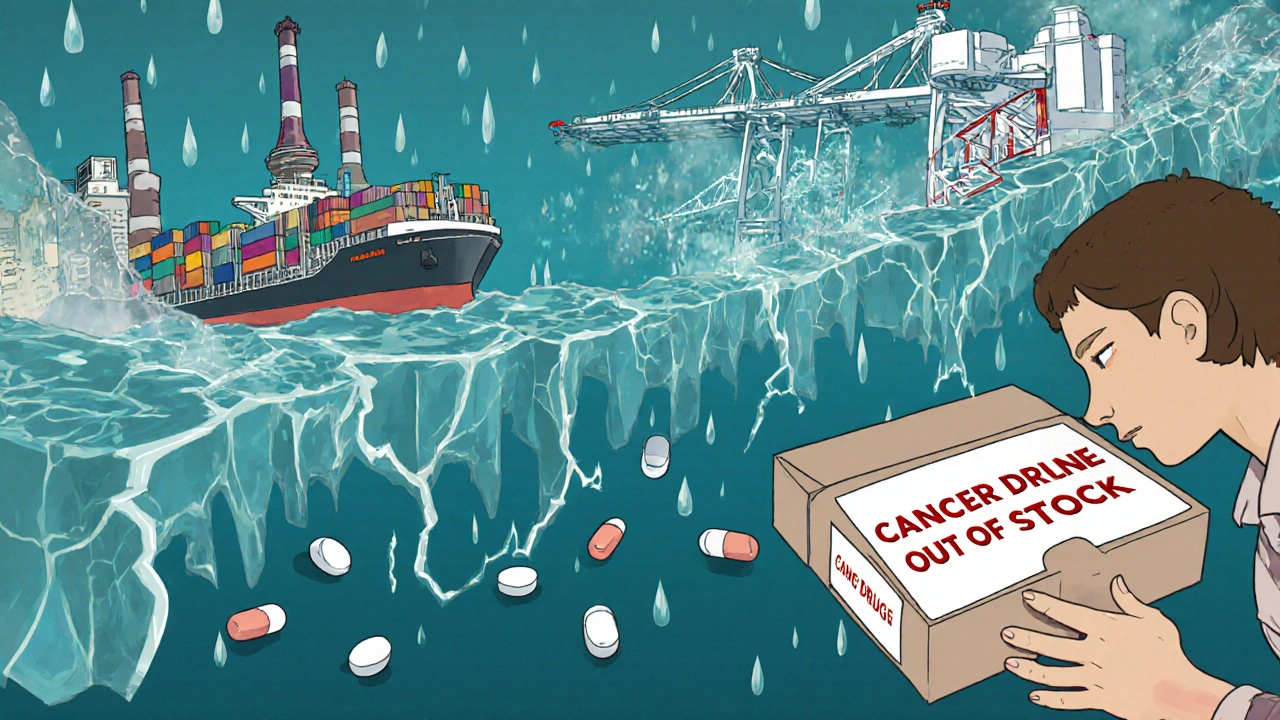
Dependence on foreign manufacturing for drugs is causing widespread shortages in 2025. With 80% of active ingredients coming from China and India, disruptions in one country can halt global supply. Here’s how multi-shoring and local production are helping.
Supply Chain Dependence in Pharmaceuticals: How Drug Availability Relies on Global Networks
When you pick up a pill at the pharmacy, you might think it came from a local factory. But the truth is, supply chain dependence, the reliance on distant manufacturers for essential medicines. Also known as global pharmaceutical sourcing, it means most of your generic drugs are made in just a few countries—India, China, and a handful of others—where production costs are low and regulations are looser. This isn’t just a business detail. It’s a health risk. When a factory in India shuts down for inspection, or a port in China closes due to lockdowns, your blood pressure med or antibiotic can disappear overnight. And there’s no backup plan waiting in the warehouse.
That’s why pharmaceutical supply chain, the network of raw material suppliers, manufacturers, distributors, and regulators that get drugs from lab to patient is so fragile. It’s built on efficiency, not resilience. Companies don’t keep extra stock because it’s expensive. They don’t diversify suppliers because it’s complicated. So when a single event—like a fire, a trade war, or a pandemic—hits one node, the whole system wobbles. We’ve seen it happen with insulin, antibiotics, and even basic painkillers. In 2021, over 200 drugs in the U.S. faced shortages. Many of them were generics made in one plant, one country, with no alternatives.
generic drug shortages, sudden gaps in availability of low-cost medications due to production or logistics failures aren’t random. They’re predictable. And they hit people hardest who can’t afford to switch brands or pay more. The same companies that sell you cheap pills online also depend on this broken system. Sites like GoodRx show you prices, but they can’t fix a factory that’s offline. Meanwhile, drug manufacturing, the process of producing active pharmaceutical ingredients and finished dosage forms is still dominated by a few players who control the raw materials, the equipment, and the approvals. Even if you buy your meds from a U.S. pharmacy, the active ingredient likely traveled halfway around the world before it reached your bottle.
This isn’t about blaming one country or one company. It’s about understanding how tightly connected your health is to global trade. When Europe uses tendering systems to force down prices for generics, they end up relying even more on the cheapest supplier—often skipping quality checks. When U.S. pharmacies push for the lowest cost, they ignore the hidden risks: delayed shipments, inconsistent quality, and sudden stockouts. And when patients don’t know their meds might be from a different factory next month, they don’t ask questions. But they should.
What you’ll find in these articles isn’t just theory. It’s real stories—like how a single factory shutdown in China caused a global shortage of metformin, or how Europe’s strict procurement rules actually help keep supplies stable. You’ll see how buying cheap online can backfire if the supply chain breaks. And you’ll learn how to spot when your medication might be at risk—not just from price, but from where it came from and who made it. This isn’t about fear. It’s about awareness. And the more you know, the better you can protect yourself when the next disruption hits.