
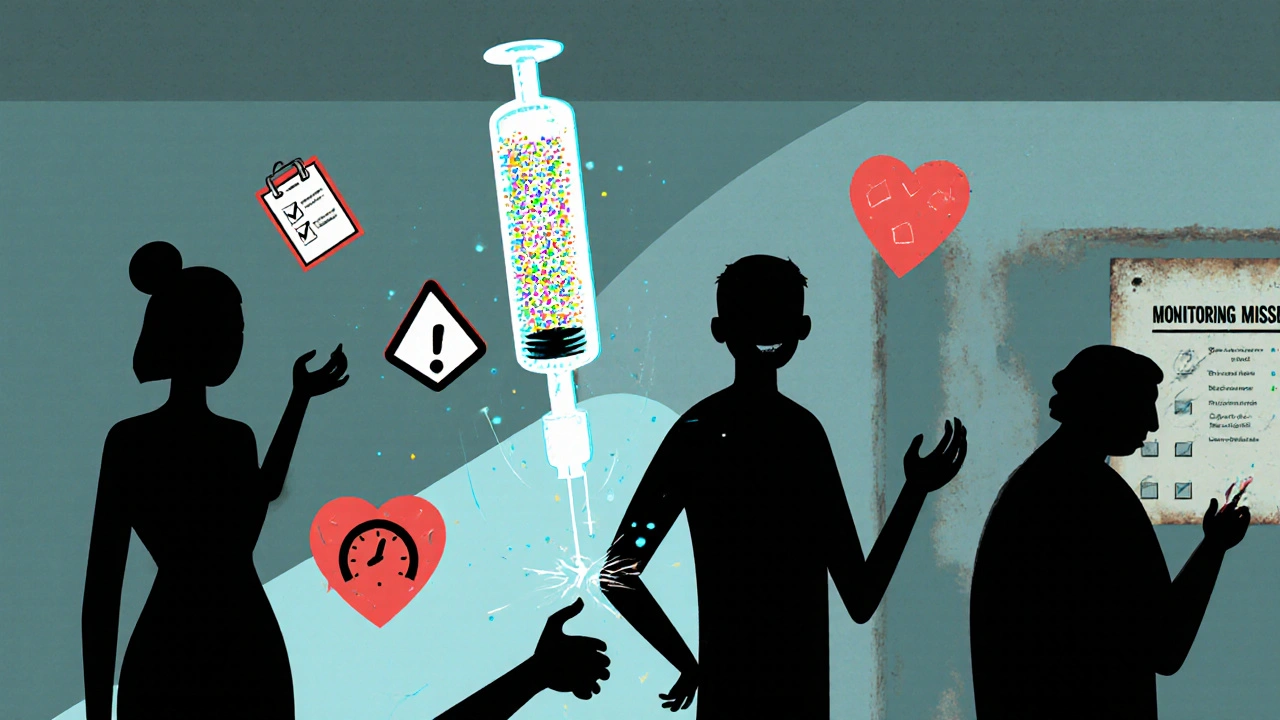
Long-acting injectable antipsychotics improve adherence but require rigorous, ongoing side effect monitoring to prevent serious health risks like diabetes, movement disorders, and even death. Without structured checks, these benefits are undermined.
Side Effect Monitoring: How to Track and Manage Medication Risks
When you take a new medication, you’re not just trusting the label—you’re trusting a system built to catch what labs and trials can’t see. Side effect monitoring, the ongoing process of tracking unexpected or harmful reactions to drugs after they’re used by real people. Also known as pharmacovigilance, it’s the quiet but vital safety net behind every prescription and over-the-counter pill you take. Clinical trials test drugs on thousands, but real life is messier. Millions use a drug at once, with different diets, other meds, genetic differences, and hidden health issues. That’s where side effect monitoring kicks in—catching rare liver damage, sudden heart rhythms, or mental side effects that only show up after years of use or in people with specific conditions.
It’s not just about spotting a rash or dizziness. Adverse reactions, harmful and unintended responses to medications can be subtle: fatigue that won’t quit, brain fog after starting a new blood pressure pill, or swelling in your ankles from a cholesterol drug. These aren’t just inconveniences—they’re signals. Tools like pharmacovigilance, the science and activities related to detecting, assessing, understanding, and preventing adverse effects of medicines turn patient reports, lab data, and electronic health records into early warnings. For example, a spike in reports of pancreatitis after a new diabetes drug hit the market led to updated warnings within months. That’s side effect monitoring in action: real people, real data, real safety.
Some drugs need extra care. Blood thinners like warfarin, epilepsy meds like carbamazepine, or even common painkillers like acetaminophen can quietly damage organs if not watched. That’s why doctors ask about every supplement you take, every OTC pill, every herbal tea—because medication risks, the potential for harm when drugs interact with each other or your body’s unique biology aren’t always obvious. A Ginkgo biloba capsule might seem harmless, but with a blood thinner, it can trigger dangerous bleeding. A beta-blocker might hide low blood sugar signs in diabetics. Side effect monitoring isn’t just for hospitals—it’s for your kitchen table, your medicine cabinet, your daily checklist.
You don’t need to be a doctor to be part of this system. Keeping a simple log of when you started a new drug, what symptoms showed up, and how they changed helps your provider connect the dots. Did your sleep get worse after switching generics? Did your bloating flare up after starting a new acid reducer? These aren’t random glitches—they’re data points that save lives. The posts below show exactly how this works in real cases: from spotting overdose signs in family members to understanding why your heart failure meds need constant tuning, how counterfeit pills bypass safety checks, and why even common painkillers can hide serious risks. You’ll see how side effect monitoring isn’t a behind-the-scenes process—it’s something you can and should be actively involved in.