
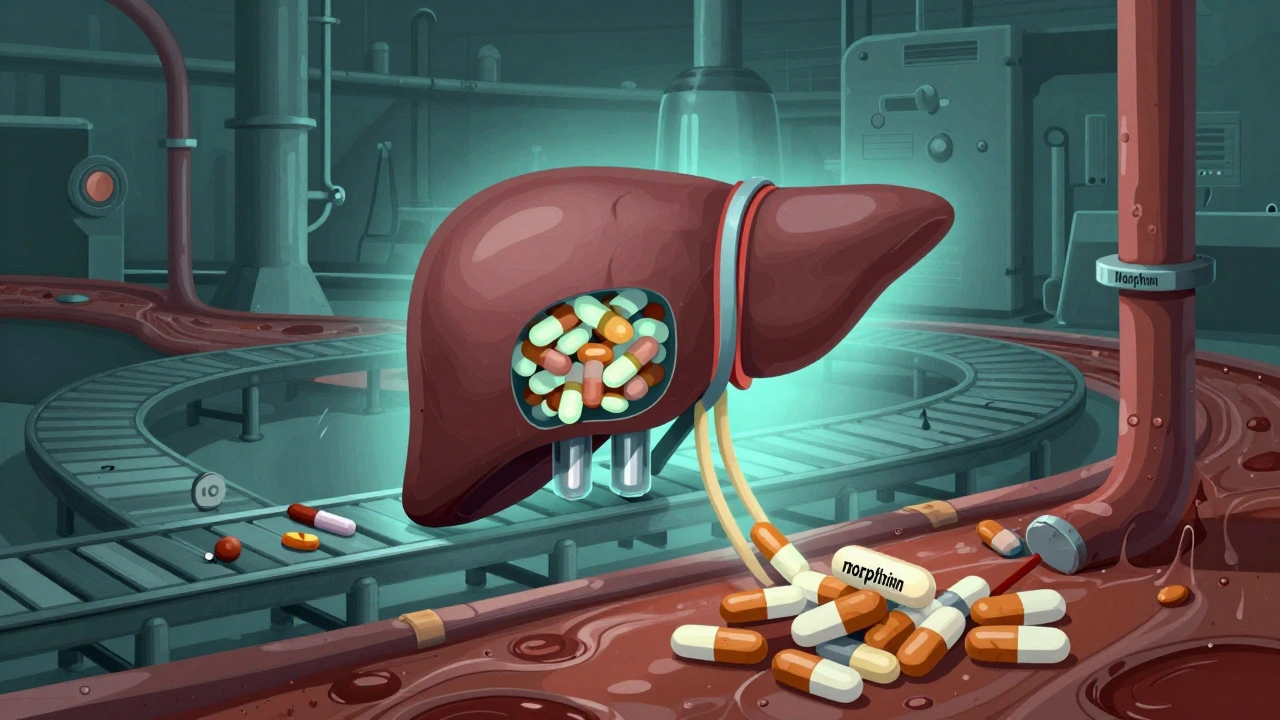
Liver disease reduces drug clearance by 30-50%, leading to dangerous drug buildup. Learn how enzyme changes, blood flow, and liver scoring affect medication safety-and what dosing adjustments actually work.
Reduced Clearance: What It Means for Drug Safety and Effectiveness
When your body can't clear a drug efficiently, that's called reduced clearance, the decreased ability of the body to remove a medication from the bloodstream. Also known as impaired drug elimination, it's not a disease—it's a warning sign that something in your system is slowing down how drugs are processed. This can turn a safe dose into a dangerous one, even if you're taking exactly what your doctor prescribed. Think of it like a clogged drain: the water (or drug) keeps coming in, but it can't flow out. That’s when levels build up, and side effects or toxicity start showing up.
Drug metabolism, how your body chemically breaks down medications, is the main player here. Most drugs are processed by the liver, especially through enzymes like CYP3A4 and CYP2D6. If those enzymes are slowed down—by age, genetics, disease, or another drug—clearance drops fast. For example, someone with liver cirrhosis might process a tricyclic antidepressant like amitriptyline at half the normal rate, raising the risk of heart rhythm problems. That’s why therapeutic drug monitoring, measuring drug levels in the blood to guide dosing is critical for drugs with narrow safety margins. It’s not just for hospital patients; it’s a tool that can prevent ER visits. And it’s not just the liver. Kidney function matters too. If your kidneys aren’t filtering well, drugs like certain antibiotics or painkillers can pile up. Even something as simple as switching from a brand-name drug to a generic can cause issues if the new version has different fillers that affect absorption and, indirectly, clearance.
Reduced clearance doesn’t happen in a vacuum. It’s often tied to drug interactions, when one medication changes how another is processed. Take acid-reducing pills like omeprazole—they lower stomach acid, which can make it harder for other drugs to be absorbed. Or mixing benzodiazepines with opioids: both are cleared by the liver, and together they overload the system. Even herbal supplements like Ginkgo biloba can interfere. If you’re on multiple meds, your body’s clearance system gets stretched thin. That’s why telling your doctor about every pill, powder, or tea you take isn’t just good advice—it’s lifesaving.
Age plays a huge role too. As we get older, liver and kidney function naturally decline. A 70-year-old on the same dose of carbamazepine as a 30-year-old might end up with toxic levels simply because their body can’t clear it fast enough. That’s why older adults often need lower doses—not because they’re more sensitive, but because their clearance is slower. The same goes for people with chronic conditions like heart failure or diabetes, where organ function is already compromised.
What you’ll find in the posts below isn’t theory—it’s real-world examples of how reduced clearance shows up in practice. From statins causing memory issues because they build up in the brain, to insulin and beta-blockers hiding low blood sugar because clearance is altered, these stories show how hidden this problem can be. You’ll see how opioid rotation helps avoid toxicity when clearance drops, how long-acting injectables demand extra monitoring because they linger longer, and why counterfeit generics are so dangerous—they might not contain the right amount of active ingredient at all, making clearance unpredictable. This isn’t about memorizing numbers. It’s about understanding the invisible system that keeps your meds working safely. And if you’re taking more than one drug, you need to know how your body handles them.