
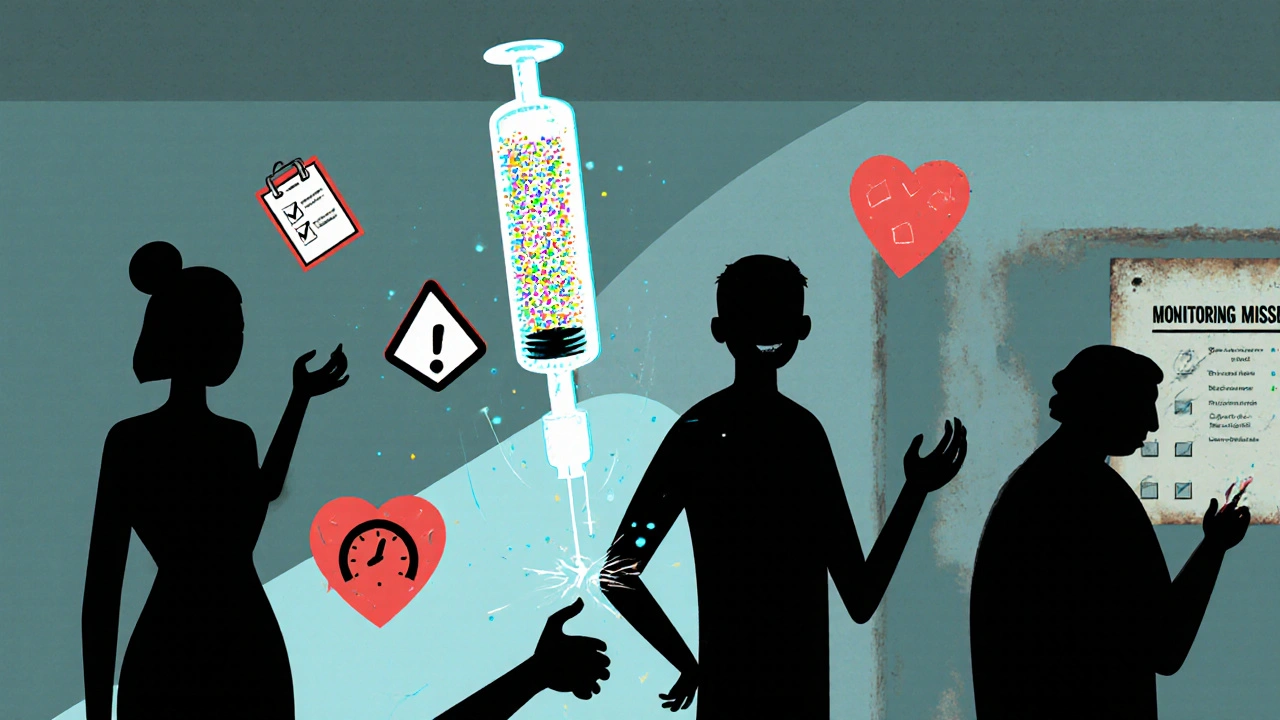
Long-acting injectable antipsychotics improve adherence but require rigorous, ongoing side effect monitoring to prevent serious health risks like diabetes, movement disorders, and even death. Without structured checks, these benefits are undermined.
Psychiatric Medication: What You Need to Know About Types, Risks, and Real-World Use
When people talk about psychiatric medication, drugs prescribed to treat mental health conditions like depression, anxiety, bipolar disorder, and schizophrenia. Also known as mental health drugs, these medications work by changing brain chemistry—but they’re not one-size-fits-all, and many come with risks you won’t hear about in ads. Millions rely on them daily, but without clear info, people end up mixing them with alcohol, opioids, or supplements like Ginkgo biloba, not realizing they’re putting their life at risk.
antidepressants, a common class of psychiatric medication used to treat depression and some anxiety disorders don’t work the same for everyone. Some people feel better in weeks; others need to try three or four before finding one that fits. And then there’s benzodiazepines, fast-acting drugs like Xanax and Valium used for acute anxiety or panic attacks. They help fast, but they’re addictive. Mixing them with opioids or sleep meds? That’s how overdoses happen. Even antipsychotics, medications used for schizophrenia and severe bipolar disorder, can cause weight gain, tremors, or metabolic problems if not monitored. And don’t forget mood stabilizers, drugs like lithium and valproate that help control extreme mood swings—they need regular blood tests just to stay safe.
What’s missing from most doctor’s offices? Real talk about how these drugs interact with everyday stuff: herbal supplements, over-the-counter painkillers, even grapefruit juice. One wrong combo can turn a safe treatment into a hospital trip. That’s why so many people end up confused, scared, or worse—stopped taking their meds because they didn’t know what they were really taking. The posts below don’t sugarcoat anything. You’ll find clear breakdowns of what these drugs do, who they help, and what to watch out for—no jargon, no fluff, just what you need to know to stay safe and in control.