
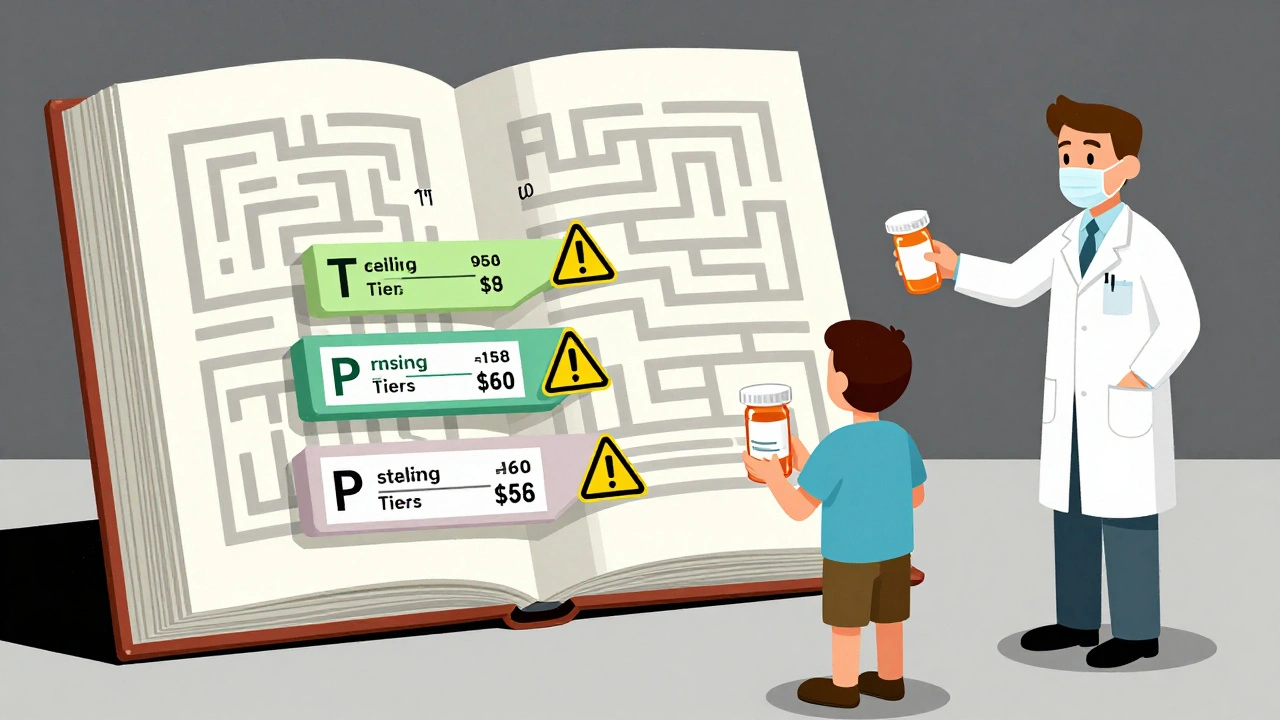
Insurance formularies control which drugs are covered and how much you pay. Learn how tiers, substitution rules, and exceptions work-and how to protect yourself from unexpected cost hikes.
Prescription Coverage: What You Need to Know About Drug Costs and Insurance
When you hear prescription coverage, the part of your health insurance that pays for medications prescribed by a doctor. Also known as pharmacy benefits, it’s what determines whether you pay $5, $50, or $500 for the same pill. It’s not just about having insurance—it’s about what your plan actually covers, how it’s structured, and which drugs get priority.
Generic drugs, lower-cost versions of brand-name medications approved by the FDA. Also known as off-patent drugs, they’re often the first choice for insurers because they cut costs without reducing effectiveness. But not all generics are treated the same. Some plans require you to try them before covering the brand name. Others limit which pharmacies you can use. And if you’re buying online, you might find prices lower than your copay—especially with tools like GoodRx. That’s why knowing your plan’s formulary matters. It’s the list of drugs your insurer agrees to pay for, and it changes often.
Pharmacy benefits managers, companies that manage drug benefits for insurers and employers. Also known as PBMs, they’re the hidden middlemen who negotiate prices with drugmakers and set what you pay at the counter. They decide which drugs go on preferred lists, which require prior authorization, and which are outright blocked. A drug might be covered by your plan, but if the PBM says it’s not preferred, you could still pay double. And if you’re on a specialty medication—like those for MS, rheumatoid arthritis, or hepatitis C—you’re dealing with an entirely different layer of rules, often involving step therapy and long approval waits.
Prescription coverage isn’t one-size-fits-all. Your plan might cover a drug but only if you’ve tried two others first. Or it might cover the brand but not the generic, which sounds backwards but happens more than you think. Some plans have high deductibles before coverage kicks in. Others have tiered copays: Tier 1 for generics, Tier 3 for brand names, Tier 4 for specialty drugs. You might not even know you’re in a tier until you get to the pharmacy.
And it’s not just about price. Some medications need special handling—like refrigerated biologics or injectables. That’s where specialty pharmacies, pharmacies that handle complex, high-cost drugs for chronic conditions. Also known as specialty drug providers, they’re often the only ones approved to dispense certain meds. These aren’t your local CVS. They handle delivery, patient education, and ongoing monitoring. But they also come with their own rules: you might have to use their mail-order service, or sign consent forms just to get your refill.
What you pay isn’t just about your insurance—it’s about timing, location, and how much your provider knows about your plan. A drug covered in January might be dropped in March. A pharmacy that gave you a $10 copay last month might charge $75 this month. That’s why checking your coverage before filling a script saves time, stress, and money. And if you’re on multiple meds, especially for chronic conditions, you’re likely dealing with overlapping coverage rules, drug interactions, and prior authorization hurdles.
Below, you’ll find real-world breakdowns of how these systems work—from how biosimilars fit into coverage plans, to why your statin might be covered but your supplement isn’t, to how counterfeit generics slip through cracks in the system. You’ll see how drug shortages, tendering systems in Europe, and PBM policies affect what’s available—and what you end up paying. This isn’t theory. It’s what’s happening right now, in your pharmacy, in your wallet, in your health.