
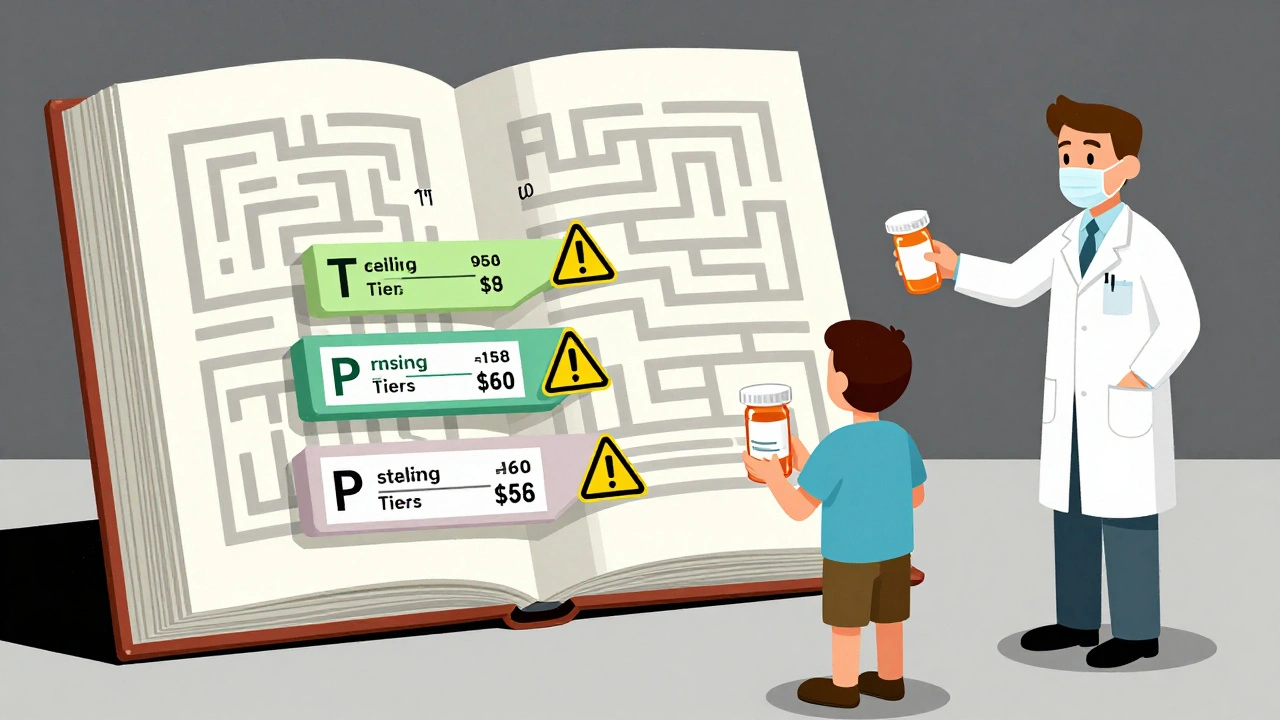
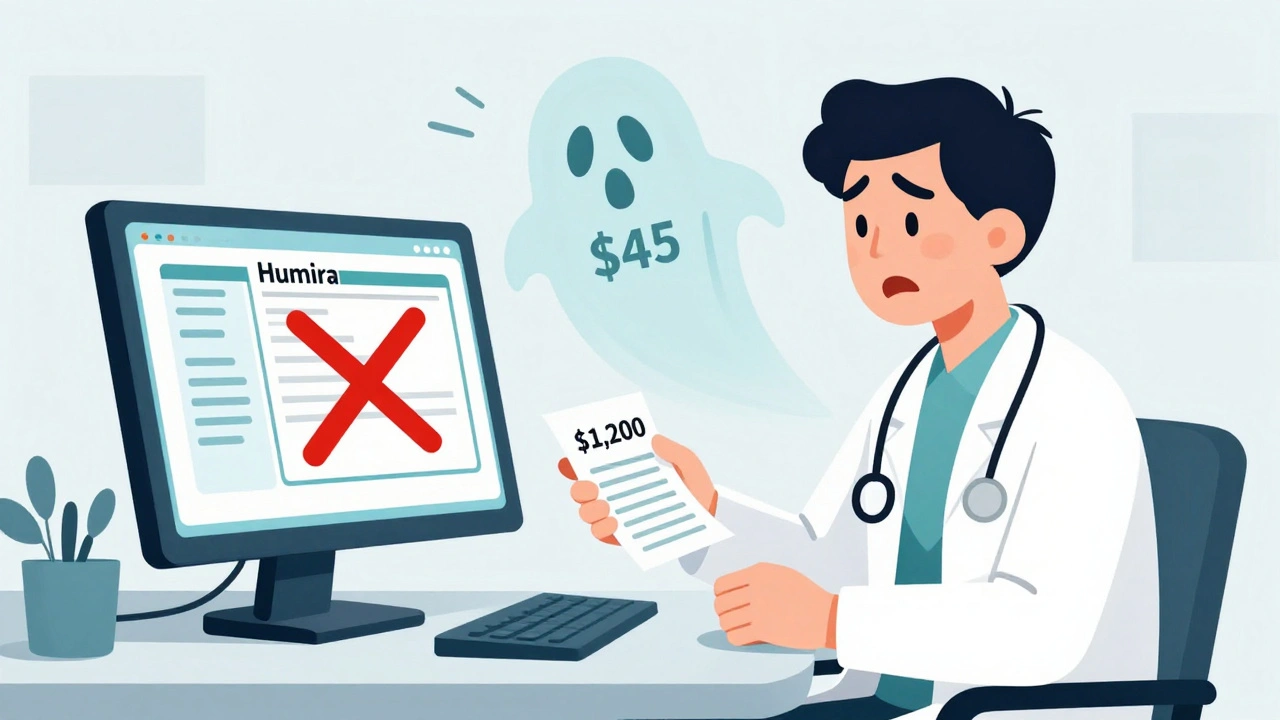
When your doctor prescribes a medication, you might assume it’s covered by your insurance. But what if your plan doesn’t list it? Or worse-what if it did last month, but now you’re being charged $1,200 instead of $45? This isn’t a glitch. It’s the reality of insurance formularies-the hidden rulebooks that decide which drugs you can get, at what price, and whether your pharmacist can swap it for something cheaper without asking you.
What Is an Insurance Formulary?
An insurance formulary is a list of prescription drugs your health plan agrees to cover. It’s not just a catalog-it’s a tool used to control costs while trying to keep patients on effective treatments. Every Medicare Part D plan and most private insurance plans in the U.S. use one. These lists are updated regularly, sometimes without warning, and they determine everything: how much you pay at the pharmacy, whether you need pre-approval, and if you can even get the drug at all.Formularies aren’t random. They’re built by Pharmacy Benefit Managers (PBMs) like CVS Caremark and Express Scripts, who negotiate with drugmakers. The more a drug gets prescribed, the more leverage insurers have to demand rebates. Those rebates often determine which drugs land on the cheapest tiers. A drug might be clinically identical to another-but if it gives the PBM a bigger discount, it gets promoted. That’s not always about what’s best for you.
How Formulary Tiers Work
Most formularies divide drugs into four tiers, each with different out-of-pocket costs:- Tier 1: Generic drugs. These cost the least-usually $10 to $15 per prescription.
- Tier 2: Preferred brand-name drugs. Slightly more expensive, around $40 to $50.
- Tier 3: Non-preferred brand-name drugs. These cost $70 to $100 or more.
- Tier 4: Specialty drugs. These are high-cost medications for complex conditions like cancer, MS, or rheumatoid arthritis. You might pay 33% of the price-no cap. That means $1,500 a month for some drugs.
Here’s the catch: the same drug can be on Tier 2 with one insurer and Tier 3 with another. A 2022 analysis found that cost differences for identical drugs could be $30 to $60 per prescription just based on your plan. That’s why choosing a plan without checking its formulary is like buying a car without knowing the fuel efficiency.
What Are the Restrictions?
Even if a drug is on your formulary, you might still face barriers:- Prior Authorization: Your doctor has to prove to your insurer why you need this specific drug-not a cheaper alternative. This can take days or weeks. The American Medical Association found 82% of doctors have seen delays cause serious harm to patients.
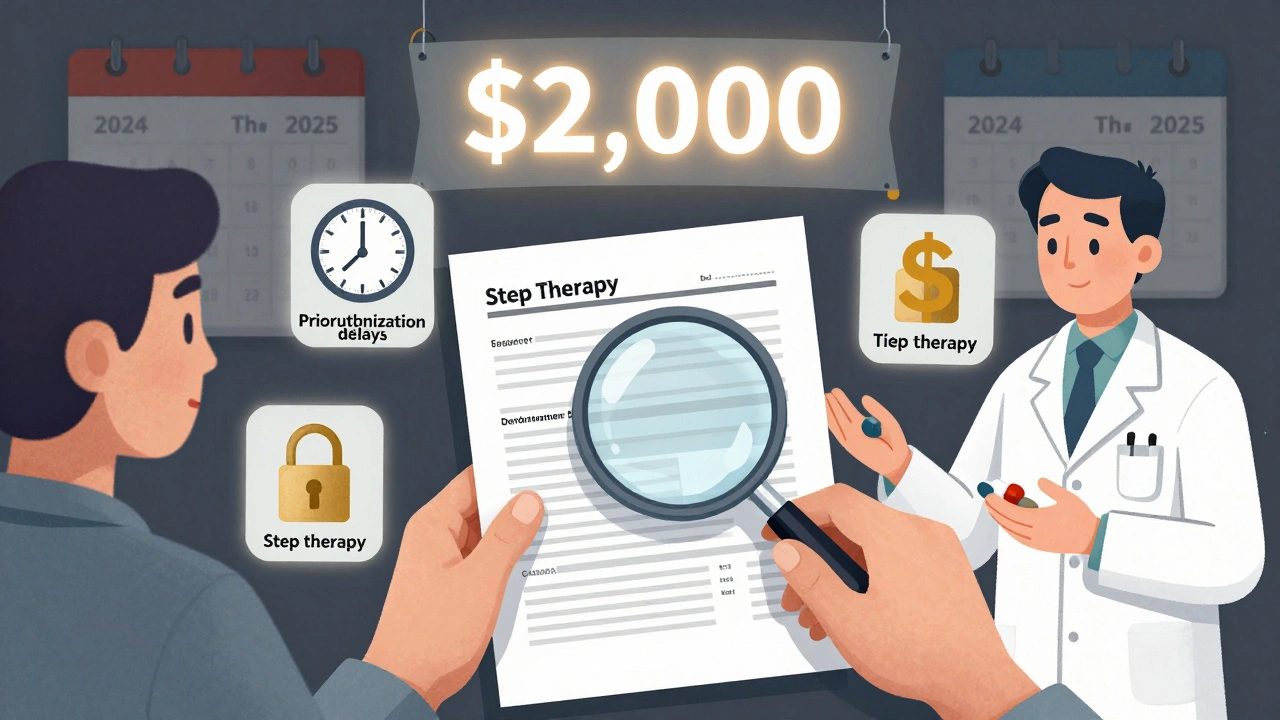
- Step Therapy: You must try and fail on cheaper drugs first. For someone with chronic pain or autoimmune disease, this isn’t just frustrating-it’s dangerous. One patient on Reddit shared that being forced to try five cheaper drugs before getting Humira led to a hospitalization.
- Quantity Limits: You can only get a 30-day supply, even if your doctor prescribes 90 days. You’ll have to call your insurer for an override.
These rules exist to cut costs-but they often shift the burden onto patients. In a 2023 GoodRx survey, 42% of people skipped doses because of cost. 29% switched to less effective drugs. 18% stopped treatment entirely.
Open vs. Closed vs. Partially Closed Formularies
Not all formularies are the same. There are three main types:- Closed formularies: Only cover drugs on the approved list. About 65% of Medicare Part D plans use this. If your drug isn’t on it, you pay full price unless you win an exception. It saves money for the insurer-but leaves patients stranded.
- Open formularies: Cover almost all drugs. About 22% of Part D plans. You pay higher premiums-$18 to $22 more per month-but you have more freedom. Good if you’re on multiple specialty meds.
- Partially closed: A middle ground. Some drugs are excluded based on cost or clinical guidelines. Most employer plans fall here.
Medicare Part D plans must cover all recommended vaccines at $0 cost. But for everything else? It’s a minefield.
Therapeutic Substitution: When Your Pharmacist Swaps Your Drug
In 31 states, pharmacists can legally substitute a drug with another in the same therapeutic class-without telling you or getting your doctor’s approval. This is called therapeutic substitution. For example, if you’re on Enbrel, your pharmacist might give you Humira instead. They’re both biologics for rheumatoid arthritis. But they’re not the same.A 2023 study in the American Journal of Managed Care found that 18% of prescriptions undergo substitution. For most people, it’s harmless. But for those with complex conditions-like cancer, epilepsy, or autoimmune disorders-it can trigger side effects, reduce effectiveness, or even cause flare-ups. Patients often don’t realize the switch happened until they feel worse.
Some states require pharmacists to notify the prescriber. Others don’t. You have to ask. Always ask. If your medication suddenly feels different, check the label. Look for the generic name. Call your doctor. Don’t assume it’s the same.
What Happens When Your Drug Gets Removed?
Insurers can remove a drug from their formulary at any time-often mid-year. A patient on Reddit described how their Humira was moved from Tier 2 to Tier 4 overnight. Their monthly cost jumped from $45 to $1,200. No warning. No grace period.When this happens, you have two options:
- Request a formulary exception. Your doctor must submit paperwork proving why you need the specific drug. For Medicare Part D, 73.2% of these requests are approved-but the process takes 7.2 business days on average. If you’re waiting for a cancer drug or a treatment for a life-threatening condition, that delay can be deadly.
- Appeal the decision. If your exception is denied, you can appeal. But only 38.5% of expedited appeals get approved. And 61% of patients who try to get an exception need to submit multiple times. 28% give up.
Some insurers now offer tools to predict your monthly drug costs. Humana’s Medicare Plan Finder, for example, has a 92% accuracy rate. Use it.
How to Protect Yourself
You can’t control your insurer’s decisions-but you can control how you respond.- Check your formulary every year. During open enrollment (October 15 to December 7 for Medicare, November 1 to January 15 for ACA plans), log into your plan’s website. Search every medication you take. Don’t trust memory. Don’t assume it’s still covered.
- Ask your doctor for alternatives. If your drug is on Tier 3 or 4, ask: "Is there a Tier 1 or 2 version?" Sometimes, switching to a different drug in the same class can save hundreds.
- Use GoodRx or SingleCare. These apps show cash prices. Sometimes, paying out-of-pocket is cheaper than your copay-especially for Tier 4 drugs.
- Know your state’s substitution laws. In 31 states, pharmacists can swap drugs without consent. Ask your pharmacist: "Will you substitute this?" If you say no, they must honor it.
- Document everything. Save emails, letters, and call logs. If your drug is removed or your exception is denied, you’ll need proof to escalate.
A 2023 CMS audit found that 43% of formulary changes happen without direct notice to patients. You can’t wait for them to tell you. You have to check.
What’s Changing in 2025?
The Inflation Reduction Act is reshaping formularies. Starting January 1, 2025, Medicare Part D will cap out-of-pocket drug spending at $2,000 a year. That’s a game-changer. Insurers are already restructuring tiers to comply. Some are lowering copays on specialty drugs. Others are shifting more costs to premiums.Also in 2025, all Medicare Part D plans must provide a simplified, 4-page formulary summary-down from 287 pages. That’s huge. For years, formularies were designed to confuse, not inform. Now, they’re being forced to be readable.
And by 2026, every Part D plan must show real-time drug costs at the point of prescribing. That means your doctor will see your copay before they even write the script. No more surprises at the pharmacy.
Final Thought: You’re Not Powerless
Insurance formularies are complex. They’re built by corporations, shaped by rebates, and enforced by bureaucracy. But they’re not unbreakable. Millions of people navigate them every year. You can too.The key isn’t fighting the system. It’s understanding it. Know your tiers. Check your formulary. Ask questions. Speak up when something changes. If you’re on a chronic medication, keep a printed copy of your formulary status. Bring it to every appointment. Tell your pharmacist: "Don’t substitute this without my doctor’s approval."
Formularies are meant to save money. But they shouldn’t cost you your health.
What is an insurance formulary?
An insurance formulary is a list of prescription drugs that your health plan covers. It determines which medications you can get, how much you pay for them, and whether you need prior approval. Formularies are divided into tiers, with lower tiers costing less out-of-pocket. They’re used by Medicare Part D and most private insurers to control drug costs.
Can my pharmacist substitute my prescription without telling me?
In 31 U.S. states, pharmacists can legally substitute a drug with another in the same therapeutic class-like swapping one biologic for another-without asking your doctor or notifying you. This is called therapeutic substitution. While it’s often safe, it can cause problems for people with complex conditions. Always ask your pharmacist: "Will you substitute this?" and say no if you’re unsure.
Why did my drug suddenly become more expensive?
Your drug may have been moved to a higher tier on your plan’s formulary, or it may have been removed entirely. Insurers change formularies often-sometimes without notice. A drug that was Tier 2 last year could be Tier 4 this year, increasing your cost from $45 to over $1,000 per month. Always check your formulary during open enrollment and use your insurer’s online tool to verify coverage.
How do I get a drug that’s not on my formulary?
You can request a formulary exception. Your doctor must submit documentation explaining why you need that specific drug-usually because alternatives didn’t work or caused side effects. Medicare Part D approves 73.2% of these requests, but the process takes about 7 days. For urgent cases, you can request an expedited review, though approval rates drop to 38.5%. If denied, you can appeal.
What’s the difference between Tier 1, Tier 2, Tier 3, and Tier 4 drugs?
Tier 1 includes generic drugs with the lowest copays ($10-$15). Tier 2 includes preferred brand-name drugs ($40-$50). Tier 3 includes non-preferred brand-name drugs ($70-$100). Tier 4 includes specialty drugs-often for serious conditions like cancer or MS-with high coinsurance (usually 33%) and no annual cap. Moving from Tier 1 to Tier 4 can increase your cost by 300-500%.
Are there any new rules coming in 2025?
Yes. Starting January 1, 2025, Medicare Part D will cap out-of-pocket drug costs at $2,000 per year. Also, all Part D plans must provide a simplified, 4-page formulary summary (down from hundreds of pages) and real-time cost tools at the point of prescribing by January 1, 2026. These changes aim to make coverage clearer and more predictable for patients.


December 3, 2025 AT 00:05 AM
Let me tell you-formularies are the corporate equivalent of a magic trick where the rabbit is your health and the hat is your premium. I’ve had my insulin moved from Tier 1 to Tier 4 mid-year. No warning. No mercy. I paid $1,400 for a vial that used to cost $30. I started calling every pharmacy, using GoodRx, and even buying half my supply in Canada. You think insurance protects you? Nah. It protects their quarterly earnings. But here’s the kicker-you’re not powerless. You just have to be louder than their algorithm.
December 3, 2025 AT 08:22 AM
Ugh. Another sob story about drug costs. Everyone’s a victim until they realize PBMs exist because drugmakers charge $10,000 for a pill that costs $2 to make. You want affordable meds? Stop rewarding pharma with monopoly pricing. Blame the manufacturers, not the middlemen who’re just trying to keep premiums from hitting $1,000/month. Your ‘surprise’ $1,200 bill? That’s the price of innovation. Get over it.
December 3, 2025 AT 11:22 AM
Hey-I’ve been a pharmacist for 17 years and I see this every single day. If you’re on a biologic or anything Tier 4, here’s what you do: Print your formulary. Bring it to every doctor’s visit. Write ‘NO SUBSTITUTION’ on the prescription in big letters. And if your pharmacist tries to swap it? Say ‘I need to speak to the manager’-they’ll back down. Also, call your insurer’s member services and ask for the ‘Formulary Change Notification Policy.’ Most don’t even know it exists. You’re not being difficult-you’re being smart. I’ve helped people save thousands just by knowing the rules. You’ve got this.
December 4, 2025 AT 13:10 PM
As someone from India where insulin costs $3 a vial, I just want to say-this is insane. I moved to the US for grad school and almost cried the first time I saw a $500 insulin bill. The system is broken, but not hopeless. I started a small Reddit group called ‘Formulary Warriors’ where we share formulary PDFs, exception templates, and even doctor scripts that work. One guy got Humira approved after 6 denials by using a letter from his rheumatologist that cited a 2021 NEJM study on biosimilar equivalence. It’s tedious, but it works. And yes, I use emojis because I need to stay sane: 🧠💪💊 #KnowYourFormulary
December 5, 2025 AT 07:50 AM
Everyone complaining about formularies is ignoring the real issue: you’re all addicted to brand-name drugs that are 10x more expensive than generics with identical efficacy. Your ‘life-saving’ biologic? There’s a $20 generic alternative that works just as well for 80% of people. You’re not sick-you’re entitled. Stop blaming the system. Start taking responsibility. And if you can’t afford it? Don’t take it. Simple.
December 6, 2025 AT 16:35 PM
Wait-so you’re telling me that a $45 drug suddenly became $1,200... and no one called the FDA? Or the DOJ? Or even a journalist? This isn’t just a formulary issue-it’s a systemic fraud. And you know what? The fact that you’re all just ‘adapting’ instead of organizing? That’s the real tragedy. I’ve filed 14 FOIA requests on PBM rebate structures. The numbers are horrifying. We need a class-action lawsuit. Not a blog post. Not a GoodRx hack. A revolution. Who’s with me? 🚨
December 7, 2025 AT 07:00 AM
In the UK, we have the NHS-so drugs are either free or £9.50. But I’ve lived in the US for 12 years, and I’ve seen friends die because they couldn’t afford their meds. This isn’t capitalism-it’s cruelty disguised as economics. The fact that a 72-year-old has to choose between insulin and groceries? That’s not a policy failure. That’s a moral collapse. And yet, we sit here debating tiers like it’s a game of Monopoly. We’ve lost our way. I’m not angry. I’m heartbroken.
December 9, 2025 AT 01:16 AM
Formularies exist. They are standard. Costs vary. Patients should check plans before enrolling. Nothing unusual here.