
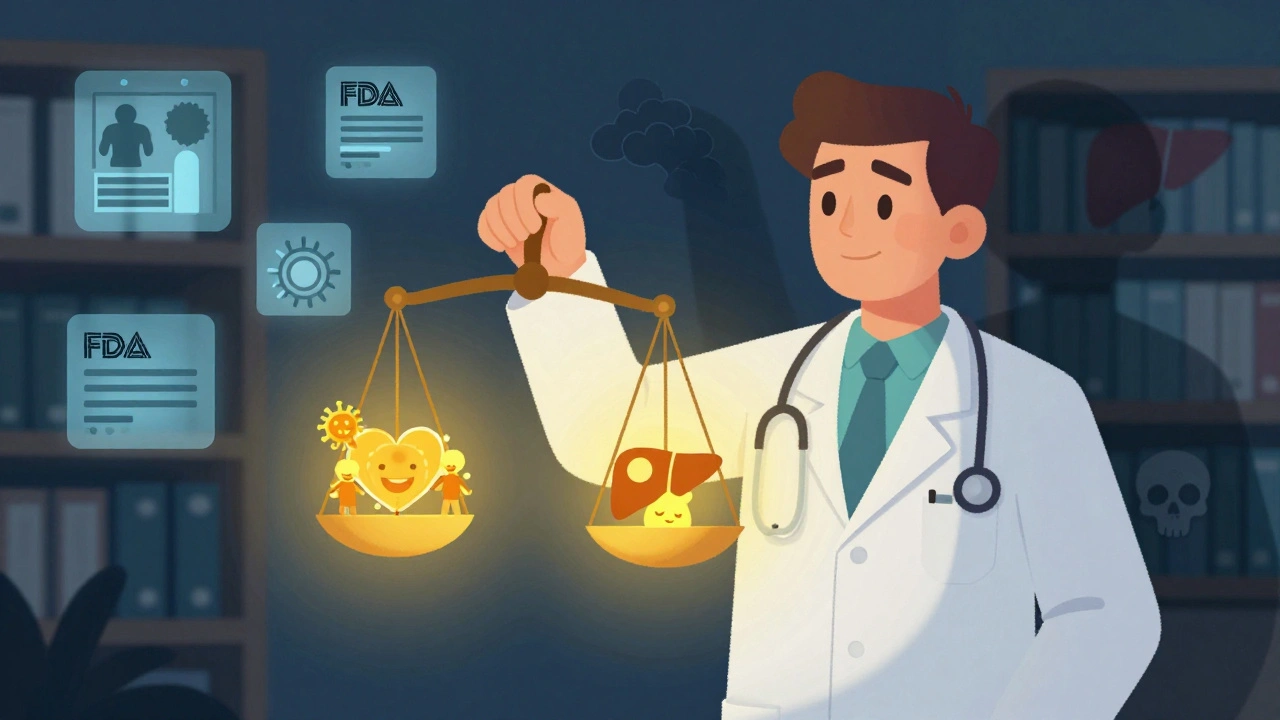
Healthcare providers weigh medication risks against benefits to ensure treatments do more good than harm. This process considers disease severity, side effects, patient preferences, and real-world data-especially when options are limited.
Prescribing Decisions: How Doctors Choose the Right Medication for You
When a doctor makes a prescribing decision, the process of selecting a medication based on a patient’s condition, history, and real-world factors like cost and safety. Also known as drug selection, it’s not just about matching a diagnosis to a pill—it’s about balancing risk, effectiveness, and your life. Too often, people assume the right drug is obvious. But in reality, prescribing decisions involve dozens of hidden variables: liver function, insurance formularies, potential drug interactions, even how a patient sleeps or eats. A statin might lower cholesterol, but if you have liver disease, that same dose could be dangerous. A benzodiazepine might calm anxiety, but mix it with opioids, and the risk of respiratory failure spikes. These aren’t edge cases—they’re everyday considerations.
Behind every prescription is a web of systems. Therapeutic drug monitoring, measuring blood levels of drugs like tricyclic antidepressants to avoid toxicity is one tool doctors use when the difference between healing and harm is a few nanograms per milliliter. Formulary tiers, how insurance plans group drugs by cost and coverage can force a switch from a brand to a generic—even if the patient did better on the original. And drug interactions, when one medication changes how another works in the body are silent killers. Ginkgo biloba and warfarin? A dangerous combo. PPIs and certain antibiotics? That’s how treatment fails before it even starts. These aren’t theoretical risks. They’re documented in real cases, from hospital ERs to home overdoses.
Doctors don’t make these choices in a vacuum. They’re influenced by guidelines, pharmacy benefit managers, drug shortages, and even how much a patient can afford. Opioid rotation isn’t just about pain control—it’s about avoiding side effects that make life harder. Biosimilars and generics save money, but they’re not interchangeable in every case. Specialty pharmacies handle complex drugs, but only if the system allows it. And when counterfeit generics flood online markets, the line between safe and deadly blurs.
What you see on your prescription label is just the tip. The real story is in the lab results, the insurance formulary, the patient’s sleep patterns, the liver enzymes, the timing of doses, the other supplements they’re taking. This collection of articles pulls back the curtain. You’ll find clear breakdowns of how drug metabolism changes with liver disease, why TDM saves lives with antidepressants, how insurance rules can block your best option, and what to do when your medication stops working—or starts hurting you. These aren’t abstract concepts. They’re the hidden mechanics behind every pill you take. Know them. Ask about them. Use them to get better care.