
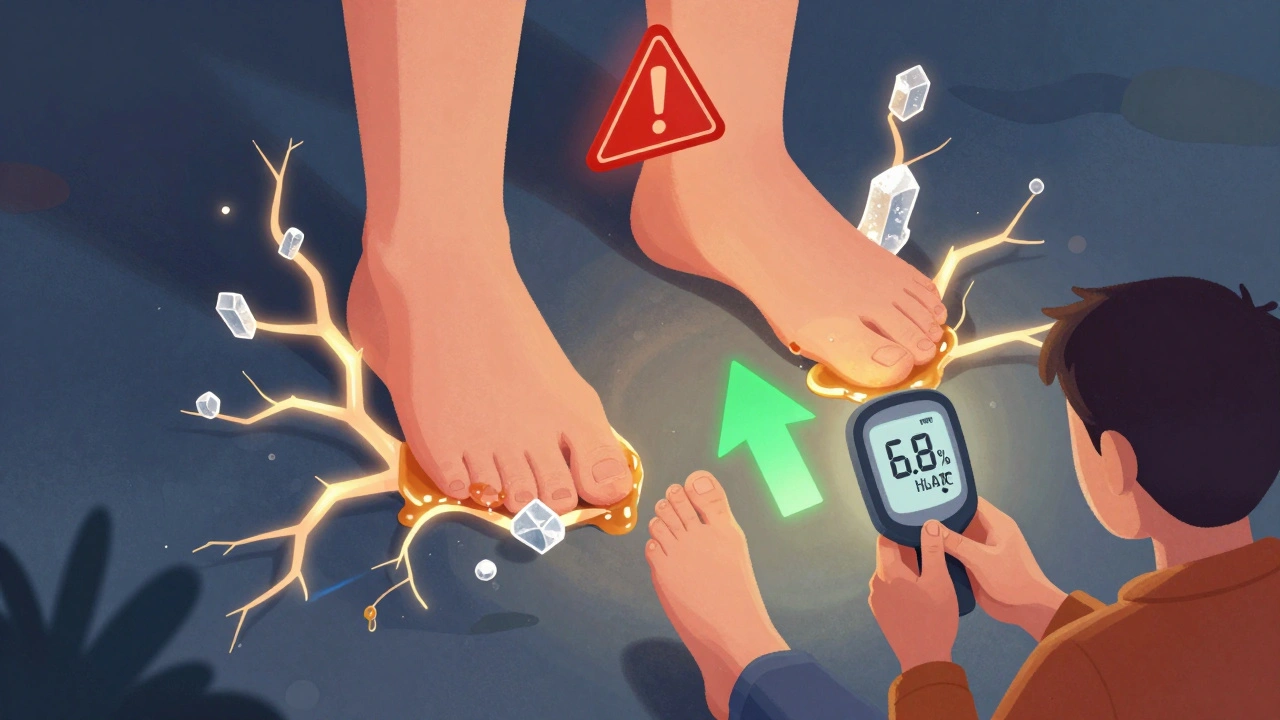
Diabetic neuropathy causes painful nerve damage in up to 70% of people with diabetes. Learn proven ways to manage pain, protect your nerves, and slow progression through blood sugar control, medications, and lifestyle changes.
Peripheral Neuropathy: Causes, Treatments, and Drug Interactions to Know
When your peripheral neuropathy, damage to the nerves outside the brain and spinal cord that causes tingling, burning, or weakness in limbs. Also known as nerve damage, it often shows up as numbness in the feet or hands, making simple tasks like buttoning a shirt or walking feel off. It’s not just aging—it’s usually tied to something deeper, like diabetes, chemotherapy, or even certain medications. About 20 million people in the U.S. have it, and many don’t realize their symptoms aren’t normal.
One of the biggest triggers is diabetic neuropathy, nerve damage caused by high blood sugar over time. If you’re on insulin or metformin, your doctor should check your nerves regularly. But it’s not just diabetes. Some antibiotics, heart meds, and even chemo drugs can wreck your peripheral nerves. That’s why knowing about drug interactions, when one medication changes how another works in your body matters. For example, mixing a painkiller with a statin or an antidepressant might seem harmless—but if you already have nerve damage, it could make things worse. You might not feel it right away, but over months, those small interactions add up.
What helps? It’s not just popping pills. Some people find relief with gabapentin or pregabalin, but those come with their own risks—dizziness, drowsiness, even dependence. Others turn to topical treatments like lidocaine patches or capsaicin cream. But here’s the thing: if you’re taking supplements like B vitamins or alpha-lipoic acid, you need to tell your provider. They might seem safe, but they can interfere with how your body processes other drugs. And if you’re on multiple meds for chronic conditions, you’re already in a high-risk zone for side effects that slip under the radar.
This collection of articles dives into exactly what you need to know: how drugs like statins, antidepressants, and even OTC pain relievers can affect your nerves, what to watch for when switching medications, and how to spot early signs of worsening nerve damage before it’s too late. You’ll find real talk on what works, what doesn’t, and why some treatments fail because no one checked for hidden interactions. No fluff. No guesses. Just what you need to protect your nerves and stay in control of your health.