
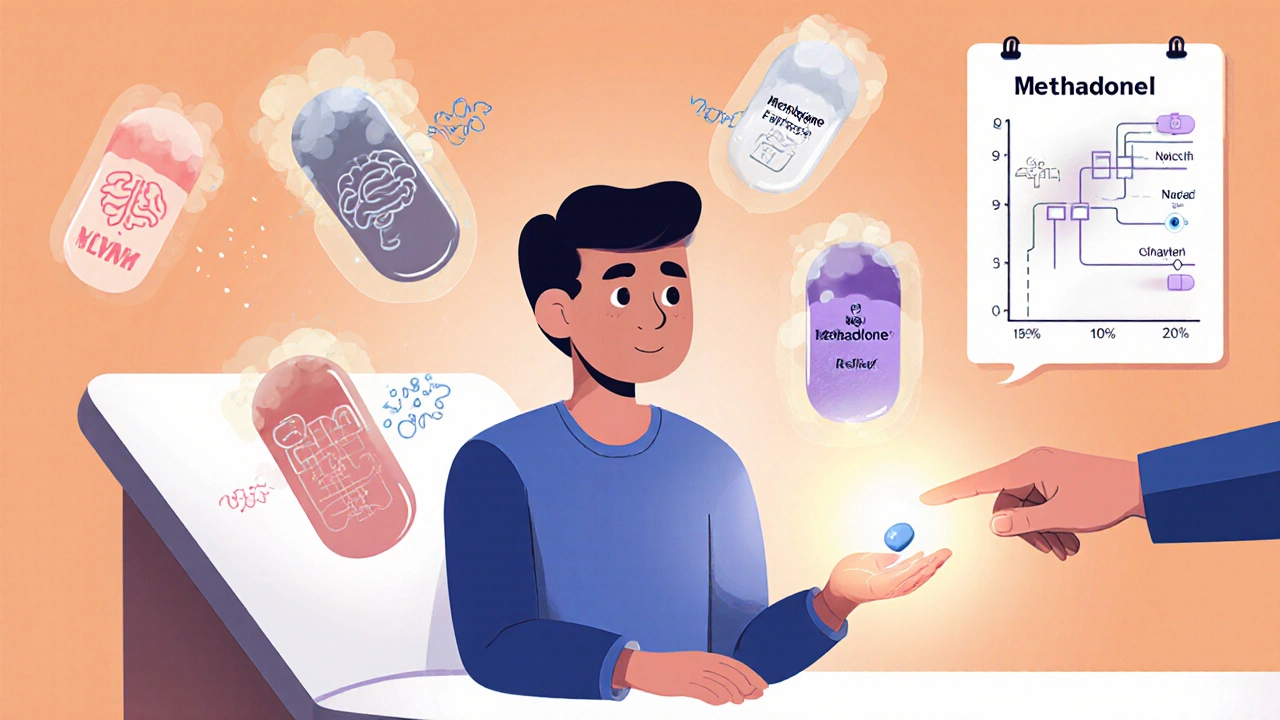
Opioid rotation means switching from one opioid to another to reduce side effects like nausea, drowsiness, or constipation while maintaining pain control. It's a proven strategy when high doses aren't working safely.
Opioid Rotation: When Switching Pain Medications Saves Lives
When opioid rotation, the planned switch from one opioid medication to another to improve pain control or reduce side effects. Also known as opioid switching, it's a critical tool in chronic pain management—not a failure, but a deliberate adjustment to keep patients safe and functional. Many people think if an opioid stops working, you just increase the dose. But that’s not always safe. Tolerance builds, side effects pile up, and the risk of overdose grows. Opioid rotation isn’t about giving up on a drug—it’s about finding the right one for your body’s current needs.
This approach directly connects to opioid tolerance, the body’s reduced response to a drug over time, requiring higher doses for the same effect. When tolerance hits, doctors don’t just crank up the pills. They look at alternatives like morphine, oxycodone, hydromorphone, or methadone, each with different ways the body processes them. Why? Because not all opioids bind the same way to your brain’s receptors. One might cause too much sedation; another might trigger nausea. Switching lets you keep pain under control while avoiding the worst side effects. It’s not guesswork—it’s based on clear conversion tables and clinical experience.
It also ties into medication safety, the practice of minimizing harm from drugs through careful dosing, monitoring, and avoiding dangerous combinations. A 2023 study in the Journal of Pain Research showed patients who underwent proper opioid rotation had 40% fewer emergency visits for side effects compared to those who just got higher doses. That’s not a small win. It means fewer falls, less confusion, and a lower chance of respiratory depression. And it’s why you’ll see posts here about liver disease affecting drug metabolism, drug interactions with benzodiazepines, and how to recognize overdose symptoms—because opioid rotation doesn’t happen in a vacuum. It’s part of a bigger picture where your liver, your other meds, and your overall health all matter.
You’ll find real-world examples in the posts below: how to teach family members to spot overdose signs, why long-acting injectables need careful monitoring, and how acid-reducing meds can interfere with absorption. These aren’t random topics—they’re all pieces of the same puzzle. Opioid rotation only works when you understand the whole system. No one-size-fits-all dosing. No skipping safety checks. No ignoring other meds you’re taking. The goal isn’t just to reduce pain—it’s to do it without risking your life.