
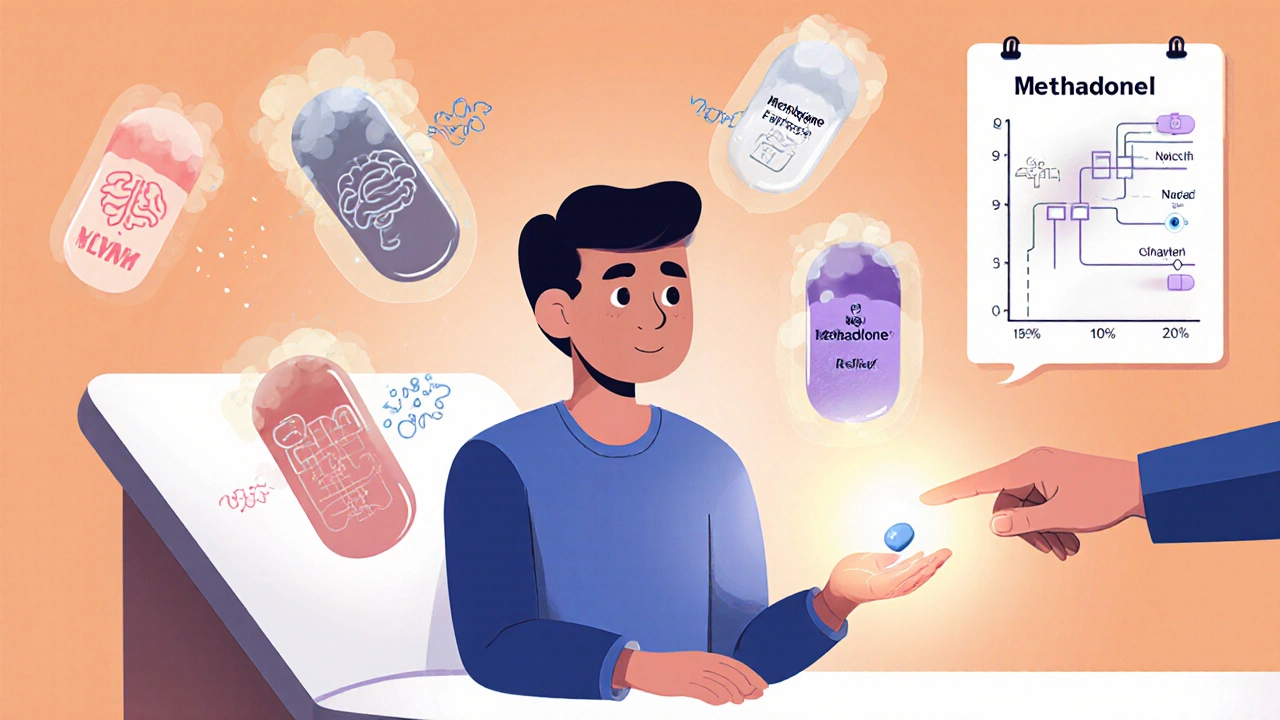
Opioid Rotation Dose Calculator
How This Works
This calculator helps determine safe opioid dose conversions based on medical guidelines. When switching opioids, doctors typically reduce the new dose by 25-50% due to incomplete cross-tolerance. Always consult your healthcare provider before making any medication changes.
WARNING: This tool provides general conversion guidelines only. Opioid rotation must be supervised by a qualified healthcare provider. Incorrect dosing can cause overdose or withdrawal. Individual factors like kidney/liver function significantly impact opioid processing.
When opioids stop working the way they should, it’s not always because the pain is getting worse. Sometimes, it’s the drugs themselves causing the problem. Nausea that won’t quit. Constant drowsiness. Confusion. Constipation so severe it stops daily life. These aren’t just side effects-they’re reasons to change course. That’s where opioid rotation comes in: switching from one opioid to another to ease the burden on your body while keeping pain under control.
Why Rotation Isn’t Just Another Dose Increase
Many people assume the only way to manage worsening pain is to keep increasing the opioid dose. But after a while, higher doses don’t bring better pain relief-they just bring more side effects. That’s when opioid rotation becomes a smarter move. It’s not about trying a stronger drug. It’s about trying a different one. Research shows that between 50% and 90% of patients who switch opioids see improvement in either their pain control or their side effects. That’s not luck. It’s biology. Everyone’s body processes opioids differently. What causes nausea in one person might not affect another at all. Some people metabolize morphine slowly, leading to buildup and drowsiness. Others clear oxycodone too quickly, leaving them with gaps in pain relief. Rotation lets you find the match that fits your body, not just your prescription.When Rotation Makes Sense
You don’t rotate opioids just because you’re bored with your current medication. There are clear, evidence-based reasons to consider it:- You’re experiencing intolerable side effects-like constant vomiting, severe drowsiness, muscle twitching, or mental confusion-even at doses that should be safe.
- Your pain isn’t improving despite increasing your dose by more than 100% over weeks or months.
- You’ve developed a drug interaction-maybe you started a new medication for depression or heart issues that messes with how your body handles opioids.
- Your body has changed. Kidney or liver function has declined, making it harder to clear the drug.
- You need a different way to take the medicine-like switching from pills to a patch because swallowing is difficult.
- You’re experiencing opioid-induced hyperalgesia, where the opioid itself makes your nerves more sensitive to pain, causing your pain to feel worse over time.
Importantly, rotation isn’t for sudden pain flares. Those need different strategies. This is for long-term management when the drug is working against you.
Which Opioids Work Best for Reducing Side Effects?
Not all opioids are the same. Some are better than others at avoiding certain side effects. Here’s what the data shows:- Oxycodone: Often better tolerated than morphine for nausea and constipation. Many patients report clearer thinking and less drowsiness after switching.
- Fentanyl (patch or lozenge): Useful when GI issues like vomiting make oral meds hard to keep down. It’s absorbed through the skin or mouth lining, bypassing the stomach.
- Methadone: This one’s different. It’s not just a substitute-it’s a game-changer. Methadone often lets doctors lower the total daily opioid dose while maintaining pain control. Why? Because it works on more than one pain pathway in the brain. Recent studies suggest the old conversion ratios (like 10:1 for morphine to methadone) are too high. The real ratio for reducing side effects may be closer to 9:1, and sometimes even lower. That means switching to methadone can mean a much bigger drop in total opioid load than expected.
- Hydromorphone: Often used when morphine causes confusion or hallucinations. It’s more potent and may have a cleaner side effect profile in older adults or those with kidney issues.
There’s no universal winner. The best choice depends on your symptoms, your metabolism, and your medical history. A doctor won’t pick one for you-they’ll work with you to test options.
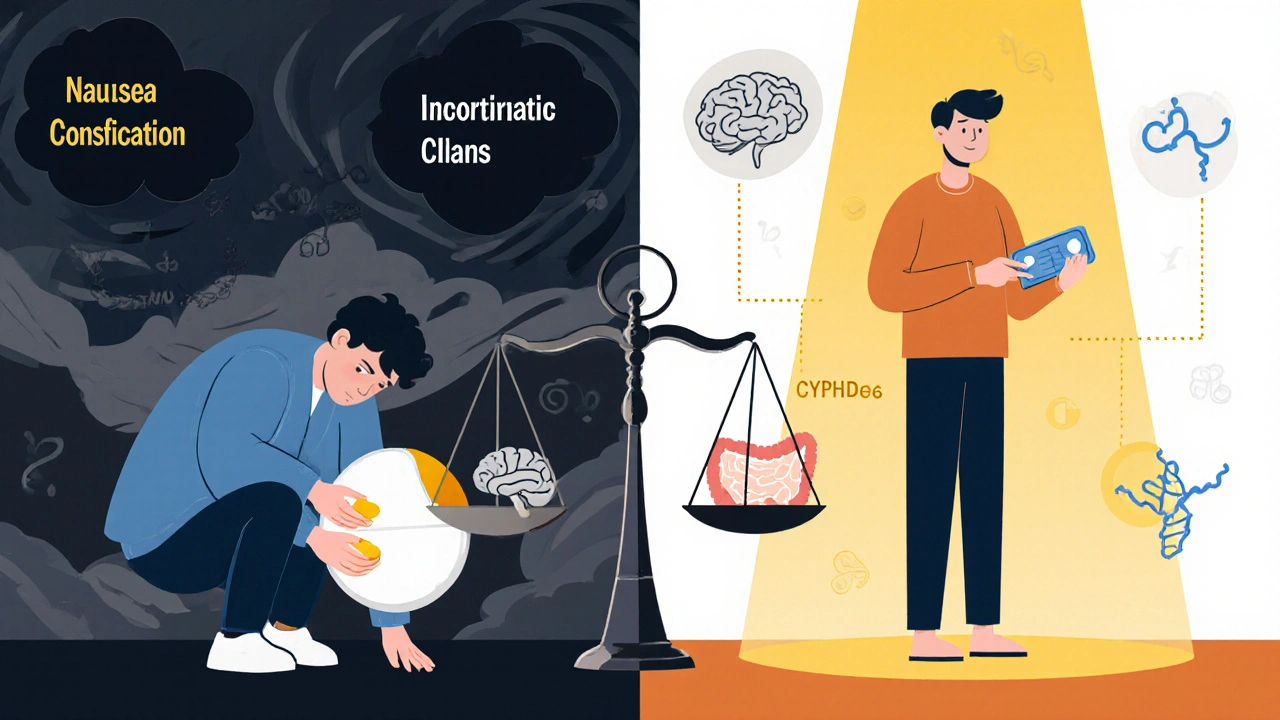
The Dangerous Part: Getting the Dose Right
Switching opioids sounds simple. But get the math wrong, and you could overdose-or end up in pain again. That’s because opioids don’t convert 1:1. The ratios are messy, unpredictable, and vary by dose.Here’s the rule most doctors follow: Always reduce the new opioid dose by 25% to 50% when converting. Why? Because your body isn’t fully tolerant to the new drug, even if you’ve been on opioids for months. This is called incomplete cross-tolerance. Skipping this step has led to fatal overdoses.
For example, if you’re on 120 mg of morphine per day, you might think you need 12 mg of hydromorphone. But the safe starting dose? Around 6 mg. That’s a 50% reduction. Then, you slowly increase it over days or weeks while watching for signs of too much or too little.
Methadone is the trickiest. Its half-life can stretch over 24 hours, and it builds up slowly. Doctors often start at just 10% to 25% of the calculated equianalgesic dose and increase very slowly-sometimes over weeks. Rushing methadone rotation is one of the most common causes of accidental overdose in pain clinics.
What Happens After the Switch?
Rotation isn’t a one-time fix. It’s a process. You’ll need to track how you feel over the next 7 to 14 days. Keep a simple log:- On a scale of 1 to 10, how’s your pain?
- Are you sleeping better?
- Is nausea gone? Constipation improved?
- Do you feel more alert during the day?
Bring this log to your next appointment. If the new opioid isn’t helping-or if side effects return-it’s time to consider another rotation or a non-opioid approach.
Some patients find that after one rotation, they can reduce their total opioid dose over time. Others need to switch again. That’s normal. The goal isn’t to stay on opioids forever-it’s to manage pain with the least harm possible.
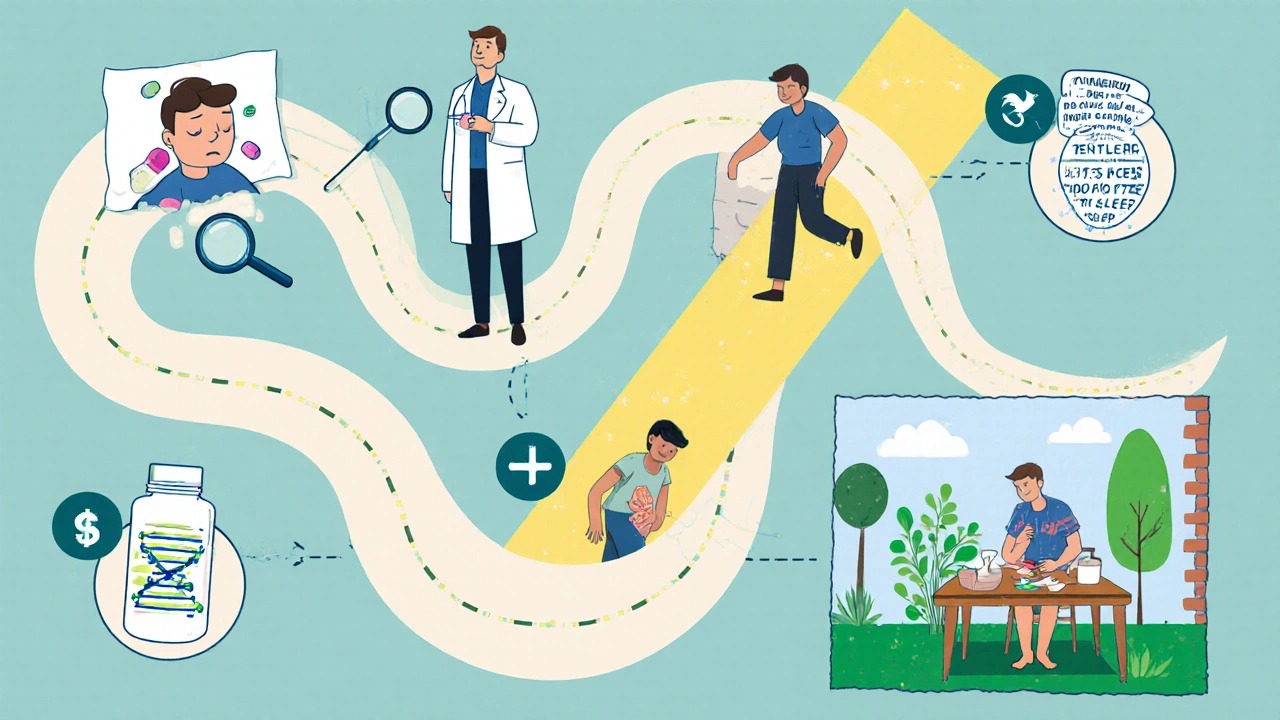
Why This Still Feels Risky
Despite decades of use, opioid rotation lacks large, randomized trials proving its long-term safety. Most evidence comes from small observational studies of cancer patients. That’s why many doctors still hesitate. But the alternative-keeping a patient on a drug that makes them sick or confused-isn’t safer.The 2009 expert guidelines from the Journal of Pain and Symptom Management remain the gold standard today, even though they’re over 15 years old. That’s because no better framework has replaced them. What’s changed is our understanding of methadone, pharmacogenetics, and opioid-induced hyperalgesia-all things now routinely considered in advanced pain clinics.
Some clinics are starting to use genetic tests to predict how a patient might respond to certain opioids. For example, people with a specific CYP2D6 gene variant process codeine poorly and are at risk of toxicity. Others metabolize oxycodone slowly. In the future, these tests could make rotation more precise. But for now, it’s still mostly trial and careful observation.
What You Can Do
If you’re on opioids and struggling with side effects:- Don’t stop or change your dose on your own. Talk to your doctor.
- Keep a symptom journal. Note what’s bothering you and when.
- Ask: “Could switching to another opioid help?” Don’t assume it’s not an option.
- Request a referral to a pain specialist if your current provider isn’t familiar with rotation.
- Ask about methadone. It’s not a last resort-it’s a tool that can reduce total opioid exposure.
Opioid rotation isn’t about giving up on pain control. It’s about finding a better way to keep it under control-without wrecking your quality of life.
Is opioid rotation safe?
Yes, when done correctly under medical supervision. The biggest risk is incorrect dosing during the switch. That’s why doctors always start with a lower dose of the new opioid-usually 25% to 50% less than the calculated equivalent. Methadone requires extra caution due to its long half-life. With proper monitoring, rotation is a safe and effective strategy for managing side effects.
Can I switch from morphine to oxycodone myself?
No. Never switch opioids without a doctor’s guidance. Even though morphine and oxycodone are both oral opioids, their conversion ratios vary depending on your dose, how long you’ve been on them, and your body’s metabolism. Guessing the dose can lead to overdose or withdrawal. Always have a plan in place with your provider before making any change.
Why does methadone reduce total opioid doses?
Methadone works differently than other opioids. It blocks pain signals in multiple ways in the brain and spinal cord, not just through the mu-opioid receptor. This means it can provide strong pain relief at lower doses than morphine or oxycodone. Recent studies suggest the old conversion ratios (like 10:1) overestimate methadone’s potency. For side effect reduction, the ratio may be closer to 9:1 or even lower, allowing for significant dose reductions without losing pain control.
How long does it take to see results after switching?
It varies. Some side effects like nausea or drowsiness improve within 2 to 3 days. Others, like constipation or mental fog, may take a week or two to clear. Pain control should stabilize within 5 to 7 days. If you’re still having major issues after 14 days, talk to your doctor-another switch or a different approach may be needed.
Does opioid rotation mean I’m addicted?
No. Addiction involves compulsive use despite harm. Opioid rotation is a medical strategy used to improve safety and effectiveness. Many patients rotate opioids to avoid side effects that make daily life unbearable. It’s about optimizing treatment-not changing your relationship with the drug. If you’re taking opioids as prescribed and your doctor is guiding the switch, you’re managing pain, not developing addiction.
What if rotation doesn’t work?
If rotation doesn’t improve your side effects or pain, your doctor may explore non-opioid options like gabapentin, duloxetine, or physical therapy. Sometimes, combining low-dose opioids with other treatments gives better results than high-dose opioids alone. In rare cases, nerve blocks or spinal cord stimulators may be considered. The goal is always to reduce reliance on opioids, not increase it.


November 30, 2025 AT 22:36 PM
Switching opioids isn't magic-it's just biology playing whack-a-mole with your nervous system. One drug makes you vomit, so you swap to another and now you're zoning out like a zombie at a TED Talk. The real win? Methadone. Not because it's 'stronger,' but because it's sneaky-smart-hits multiple pain pathways so your body doesn't have to choke down 120mg of morphine just to feel human. And yeah, the conversion ratios are bullshit. Most docs still use 10:1 like it's 2005. Reality? 9:1. Maybe even 7:1 if you're lucky. Stop treating patients like lab rats with spreadsheets.
December 2, 2025 AT 10:34 AM
THIS. 🙌 I switched from morphine to oxycodone after 3 years of constipation so bad I cried in the bathroom at work. Within 48 hours? I could breathe again. No more brain fog. No more vomiting before breakfast. I’m not ‘addicted’-I’m just finally living. 💪💊 #OpioidRotationSavesLives
December 3, 2025 AT 17:07 PM
Oh, so now we’re pretending opioid rotation is some kind of enlightened medical breakthrough? How quaint. The real problem is we’re still prescribing opioids at all. You don’t fix a broken system by swapping out the broken parts-you rebuild the damn system. But sure, let’s keep pretending this is science instead of pharmaceutical roulette.
December 4, 2025 AT 10:05 AM
Let me tell you something-this isn’t just about pain management, it’s about dignity. I was on 180mg of morphine a day. Couldn’t hold a conversation without nodding off. My daughter stopped asking me to take her to school because I’d fall asleep in the car. We switched to hydromorphone-started at 6mg, built up slow. Two weeks later? I watched her play soccer. I didn’t nap once. I didn’t hallucinate. I didn’t feel like a ghost in my own body. That’s not medicine-that’s a second chance. And yeah, methadone? I’m on it now. Lower total dose, better sleep, zero nausea. I wish I’d known this 5 years ago.
December 6, 2025 AT 01:20 AM
OMG like?? I tried switching to fentanyl patch and my skin went CRAZY 😵💫 like, red and itchy and I felt like a human glow stick?? Also, why does everyone act like methadone is some magic unicorn?? My cousin overdosed on it bc her doc didn’t reduce enough 😭 like… y’all just trust the math??
December 7, 2025 AT 07:02 AM
My uncle in India was on morphine for cancer pain. He got so sleepy he forgot to eat. Doctor switched him to oxycodone. He started eating again. Smiled again. Just a small change, but it brought him back to us. Not all science needs to be fancy. Sometimes it’s just finding the right fit. No need to overthink it. Just listen to the body.
December 7, 2025 AT 08:28 AM
While the anecdotal evidence presented herein is compelling, it remains insufficient to constitute a paradigmatic shift in clinical practice. The absence of prospective, randomized, double-blind trials with longitudinal follow-up precludes definitive conclusions regarding the efficacy and safety profile of opioid rotation as a standardized therapeutic modality. Furthermore, the reliance on equianalgesic conversion tables-many of which are derived from outdated pharmacokinetic models-introduces significant risk of iatrogenic harm. Until such time as robust, population-level data supports its routine implementation, clinicians ought to exercise extreme caution.
December 9, 2025 AT 00:58 AM
Bro, I was skeptical too. Thought this was just doctor BS to make me feel better about still being on pain meds. But after switching from oxycodone to methadone? I went from ‘I need a nap after brushing my teeth’ to ‘I actually walked my dog today.’ No joke. The dose was cut in half and I felt more awake. Weird, right? Like my brain finally stopped being full of cotton. Don’t let fear stop you from asking. Just go slow. And bring snacks. Constipation’s a beast.
December 10, 2025 AT 18:19 PM
Why do people act like this is some big revelation? I’ve been on three different opioids in five years. It’s just swapping one addiction for another. At least with the old one I knew what I was getting. Now I’m just guessing. And don’t even get me started on methadone clinics. 😒
December 11, 2025 AT 17:11 PM
Can I just say… I’m so tired of people saying ‘you’re not addicted if you take it as prescribed.’ What if the prescription itself is the problem? Why are we still giving opioids to people with chronic non-cancer pain? Rotation just makes the cycle longer. I’m not mad at you-I’m mad at the system. 💔