
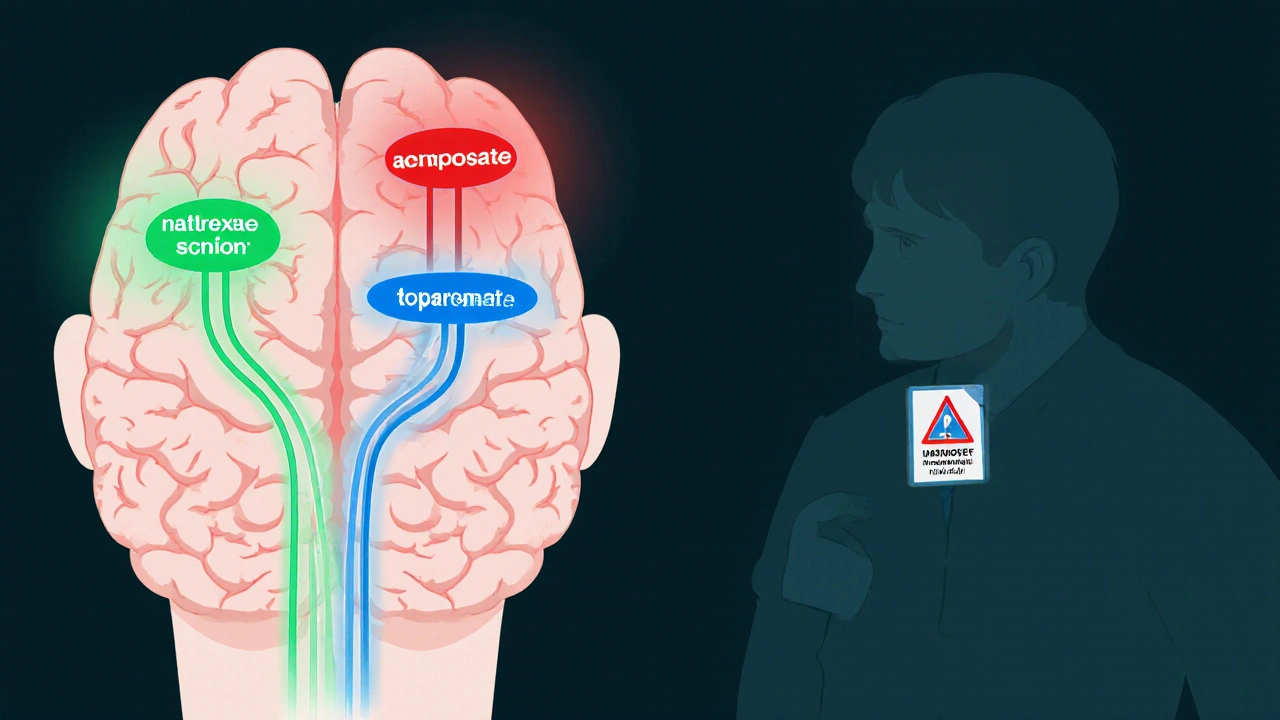
Discover the top Antabuse competitor drugs used today for alcohol dependence-naltrexone, acamprosate, and topiramate-and how they compare in effectiveness, safety, and ease of use.
Naltrexone: What It Is, How It Works, and What You Need to Know
When you hear naltrexone, a medication used to treat alcohol and opioid dependence by blocking the effects of these substances in the brain. Also known as Vivitrol when given as a monthly injection, it doesn’t get you high, doesn’t cause dependence, and doesn’t treat withdrawal—it stops the reward loop that keeps addiction going. This isn’t a cure, but it’s one of the most reliable tools for breaking the cycle of cravings and relapse.
Naltrexone works by latching onto opioid receptors in your brain, so alcohol and opioids can’t activate them. If you drink while on naltrexone, you won’t feel the usual buzz. If you use opioids, they won’t hit like they used to. That’s the point. It’s not about making you sick—it’s about making the substance feel pointless. This is why it’s used in medication-assisted treatment, a proven approach combining drugs like naltrexone with counseling and behavioral support for addiction recovery. It’s not magic, but it gives you space to rebuild habits without the constant pull of cravings.
People use naltrexone for two main reasons: to stay off alcohol or to stay off opioids like heroin or prescription painkillers. It’s not for everyone. You must be fully detoxed before starting—using it while opioids are still in your system can trigger sudden, severe withdrawal. And while it’s safe for most, it can affect your liver, so blood tests are often part of the process. It’s also used off-label for other conditions, like reducing compulsive behaviors or helping with certain autoimmune issues, but those uses are still being studied.
The real power of naltrexone comes when it’s paired with real change. You can take the pill every day, or get the monthly shot, but if you’re not working on triggers, stress, or old routines, the medicine alone won’t hold you. That’s why so many of the articles below focus on how naltrexone fits into broader health strategies—like managing alcohol dependence, a chronic condition where drinking becomes hard to control despite negative consequences, or avoiding dangerous mixes with other drugs like benzodiazepines or painkillers. You’ll find practical advice on how to talk to your doctor, what to expect side-effect-wise, and how to spot if it’s working—or if you need to try something else.
What you’ll find here isn’t just theory. These are real stories and data-driven comparisons from people who’ve used naltrexone, alongside guides on how to buy it safely online, how it compares to other treatments like methadone or buprenorphine, and how to avoid scams when ordering medication. Whether you’re considering naltrexone for yourself or supporting someone who is, this collection gives you the no-fluff facts you need to make smart, safe choices.