
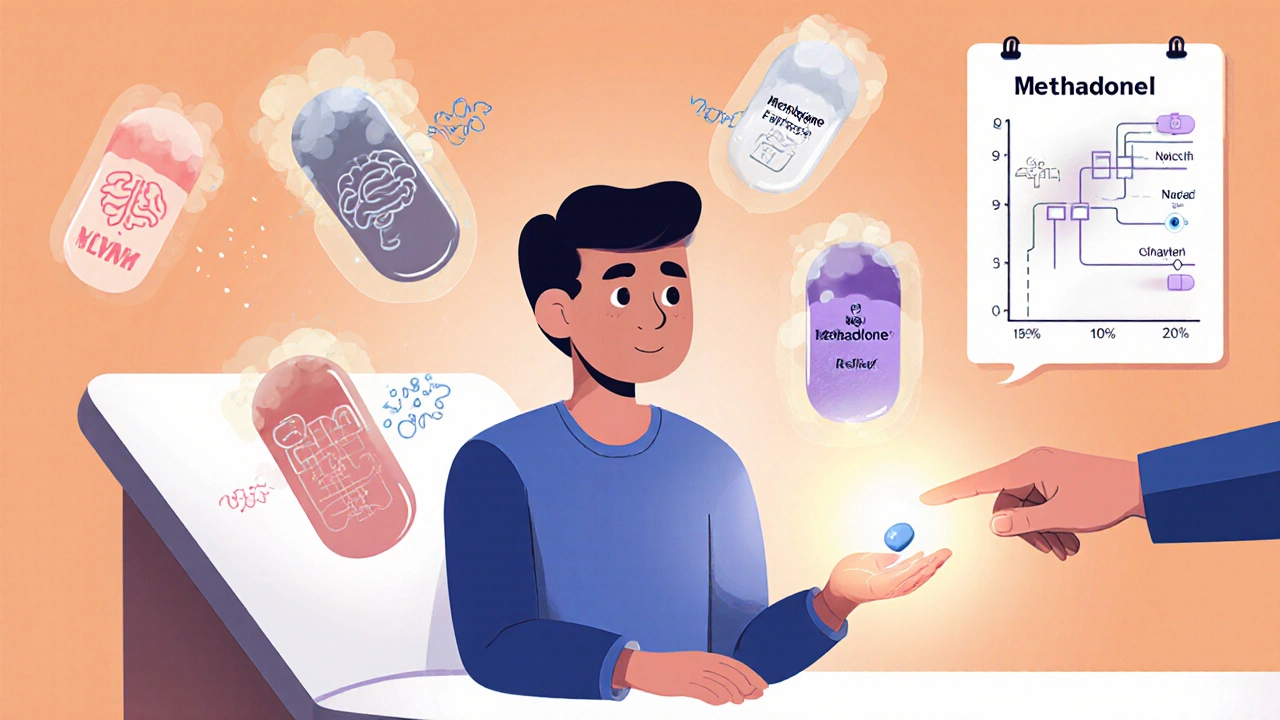
Opioid rotation means switching from one opioid to another to reduce side effects like nausea, drowsiness, or constipation while maintaining pain control. It's a proven strategy when high doses aren't working safely.
Methadone Opioid: What It Is, How It Works, and What You Need to Know
When people talk about methadone opioid, a long-acting synthetic opioid used primarily to treat opioid dependence and manage chronic pain. Also known as methadone hydrochloride, it’s one of the most studied medications for helping people break free from heroin or prescription painkiller addiction. Unlike street opioids that wear off fast, methadone lasts 24 to 36 hours, which means fewer cravings and less withdrawal—giving people space to rebuild their lives.
But methadone isn’t a quick fix. It’s part of a system called medication-assisted treatment, a clinical approach that combines FDA-approved medications with counseling and behavioral therapies. This isn’t just swapping one drug for another. It’s about stabilizing brain chemistry so people can focus on therapy, jobs, family, and recovery. The opioid dependence, a chronic condition marked by compulsive drug use despite harmful consequences. often starts with a prescription, then spirals. Methadone helps stop that spiral by blocking the high from other opioids while preventing withdrawal.
It’s not without risks. Taking too much can slow breathing to dangerous levels—especially if mixed with alcohol, benzodiazepines, or sleep aids. That’s why methadone is only available through certified clinics in most places. You can’t just pick it up at a regular pharmacy. Dosing is strict, monitored, and personalized. Some people stay on it for months; others for years. There’s no shame in that. Recovery isn’t a race. What matters is staying alive and in control.
Many wonder if methadone just replaces one addiction with another. The science says no. It doesn’t produce euphoria when taken as directed. It doesn’t cause the same crash-and-burn cycle. It’s like insulin for diabetes—managing a biological imbalance so the body can heal. And unlike street opioids, it’s clean, tested, and dosed accurately.
What you’ll find in the posts below isn’t just theory. It’s real-world guidance on how methadone interacts with other drugs, how liver function affects its clearance, why monitoring matters, and how to spot overdose signs before it’s too late. You’ll also see how it fits into broader treatment plans—like what happens when someone on methadone also needs pain relief, or how to teach family members to respond in a crisis. These aren’t abstract ideas. They’re life-saving details.