
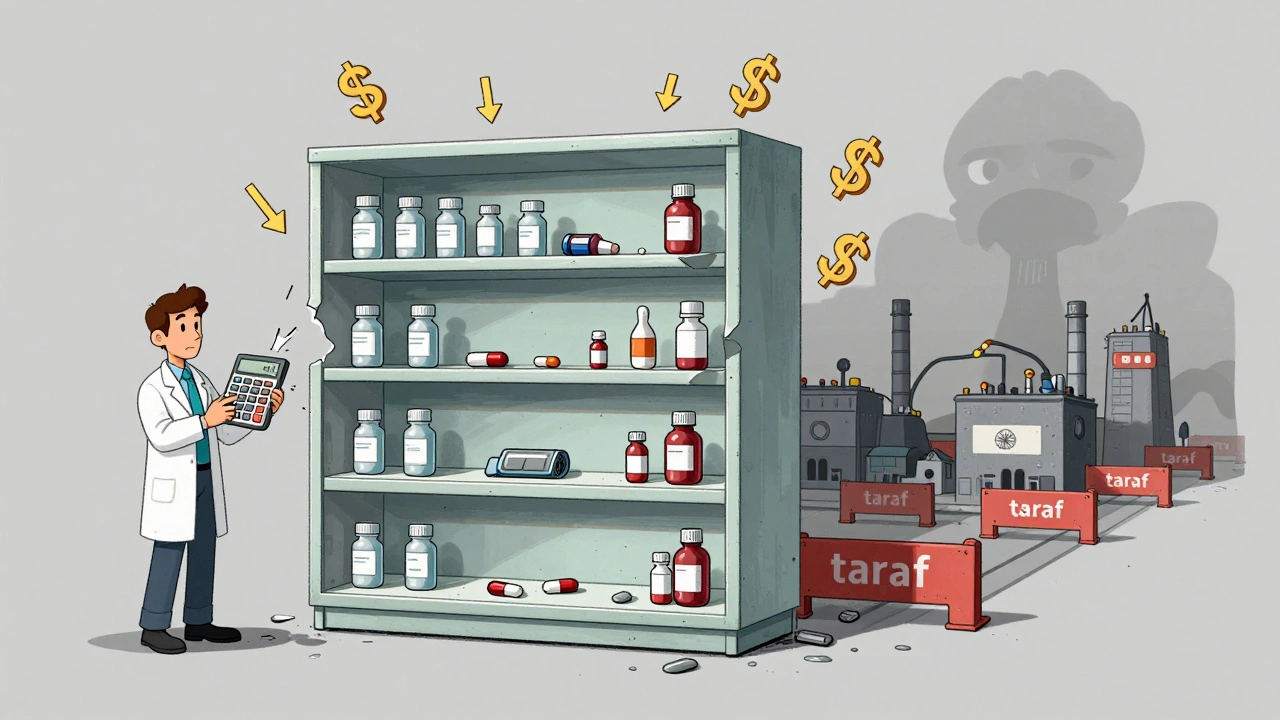
Pricing pressure and rising manufacturing costs are causing widespread drug shortages as generic drug makers can't profitably produce essential medicines. Here's how the system broke - and what needs to change.
Manufacturer Financial Strain: How Drug Costs, Supply Chains, and Pricing Pressure Affect Your Medications
When you hear manufacturer financial strain, the pressure pharmaceutical companies face to cut costs while maintaining quality and supply. Also known as pharmaceutical cost crisis, it’s not just a business problem—it’s a health problem. Every time a drug gets harder to find, costs more, or gets replaced by a generic you’ve never heard of, it’s often because the company making it is losing money on it.
This strain shows up in real ways. Look at generic drug costs, the price of off-patent medications that once kept millions affordable. They’ve dropped so low that some manufacturers can’t cover production, shipping, or quality control. That’s why you see shortages—even for basic antibiotics or blood pressure pills. It’s not about demand. It’s about profit. And when a company can’t make money on a drug, they stop making it. Meanwhile, pharmaceutical supply chain, the global network of raw material sourcing, manufacturing, and distribution is stretched thin. Over 80% of active ingredients come from just two countries. One factory shutdown, one shipping delay, one political dispute—and your prescription disappears.
Even biosimilars, complex, biologic alternatives to expensive brand-name drugs aren’t immune. They’re supposed to cut costs, but the approval process is long, the manufacturing is fragile, and insurers often don’t cover them as easily as generics. So patients get stuck paying more, or waiting longer, or taking something less effective. Meanwhile, the companies trying to make these drugs are caught between shrinking margins and rising compliance costs.
And it’s not just about big pharma. Small manufacturers, the ones making niche drugs for rare diseases or specialty conditions, are folding under the weight of regulatory paperwork, insurance formularies that block their products, and price controls that don’t match their actual costs. That’s why you see fewer options for certain conditions. Not because science stopped advancing—but because the economic model broke.
What does this mean for you? It means your medication might change without warning. It means your pharmacy might run out. It means your copay could jump overnight. It means the drug your doctor prescribed last year might not even be made anymore. And when that happens, you’re left guessing: Is this new version safe? Is this cheaper pill really the same? Is this delay because of a shortage—or because no one wants to make it anymore?
The posts below dig into the real-world fallout of this strain. You’ll find stories about counterfeit generics slipping into the market because legitimate makers can’t compete on price. You’ll see how insurance formularies push pharmacists to substitute drugs that may not work the same. You’ll learn why liver disease patients get fewer options when manufacturers stop producing lower-dose versions. You’ll see how opioid rotation became necessary not just for medical reasons, but because some pain meds became too expensive to stock. And you’ll understand why drug shortages in 2025 aren’t accidents—they’re predictable results of a system under financial stress.
These aren’t abstract economics. They’re your prescriptions, your health, your daily routine. What follows is a clear-eyed look at how money, not medicine, is driving what ends up in your medicine cabinet—and what you can do about it.