
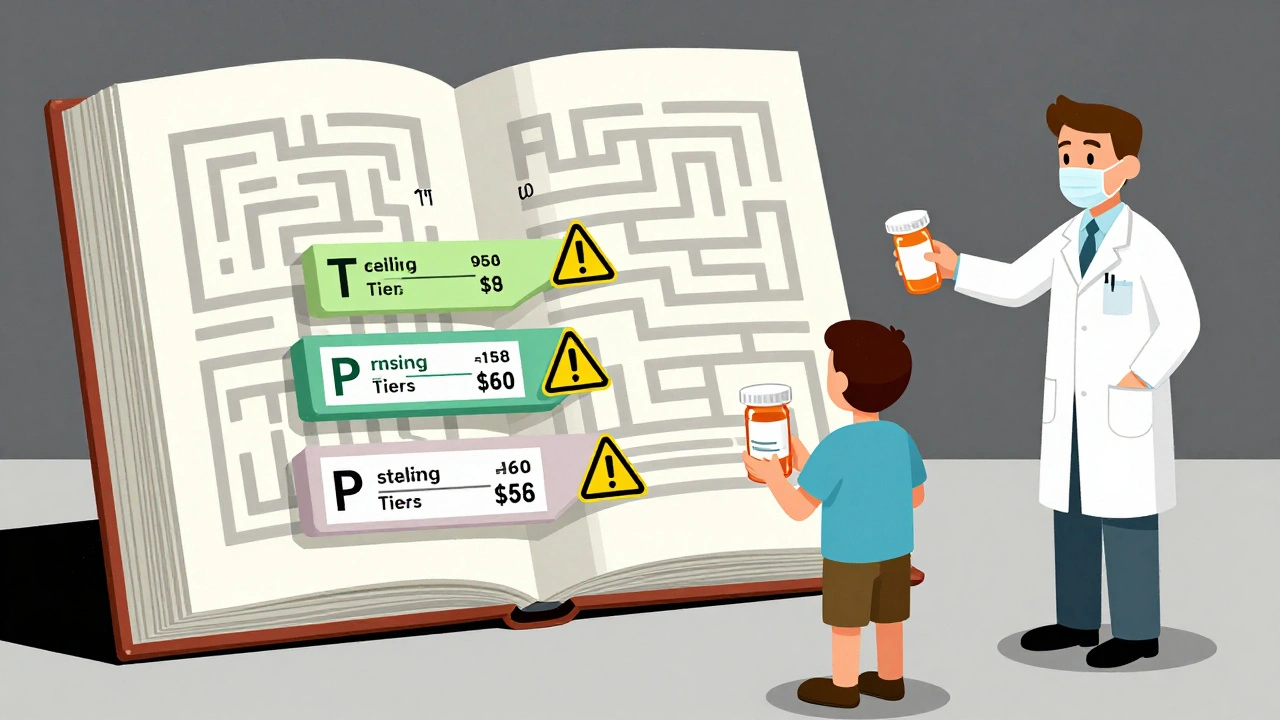
Insurance formularies control which drugs are covered and how much you pay. Learn how tiers, substitution rules, and exceptions work-and how to protect yourself from unexpected cost hikes.
Insurance Formulary: What It Is and How It Controls Your Medication Access
When you pick up a prescription, what you pay isn’t just about the drug—it’s about your insurance formulary, a list of medications approved and covered by your health plan, often managed by a pharmacy benefits manager (PBM). Also known as a drug formulary, it’s the hidden rulebook that decides if your medicine is covered, if you need prior authorization, or if you’re stuck paying full price. This isn’t just paperwork—it directly affects whether you can afford your treatment, switch to a cheaper option, or even get the drug your doctor prescribed.
Behind every insurance formulary is a pharmacy benefits manager, a middleman hired by insurers to negotiate drug prices and build formularies. These companies don’t make drugs—they control access. They push for generics and biosimilars because they’re cheaper, which is why you’ll see so many posts here about generic vs brand name drugs, cost savings, and how formularies treat them differently. But they also block certain meds unless you try others first, or require you to get approval before filling. That’s step therapy. That’s prior authorization. And if you’ve ever been denied a prescription you thought you needed, this is why. The formulary doesn’t care what your doctor thinks—it cares about cost, contracts, and clinical guidelines set by the PBM. Some plans even put high-cost drugs like CGRP inhibitors or long-acting injectables in special tiers, meaning you pay more unless you jump through hoops.
It’s not just about what’s covered—it’s about what’s not. If your drug isn’t on the formulary, you might be forced to switch to a generic, even if you’ve had side effects before. Or you might be told to try an older, cheaper drug first, even if it’s less effective. That’s why posts on this site dig into real-world issues: how PBM policies, the rules insurers use to manage drug access and pricing can clash with patient needs, how counterfeit generics slip through when cost pressures rise, and why specialty pharmacies struggle with formulary changes that disrupt chronic disease care. You’ll find posts about how liver disease changes dosing, how opioid rotation affects coverage, and how statins or benzodiazepines get flagged in formularies because of safety risks. These aren’t random—they’re all connected to the same system: the formulary.
What you’ll find below are real stories and facts from people who’ve been caught in this system. You’ll learn how to check your formulary, how to appeal a denial, and how to spot when your drug was removed without warning. You’ll see how biosimilars are being pushed into formularies as cost-savers, how acid-reducing meds interfere with absorption and get flagged for interactions, and why some OTC drugs still get blocked under certain plans. This isn’t theory. It’s what happens when pricing rules meet real health needs. The next time you’re told your med isn’t covered, you’ll know why—and what to do next.