
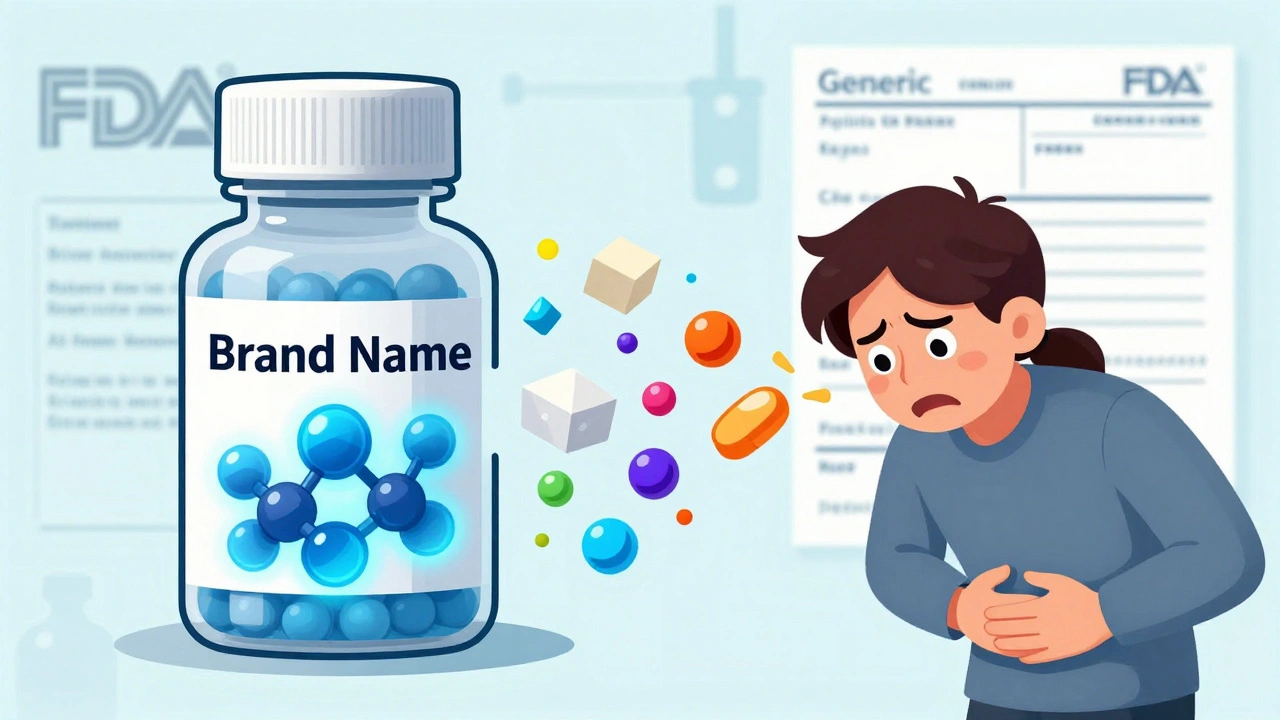
Generics are just as safe as brand-name drugs, but unexpected side effects can come from inactive ingredients-not the active drug. Learn what really causes interactions and how to stay safe.
Inactive Ingredients: What They Are and Why They Matter in Your Medications
When you take a pill, most of it isn’t the medicine you’re after. In fact, up to 90% of a tablet or capsule is made up of inactive ingredients, substances added to pills that have no therapeutic effect but are essential for manufacturing, stability, and absorption. Also known as excipients, these include things like starch, lactose, titanium dioxide, and food dyes. They hold the drug together, help it dissolve at the right time, or make it easier to swallow—but they’re not harmless. Even though they don’t treat your condition, they can still affect your health.
Some people don’t realize that lactose, a sugar found in milk, is commonly used as a filler in pills, and if you’re lactose intolerant, it can cause bloating, gas, or worse. Others might react to dyes, like FD&C Red No. 40 or Yellow No. 5, which are added for appearance but can trigger allergies or hyperactivity in sensitive individuals. Even the coating on a pill can contain gluten or shellfish-derived ingredients, which could be dangerous if you have a known allergy. The FDA requires these to be listed on the label, but most people never check. And if you’re taking generic drugs, the inactive ingredients can change between brands—even if the active drug is the same. That’s why some people feel different switching from one generic to another.
It’s not just about allergies. inactive ingredients, like certain binders or coatings, can interfere with how well your body absorbs the medicine. For example, acid-reducing medications can change how a drug dissolves in your gut, and some fillers can bind to other drugs you’re taking, making them less effective. This matters especially for people with liver disease, kidney issues, or those on multiple medications, where even small changes in absorption can lead to serious side effects or treatment failure. Pharmacists know this—they’re the ones checking for hidden interactions between your pills and their fillers. But unless you ask, you might never find out what’s really in your medicine.
There’s no such thing as a "neutral" ingredient in a pill. Every capsule, tablet, or liquid has a recipe—and that recipe includes things you didn’t sign up for. If you’ve ever had an unexpected reaction to a medication, or noticed your symptoms changed after switching brands, it might not be the drug itself. It could be the filler. The posts below break down real cases where inactive ingredients caused problems, how to read labels like a pro, and what to ask your pharmacist to avoid hidden risks. You’re not just taking a pill—you’re taking a whole formulation. Know what’s in it.