
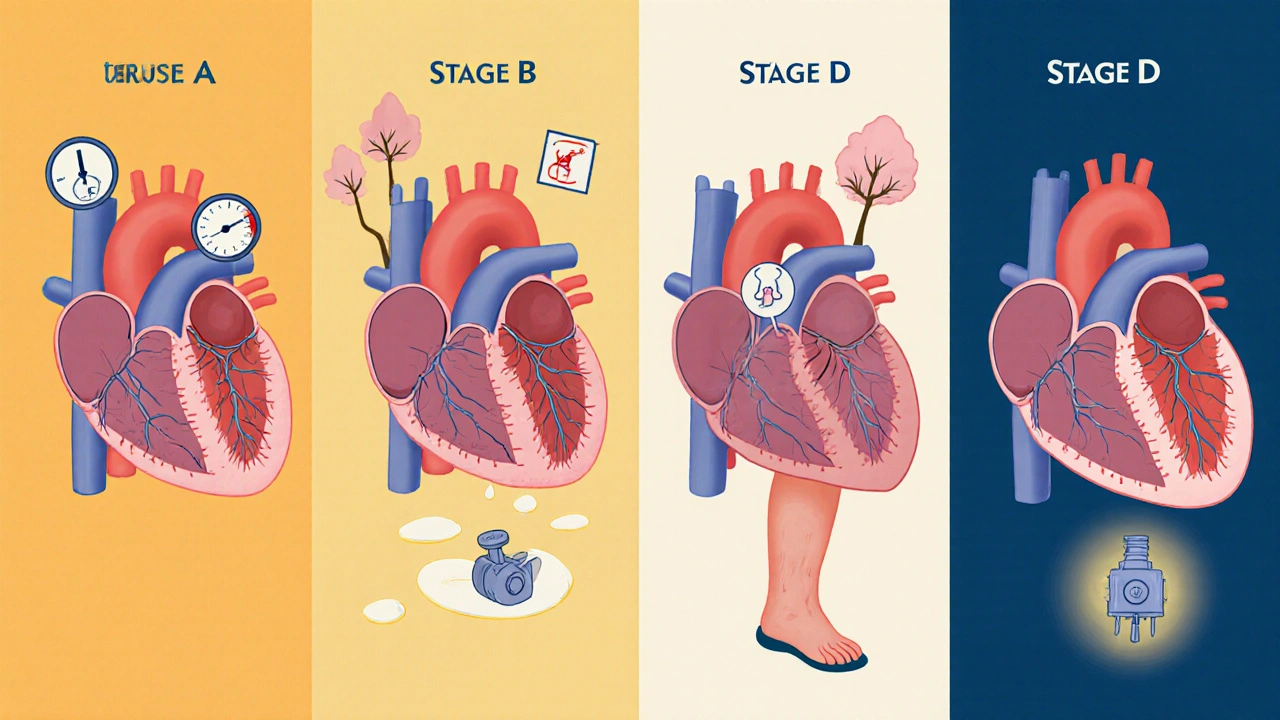
Heart failure management has transformed with new guidelines and medications. Learn how quadruple therapy, SGLT2 inhibitors, and monitoring devices help patients live longer and better-no matter the stage or type of heart failure.
HFrEF: Understanding Heart Failure with Reduced Ejection Fraction and How It Affects Treatment
When your heart can't pump blood the way it should, you might be dealing with HFrEF, Heart Failure with Reduced Ejection Fraction, a condition where the left ventricle doesn't contract strongly enough to push out enough blood. Also known as systolic heart failure, it's one of the most common and serious types of heart failure, affecting millions worldwide. Ejection fraction — the percentage of blood pumped out with each heartbeat — drops below 40% in HFrEF. Normal is 55-70%. That drop isn't just a number; it means your body isn't getting the oxygen and nutrients it needs, leading to fatigue, swelling, and shortness of breath even with light activity.
HFrEF doesn't happen alone. It often shows up with other conditions like high blood pressure, coronary artery disease, or past heart attacks. That’s why treatment isn’t just about one drug — it’s about a system. Medications like ACE inhibitors, beta-blockers, and SGLT2 inhibitors have become the backbone of care because they don’t just ease symptoms — they actually help the heart heal over time. These drugs are backed by years of real-world data showing they cut hospital stays and save lives. But they don’t work the same for everyone. Some people need aldosterone antagonists. Others need newer drugs like vericiguat or sacubitril/valsartan. The right mix depends on your history, age, kidney function, and how your body responds.
What’s often missed is how HFrEF connects to other health issues. For example, people with HFrEF are more likely to have kidney problems, diabetes, or atrial fibrillation. That’s why managing HFrEF means looking at your whole health, not just your heart. It’s also why some of the posts below focus on drug interactions — like how acid-reducing meds can interfere with heart drugs, or how beta-blockers can hide low blood sugar in people taking insulin. These aren’t side notes; they’re critical pieces of the puzzle.
You’ll find real, practical advice here on how medications work, what to watch for, and why some treatments are preferred over others. Whether you're managing HFrEF yourself, helping a loved one, or just trying to understand why your doctor changed your prescription, this collection gives you the facts without the fluff. No guesswork. No jargon. Just what works, what doesn’t, and why.