
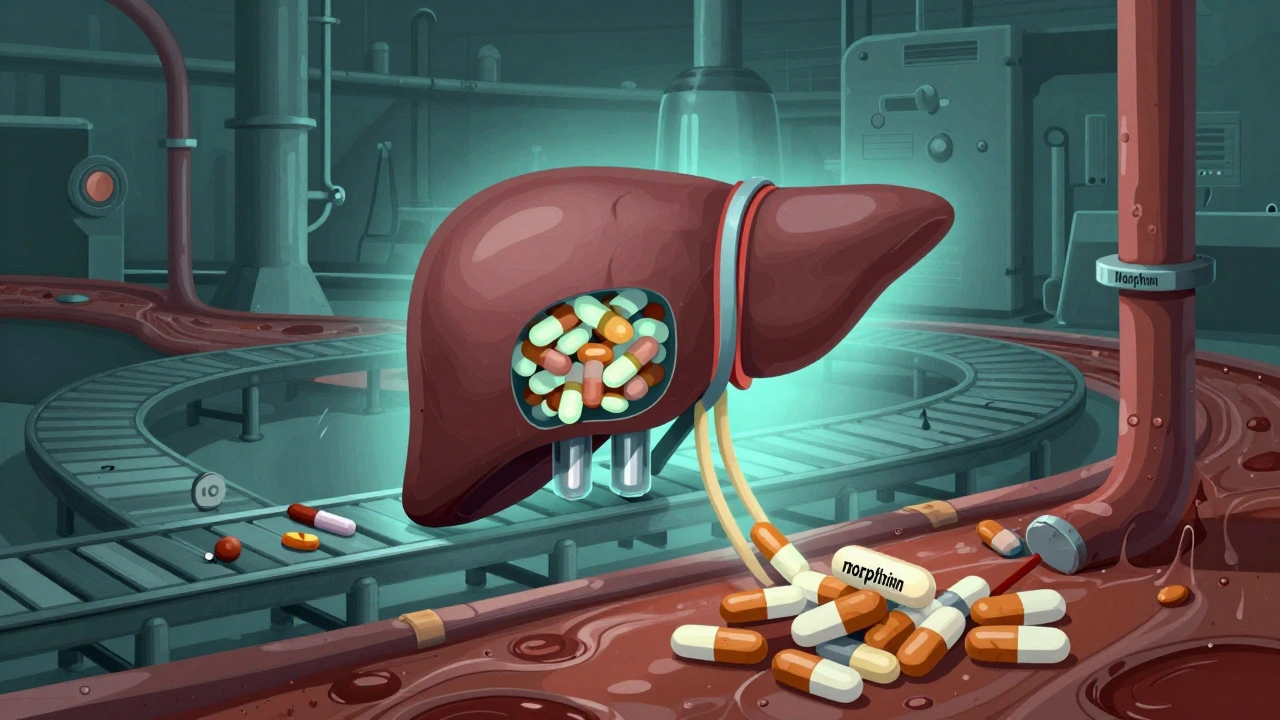
Liver disease reduces drug clearance by 30-50%, leading to dangerous drug buildup. Learn how enzyme changes, blood flow, and liver scoring affect medication safety-and what dosing adjustments actually work.
Hepatic Impairment: How Liver Problems Affect Medications and What You Need to Know
When your liver isn't working right, it's not just about fatigue or jaundice—it changes how every drug in your body behaves. hepatic impairment, a condition where the liver can't perform its normal functions like filtering toxins or breaking down drugs. Also known as liver dysfunction, it means even standard doses of medications can build up to dangerous levels in your blood. This isn't rare. About 1 in 5 adults over 65 have some degree of liver damage from alcohol, fatty liver, or long-term meds—and many don't even know it.
That’s why drug metabolism, the process where the liver breaks down medications into forms your body can use or remove becomes critical. If your liver is impaired, enzymes like CYP3A4 and CYP2D6 slow down. That means drugs like tricyclic antidepressants, used for depression and nerve pain, can stay in your system too long, leading to heart rhythm problems or seizures. Same with opioids, painkillers that rely heavily on liver processing. A normal dose might cause extreme drowsiness or breathing trouble. Even common stuff like statins or acid reducers can become risky. Your liver doesn’t just handle alcohol—it’s the main factory for clearing out most pills you take.
Doctors don’t just guess when adjusting doses. They look at blood tests—ALT, AST, bilirubin, albumin—to measure how well your liver is working. They also check for signs like fluid buildup or confusion, which signal advanced damage. For some drugs, like carbamazepine or certain antibiotics, they’ll reduce the dose by half or even skip it entirely. For others, like fosfomycin or CGRP inhibitors, they might still use them safely because the liver doesn’t break them down much. The key is knowing which drugs are risky and which aren’t. That’s why reporting every supplement, OTC painkiller, or herbal product matters. Ginkgo biloba, for example, can increase bleeding risk if your liver can’t clear it properly. And if you’re on insulin or beta-blockers, impaired liver function can hide low blood sugar symptoms, making it harder to catch danger before it’s too late.
You might think, "I feel fine, so my liver must be okay." But damage can hide for years. Many people with fatty liver disease or early cirrhosis have no symptoms until something goes wrong with a medication. That’s why knowing your liver status isn’t optional—it’s part of safe用药. If you’ve ever been told you have high liver enzymes, drink regularly, take multiple meds daily, or have hepatitis, you’re in the group that needs this info most. Below, you’ll find real-world guides on how specific drugs behave when your liver is compromised, what monitoring looks like, and how to avoid life-threatening mistakes that most patients never even hear about.