
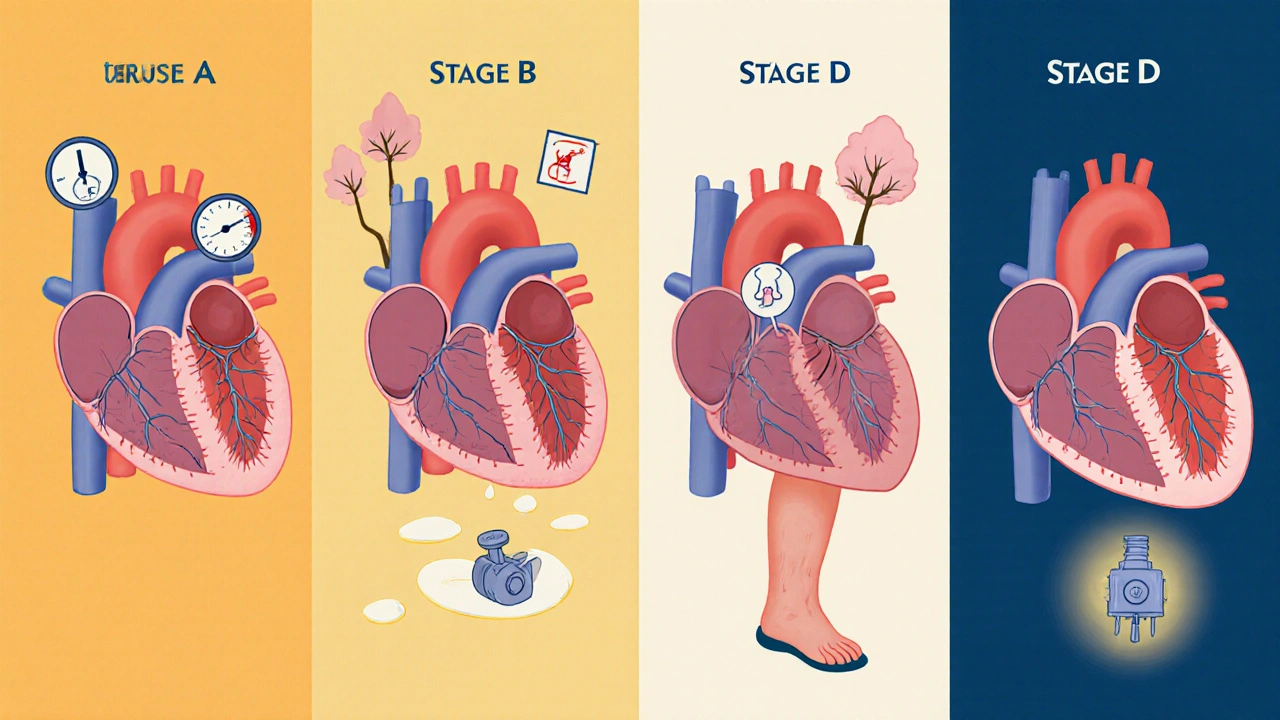
Heart failure management has transformed with new guidelines and medications. Learn how quadruple therapy, SGLT2 inhibitors, and monitoring devices help patients live longer and better-no matter the stage or type of heart failure.
Heart Failure: Causes, Symptoms, and Medications That Help
When someone says heart failure, a condition where the heart can't pump enough blood to meet the body's needs. Also known as congestive heart failure, it's not a sudden event—it's a slow decline that sneaks up on people, often mistaken for just getting older or out of shape. It happens when the heart muscle weakens or stiffens, and over time, fluid builds up in the lungs, legs, or abdomen. This isn't rare—nearly 6.7 million adults in the U.S. live with it, and many don’t even know they have it until symptoms get bad.
Heart failure doesn’t happen in a vacuum. It’s often the end result of other problems like high blood pressure, a silent killer that forces the heart to work too hard for years, or coronary artery disease, when blocked arteries starve the heart muscle of oxygen. Diabetes, obesity, and even long-term alcohol use can push the heart past its limits. Some people develop it after a heart attack; others just wear down slowly from years of uncontrolled stress on the system. The key is recognizing the signs: swelling in the ankles, trouble breathing when lying down, sudden weight gain from fluid, or feeling exhausted after simple tasks like walking to the mailbox.
Medications are the backbone of managing heart failure—not a cure, but a way to slow it down and help you feel better. Drugs like ACE inhibitors, beta-blockers, and diuretics are common, but newer ones like SGLT2 inhibitors (originally for diabetes) have shown surprising benefits for the heart. You’ll also hear about aldosterone antagonists and ARNIs—these aren’t just fancy names, they’re tools that help the heart relax, remove extra fluid, and reduce strain. But meds alone aren’t enough. Salt intake, daily weight checks, and avoiding alcohol make a real difference. And if you’re on multiple pills, you need to know how they interact—like how acid-reducing drugs can mess with absorption, or how some pain relievers can worsen fluid retention.
What you’ll find below isn’t just a list of articles. It’s a collection of real, practical insights from people who’ve lived with heart failure, their families, and the doctors who treat them. You’ll see how drugs like beta-blockers can hide low blood sugar in diabetics, why some supplements like Ginkgo biloba can be dangerous if you’re on blood thinners, and how drug shortages might delay critical treatments. These aren’t theory pieces—they’re stories about what works, what doesn’t, and what no one tells you until it’s too late. Read them. Save them. Share them. Your heart might thank you later.