
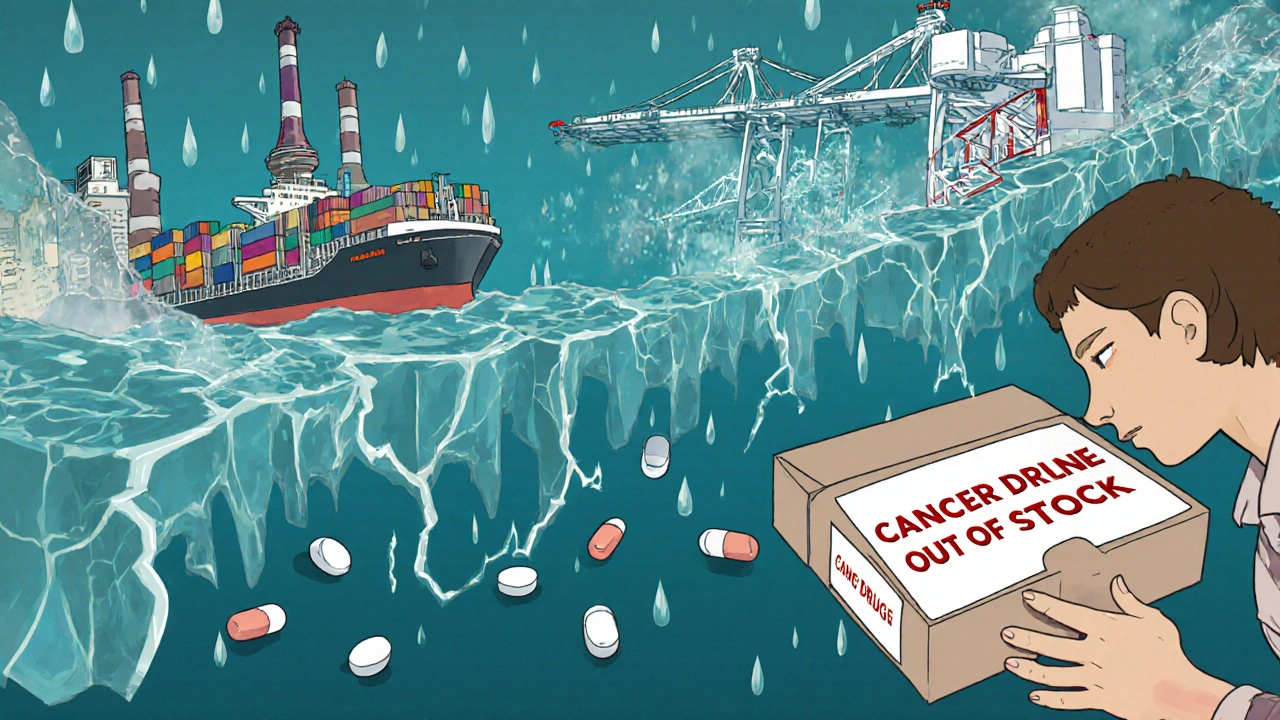
Dependence on foreign manufacturing for drugs is causing widespread shortages in 2025. With 80% of active ingredients coming from China and India, disruptions in one country can halt global supply. Here’s how multi-shoring and local production are helping.
Global Drug Production: How Medicines Are Made, Shipped, and Priced Around the World
When you pick up a bottle of generic ibuprofen or a prescription for metformin, you're holding a product shaped by global drug production, the complex network of manufacturing, regulation, and distribution that supplies medicines to billions. Also known as pharmaceutical manufacturing, it's not just about labs and pills—it's about who makes them, where, under what rules, and at what cost. Most of the active ingredients in your meds come from just a few countries, especially India and China, where factories produce billions of doses at a fraction of the price you'd pay at a local pharmacy. These aren't shady operations—they're often FDA- and EMA-approved facilities supplying major brands and generics worldwide.
But public procurement, how governments and health systems buy drugs in bulk plays just as big a role. In Europe, for example, tendering systems force drugmakers to compete on price and quality, driving down costs for entire populations. That’s why a month’s supply of a generic drug might cost $5 in Germany but $50 in the U.S.—it’s not about the pill, it’s about the buying system. Meanwhile, drug pricing, the often opaque process that sets what patients and insurers pay is influenced by patents, tariffs, distribution layers, and even political pressure. And while you might think a brand-name drug is better, the active ingredient in a generic made in India is chemically identical to the one made in the U.S.—but the price difference can be 80%.
What you’re really paying for isn’t just the chemical—it’s the system around it. The journey from raw materials in a Chinese factory to your medicine cabinet involves shipping, customs, labeling, storage, and regulatory checks. And when something goes wrong—a contamination, a shortage, a new regulation—it ripples across continents. That’s why drug safety signals often show up first in one country before spreading to others, and why buying cheap generics online can be risky if you don’t know where they’re really coming from.
What you’ll find in the posts below are real stories from this system: how Europe saves billions by forcing competitive bidding, how e-pharmacies undercut retail prices by cutting out middlemen, why some antibiotics are cheaper because they’re made in bulk for public health programs, and how a single-dose UTI treatment can cost less than a coffee because of how it’s produced and distributed. This isn’t theory—it’s the hidden infrastructure behind every pill you take. Whether you’re trying to save money, understand your prescription, or just know where your meds come from, the answers are all here.