
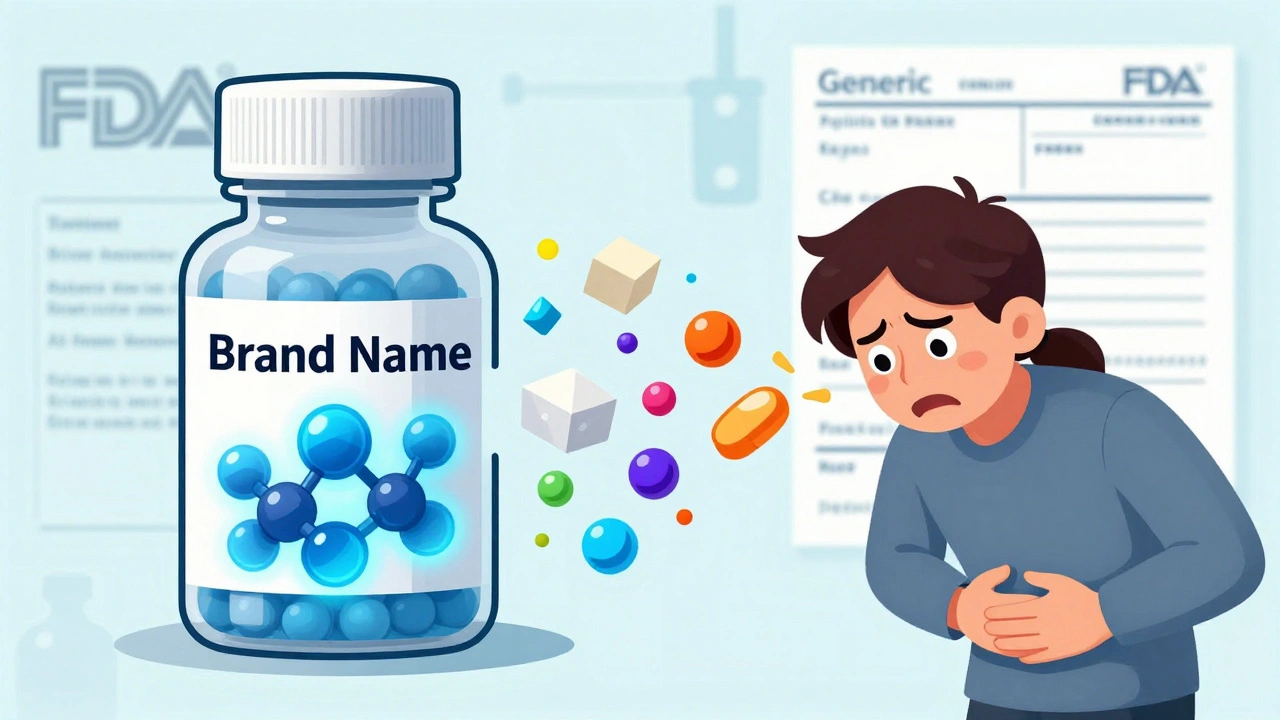
Generics are just as safe as brand-name drugs, but unexpected side effects can come from inactive ingredients-not the active drug. Learn what really causes interactions and how to stay safe.
Generic vs Brand Name Drugs: What You Really Need to Know
When you pick up a prescription, you might see two options: the brand name drug, a medication marketed under a proprietary name by the original manufacturer, often after patent protection. Also known as name-brand medicine, it’s what your doctor first prescribes. Then there’s the generic drug, a chemically identical version sold after the patent expires, with the same active ingredient, strength, and dosage form. Also known as off-patent drug, it’s the budget-friendly alternative that works just as well. The generic vs brand name debate isn’t about quality—it’s about cost, perception, and how the system works.
The FDA approval, the rigorous process that ensures both generics and brand drugs meet the same safety and effectiveness standards. Also known as drug certification, it’s what makes generics trustworthy. Generics don’t need to repeat expensive clinical trials because they’re proven to behave the same way in your body. That’s why they cost 80% less. But here’s what no one tells you: the fillers, coatings, and inactive ingredients can differ. That’s why some people swear one brand works better—sometimes it’s not the drug, it’s the pill’s texture or how fast it dissolves. For most people, though, the difference is invisible. The real issue? Insurance formularies and pharmacy substitution rules. Your insurer might force you to take the generic, or your pharmacist might switch it without asking. That’s fine… unless you’re one of the rare people who reacts differently to a new filler. And then there’s the growing problem of counterfeit generics, fake versions sold online that contain no active ingredient—or worse, toxic chemicals. Also known as fake medications, these are why buying from licensed pharmacies matters.
It’s not just about saving money. It’s about access. Generics make chronic disease management possible for millions who couldn’t afford the brand. But understanding the system helps you stay in control. Know your rights when a substitution happens. Check your pill’s appearance if it changes. Ask if your pharmacy sources from reliable suppliers. And if you’re on a narrow-therapeutic-index drug—like warfarin or thyroid meds—talk to your doctor before switching. Most of the time, generics are a win. But you need to know how to use them wisely.
Below, you’ll find real stories and facts from people who’ve navigated this system—from how insurance forces substitutions to how to spot a fake pill online. You’ll see how biosimilars are different from generics, why some drugs have no cheap alternatives, and what to do when your body reacts to a switch. This isn’t theory. It’s what happens in your medicine cabinet, your pharmacy line, and your doctor’s office every day.