
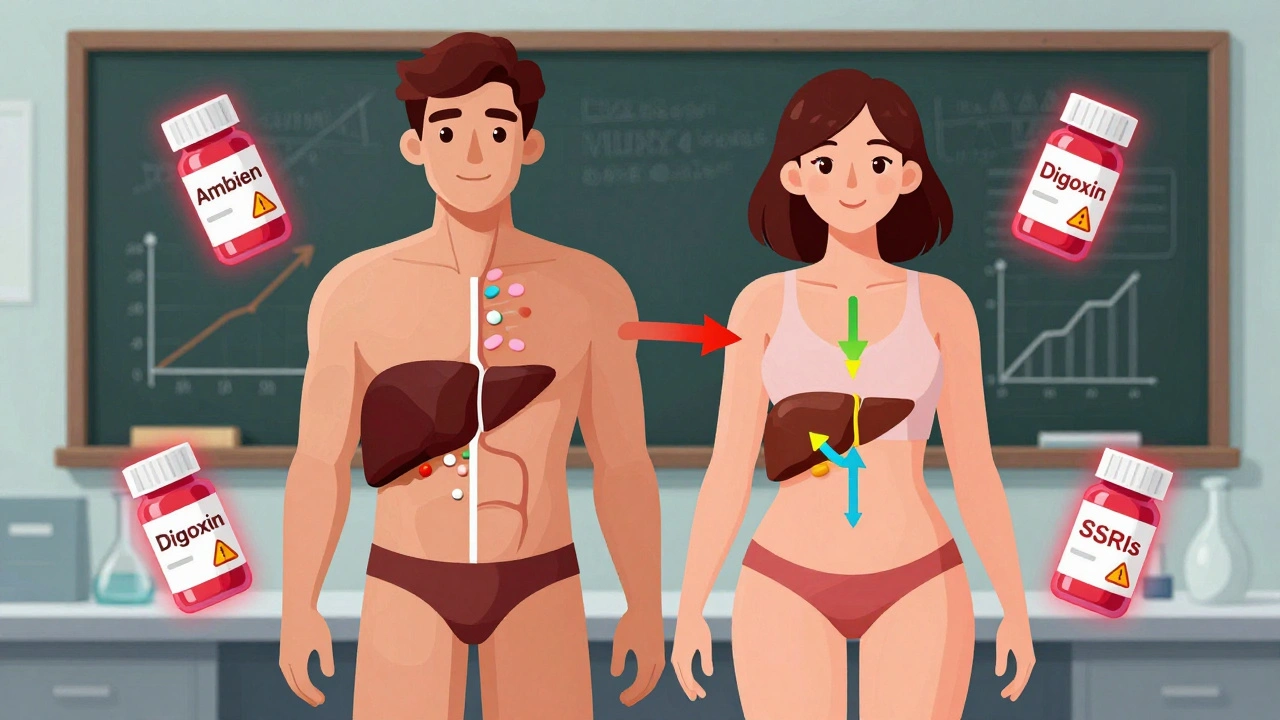
Women experience adverse drug reactions nearly twice as often as men due to biological differences and outdated clinical trial practices. Learn why dosing based on male physiology puts women at risk - and what’s being done to fix it.
Gender and Pharmacology: How Sex Differences Affect Drug Response and Safety
When we talk about gender and pharmacology, the study of how biological sex and gender identity influence how drugs work in the body. Also known as sex-based pharmacology, it explains why a pill that helps one person might do nothing—or cause harm—to another. For decades, medical research treated male bodies as the default. That meant drugs were tested mostly on men, dosed based on male metabolism, and approved without knowing how they’d affect women. The result? Women experience adverse drug reactions at nearly twice the rate of men. And it’s not just about hormones—it’s about liver enzymes, body fat, kidney function, and even how stomach acid works.
Take drug metabolism, how the body breaks down and eliminates medications. Women often process drugs slower than men because of differences in liver enzyme activity, especially CYP450 enzymes. That means a standard dose of a sleep aid or antidepressant might build up in a woman’s system, increasing drowsiness or dizziness. Meanwhile, medication safety, the practice of ensuring drugs are used without causing preventable harm can’t ignore that women are more likely to take multiple prescriptions, especially for chronic conditions like autoimmune diseases or depression. This raises the risk of dangerous interactions—something we see in posts about benzodiazepines mixing with opioids, or acid-reducing drugs blocking absorption of other meds.
It’s not just about biology. Gender identity affects how people report symptoms, access care, and even how doctors listen. A woman with chest pain is more likely to be told she’s anxious than to get a heart test—even when the signs match a heart attack. That bias carries into prescribing: women are more often given sedatives, while men get painkillers for the same complaints. And when it comes to sex differences in drug response, how men and women react differently to the same medication due to biological factors, the data is clear. Statins work differently in women. Antidepressants hit harder. Opioids need adjusted doses. Even over-the-counter pain relievers like ibuprofen and acetaminophen have varying effectiveness across sexes.
The good news? Science is catching up. Regulatory agencies now ask for sex-disaggregated data. Pharmacists are learning to check for gender-specific dosing guidelines. And patients are starting to ask better questions: "Is this dose right for me?" or "Has this been tested in women?" The posts below don’t just list drugs—they show you how gender shapes real-world outcomes. From how liver disease changes drug clearance differently in men and women, to why yeast infections respond differently to OTC treatments, to how heart failure meds work better in one sex than the other—you’ll see the patterns behind the prescriptions. This isn’t theory. It’s what’s happening in clinics, pharmacies, and your own medicine cabinet right now.