
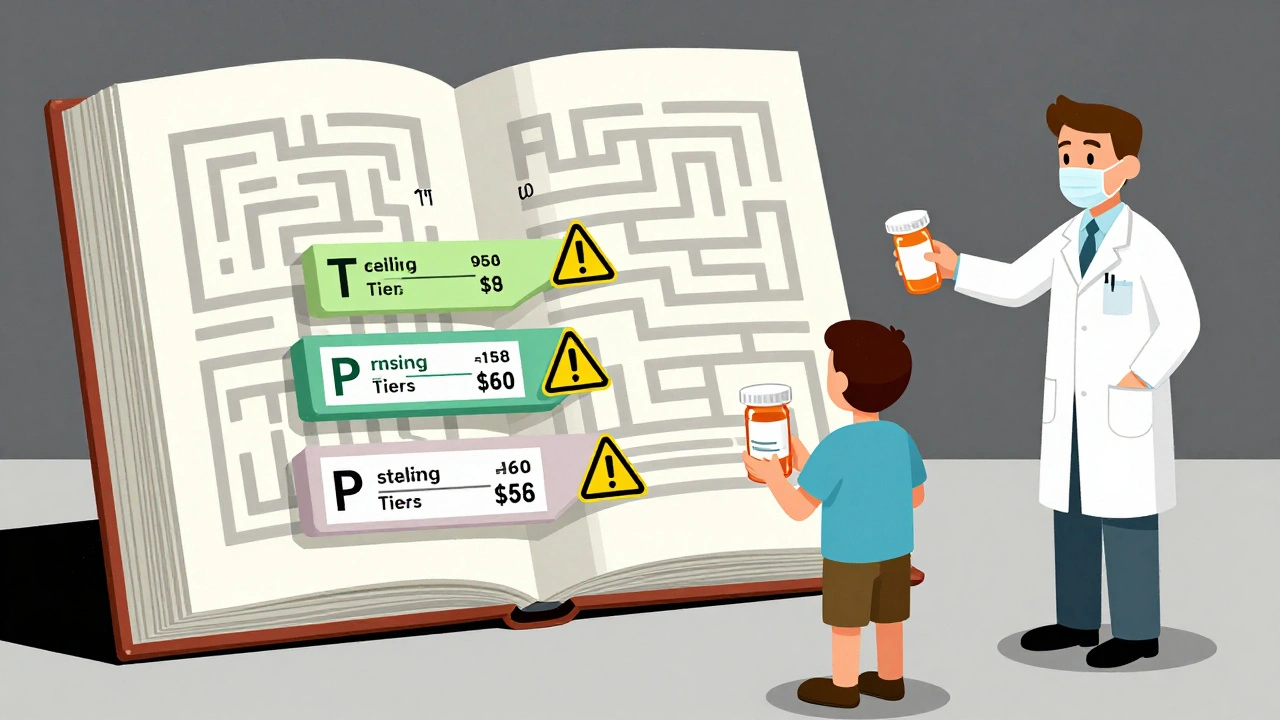
Insurance formularies control which drugs are covered and how much you pay. Learn how tiers, substitution rules, and exceptions work-and how to protect yourself from unexpected cost hikes.
Formulary Tiers Explained: How Drug Costs Affect Your Prescriptions
When your insurance says a drug is on formulary tiers, a system that groups medications by cost and coverage level set by your health plan or pharmacy benefit manager. It's not just a list—it's a pricing ladder that directly affects what you pay at the pharmacy. You might think all prescriptions are treated the same, but they’re not. Your plan puts drugs into different levels, or tiers, based on cost, effectiveness, and whether a generic version exists. The lower the tier, the less you pay. Tier 1 usually means generic drugs you pay just a few dollars for. Tier 4 or 5? That’s where specialty meds, like those for rheumatoid arthritis or hepatitis C, land—and those can cost hundreds, even thousands, per month.
Behind every tier is a pharmacy benefit manager, a middleman that negotiates drug prices with manufacturers on behalf of insurers. PBM decides which drugs go where, often favoring ones they have financial deals with. That’s why your doctor might prescribe a drug you’ve never heard of—it’s not necessarily the best for you, it’s the one the PBM pushed into a lower tier. This isn’t conspiracy; it’s business. But it’s your wallet that feels the impact. And when a drug moves tiers—say, from Tier 2 to Tier 3 because the generic expired—you’ll get a notice, often too late to avoid a surprise bill.
That’s why knowing your formulary matters. If you’re on multiple meds, especially for chronic conditions like diabetes or high blood pressure, you can save hundreds a year by switching to a lower-tier drug. Biosimilars and generics often sit in the same tier, but they’re not interchangeable in practice. Specialty pharmacies handle high-cost drugs that may be locked in Tier 5, and even then, prior authorization can block access. Meanwhile, counterfeit generics and online price differences show how inconsistent the system is. Some people pay $5 for metformin at Walmart. Others pay $50 for the same pill through their insurance because it’s not on their formulary. It’s not fair. It’s not logical. But it’s real.
Formulary tiers aren’t just about cost—they affect adherence. If a drug is too expensive, you skip doses. You stop taking it. That’s how hospital visits start. That’s how conditions get worse. And that’s why understanding your tier structure isn’t just about saving money—it’s about staying healthy. The posts below show you exactly how this system plays out in real life: how drug interactions change when you switch tiers, how liver disease forces dosing changes that clash with formulary rules, how opioid rotation gets blocked by tier restrictions, and how people end up paying more for the same drug just because their plan changed its list. You’ll see how PBM decisions impact real patients, how generics aren’t always the cheapest option, and what steps you can take to fight back when a drug gets bumped up a tier. This isn’t theory. It’s your prescription. Let’s make sense of it.