
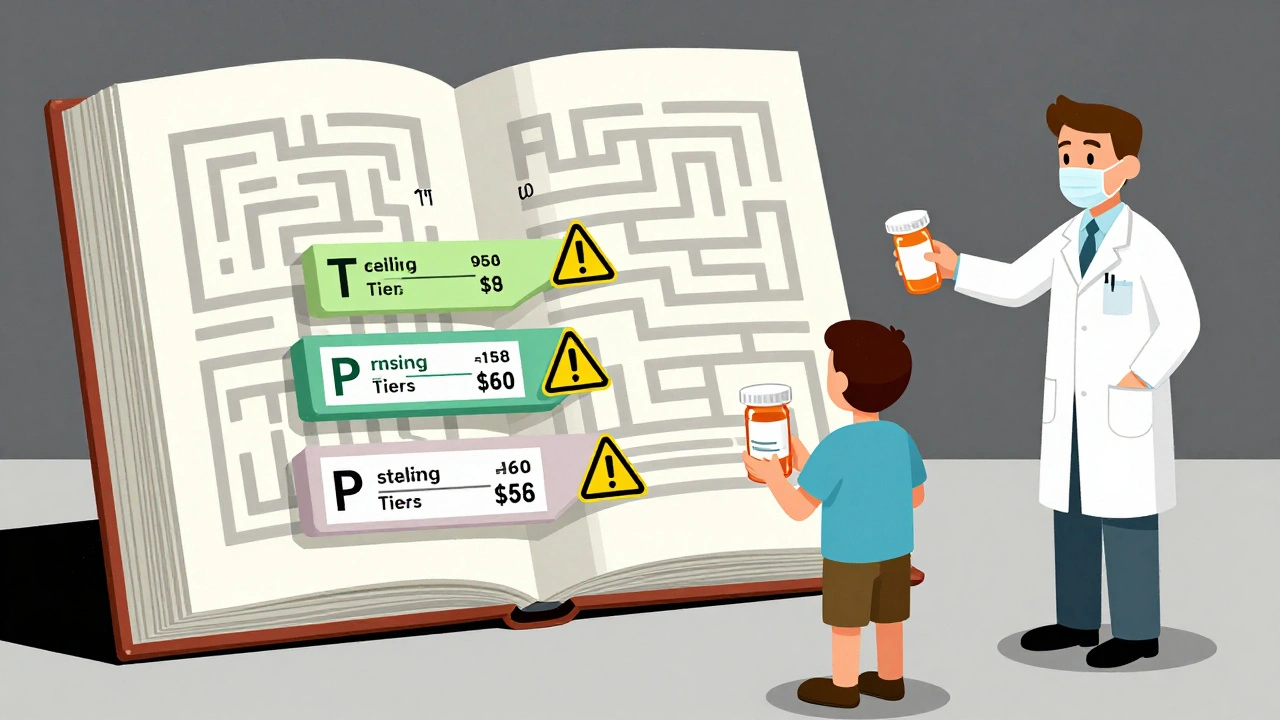
Insurance formularies control which drugs are covered and how much you pay. Learn how tiers, substitution rules, and exceptions work-and how to protect yourself from unexpected cost hikes.
Formulary Exceptions: What They Are and Why They Matter in Your Treatment Plan
When your insurance plan won’t cover a drug you need, a formulary exception, a formal request to bypass a plan’s restricted drug list when medically necessary. Also known as a prior authorization appeal, it’s your legal right to ask for coverage when standard options fail or cause harm. This isn’t a loophole—it’s a safety valve built into health plans to make sure patients don’t go without essential meds just because of paperwork.
Formulary exceptions aren’t about picking your favorite brand. They’re about matching the right drug to the right body. If a generic causes severe nausea, a biosimilar triggers an allergic reaction, or a specialty drug is the only one that controls your condition, your provider can file an exception. It’s not rare—about 1 in 5 specialty drug requests get approved this way. The key is documentation: lab results, trial failures, side effect logs, or specialist notes. Without proof, the request gets denied. And yes, insurers do push back. But when the evidence is solid, they’re required by law to reconsider.
Related to this are prior authorization, a pre-approval step insurers use to control costs before approving high-risk or expensive drugs, and drug formularies, the lists of approved medications a plan will pay for, often shaped by cost, not clinical need. These systems are meant to save money, but they can block care. Formulary exceptions are the counterweight—putting patient outcomes ahead of budget lines. You’ll see this play out in posts about opioid rotation, where switching drugs is medically necessary but not always covered, or in statin side effect discussions, where a patient’s intolerance forces a switch off the formulary list.
It’s not just about expensive drugs. Even cheap generics can be excluded if the formulary only lists one version, or if a PBM (pharmacy benefit manager) favors a specific supplier. That’s why counterfeit generics and e-pharmacy pricing posts matter—they show how access gaps force people to look outside the system. And when liver disease or heart failure changes how drugs are processed, standard dosing rules break down. That’s when formulary exceptions become lifesavers, not just paperwork.
You don’t need to fight this alone. Your doctor, pharmacist, or patient advocate can help you build the case. The real challenge? Timing. These requests take days or weeks. If you’re waiting for a new medication and your current one is failing, every delay matters. That’s why posts on therapeutic drug monitoring, long-acting injectables, and acid-reducing drug interactions are so relevant—they show how medication choices ripple through your whole treatment plan, and why one-size-fits-all formularies often miss the mark.
What you’ll find below are real stories and practical guides on how to get the right drugs when the system says no. From how to document side effects that justify an exception, to understanding why your insurer denied a biosimilar, to what to say when your pharmacist says "it’s not covered"—this collection gives you the tools to push back, not just accept.