
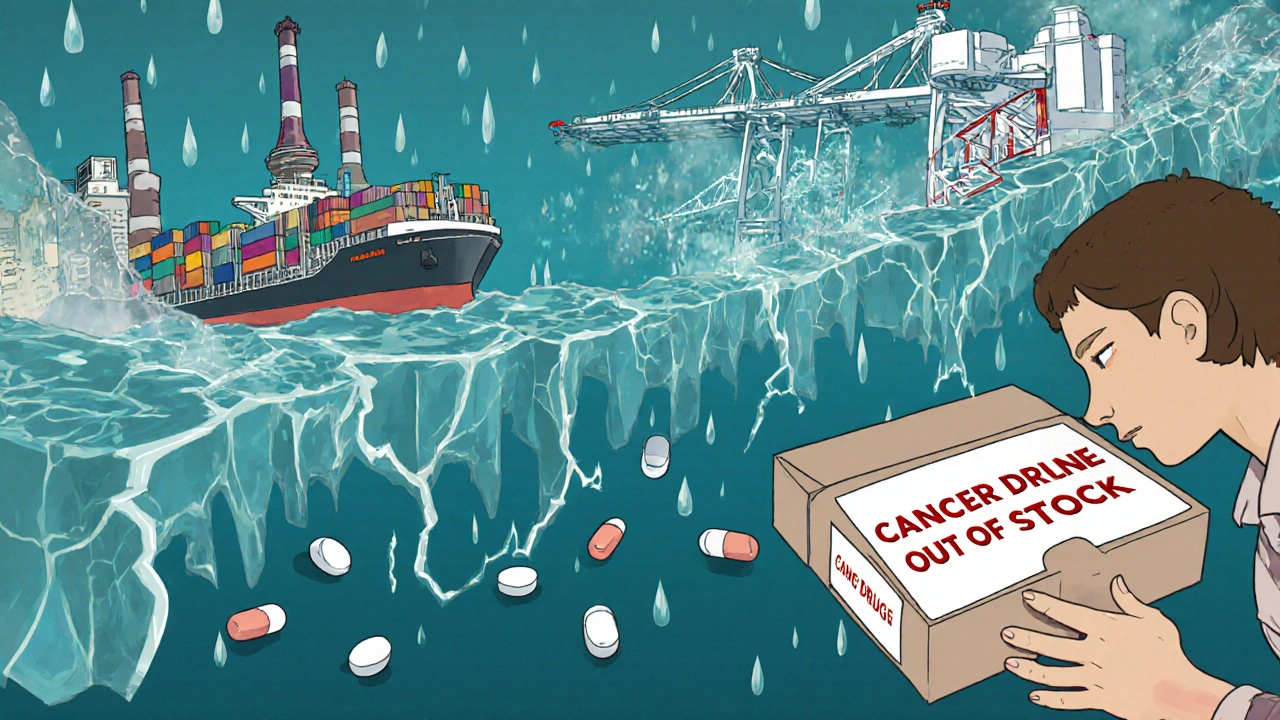
Dependence on foreign manufacturing for drugs is causing widespread shortages in 2025. With 80% of active ingredients coming from China and India, disruptions in one country can halt global supply. Here’s how multi-shoring and local production are helping.
Foreign Manufacturing: What It Means for Your Medications and Where They Really Come From
When you pick up a bottle of generic pills, you might think you’re getting the same thing as the brand-name version—but foreign manufacturing, the process of producing pharmaceuticals outside the country where they’re sold. Also known as overseas drug production, it’s how most of the generic medications in your medicine cabinet are made today. The U.S. and Europe rely heavily on factories in India, China, and other countries to produce active ingredients and finished drugs. This isn’t a secret—it’s the standard. But few people know how much of their health depends on these distant facilities, or what happens when quality control slips.
Generic drugs, medications that contain the same active ingredients as brand-name versions but cost far less. Also known as non-branded prescriptions, it’s the backbone of affordable healthcare. But here’s the catch: the FDA doesn’t inspect every foreign factory. It checks a fraction—sometimes less than 10%—each year. Meanwhile, countries like India produce over 40% of the world’s generic medicines. That means your $5 prescription for metformin or lisinopril could have been made in a plant thousands of miles away, under different rules, with different oversight. And while most of these facilities meet international standards, the risks aren’t theoretical. In 2018, contaminated valsartan from a Chinese factory led to a global recall. In 2021, the FDA flagged multiple Indian plants for falsified data. These aren’t rare events—they’re symptoms of a system built on cost, not control.
That’s why drug sourcing, the process of tracking where pharmaceutical ingredients and finished products originate. Also known as supply chain transparency, it should matter to you. If your blood pressure med comes from a factory with a history of violations, you’re not just saving money—you’re gambling with safety. And yet, most people don’t ask where their pills come from. They trust the label. But labels don’t tell you if the factory passed its last inspection—or if it even had one. The truth is, your doctor doesn’t know either. Pharmacists rarely track the origin of each batch. It’s all hidden behind corporate contracts and bulk shipping.
What you will find in the articles below is a clear look at how this system works—and where it fails. You’ll see how foreign manufacturing drives down prices, but also creates blind spots. You’ll learn how Europe uses tendering systems to force transparency, while the U.S. lets market forces decide. You’ll read about real cases where cheap generics saved lives—and others where they nearly ended them. You’ll discover how companies like GoodRx and Beem rely on these overseas factories to offer discounts, and why some online pharmacies cut corners. You’ll even find out how your own supplement or OTC painkiller might be made in the same facility as your prescription drugs.
This isn’t about fear. It’s about awareness. If you’re taking medication regularly, you deserve to know where it came from—and whether it’s truly safe. The next time you refill a prescription, ask yourself: Who made this? And did they pass inspection? The answers might surprise you.