
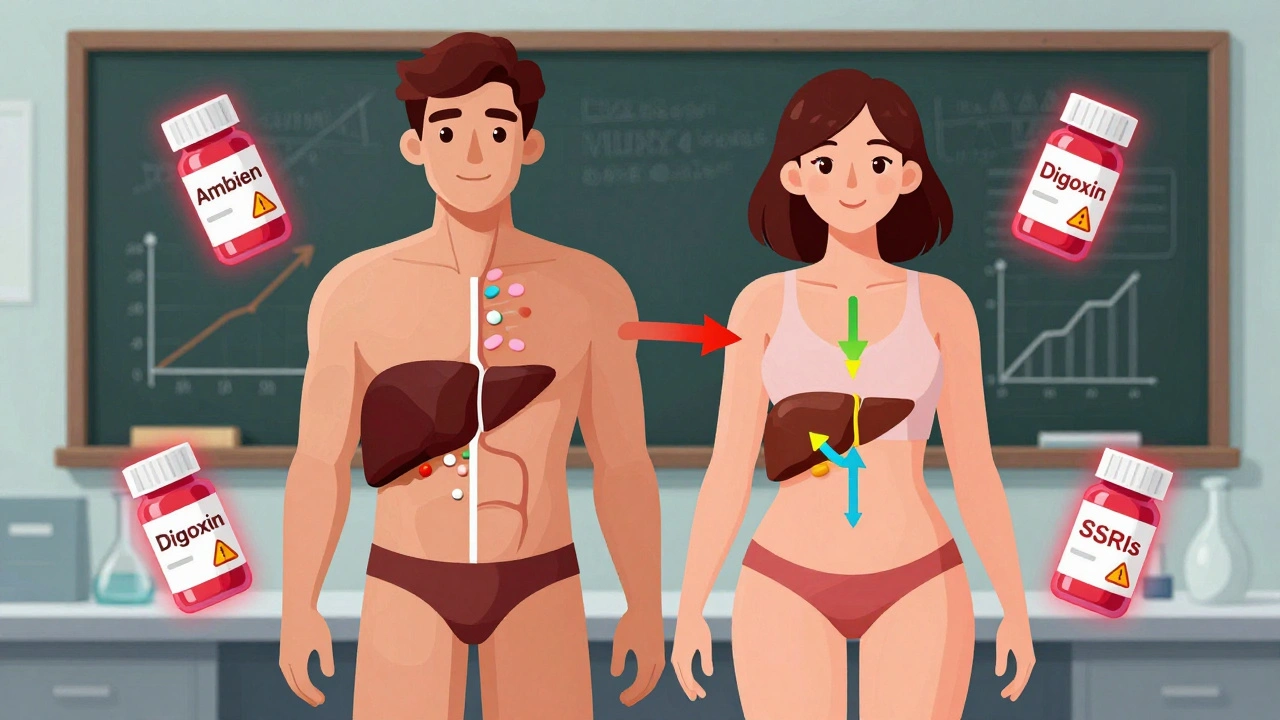
Women experience adverse drug reactions nearly twice as often as men due to biological differences and outdated clinical trial practices. Learn why dosing based on male physiology puts women at risk - and what’s being done to fix it.
Drug Dosing for Women: How Gender Affects Medication Safety and Effectiveness
When it comes to drug dosing for women, the way medications are processed in the female body differs significantly from men due to biological, hormonal, and metabolic factors. Also known as gender-specific pharmacology, this field explains why the same dose can be ineffective or even harmful depending on sex. Many drugs were tested mostly on men in clinical trials—until recently—and that legacy still affects prescriptions today.
Pharmacokinetics, how the body absorbs, distributes, metabolizes, and excretes drugs works differently in women. Lower average body weight, higher body fat percentage, and slower gastric emptying mean drugs often stay longer in the system. Hormones like estrogen and progesterone directly affect liver enzymes—especially CYP450—that break down medications. This means antidepressants, painkillers, and even blood thinners can build up to unsafe levels if dosed the same as men.
Drug metabolism, the chemical process that breaks down medicines in the liver slows down in women during certain phases of the menstrual cycle and especially during pregnancy or menopause. For example, studies show women clear some beta-blockers and sedatives up to 30% slower than men. This isn’t just theory—it’s why women are more likely to suffer side effects from Zoloft, Ambien, or statins, even at standard doses.
It’s not just about the drug itself. medication safety, the risk of harm from drugs when used as directed for women also includes how they interact with birth control, hormone therapy, or supplements like iron and calcium. A woman taking antidepressants and an iron supplement might get less relief because the iron blocks absorption—something her male doctor might never consider. And when women report side effects, they’re more likely to be dismissed as "anxiety" or "hormonal."
There’s no universal fix, but awareness changes outcomes. Doctors who check liver enzymes, track weight changes, and ask about menstrual cycles see better results. Women who know their own patterns—like how their body reacts to caffeine, alcohol, or sleep loss—can spot early signs of toxicity. It’s not about overcomplicating treatment. It’s about making sure the dose fits the person, not the textbook.
Below, you’ll find real-world insights from posts that dig into how women’s bodies respond to everything from antidepressants and statins to yeast infection treatments and pain meds. These aren’t generalizations—they’re based on clinical data, patient reports, and pharmacist observations. Whether you’re managing a chronic condition, dealing with a new prescription, or just trying to understand why a med didn’t work as expected, the answers here are grounded in how your body actually works—not what the label assumes.