
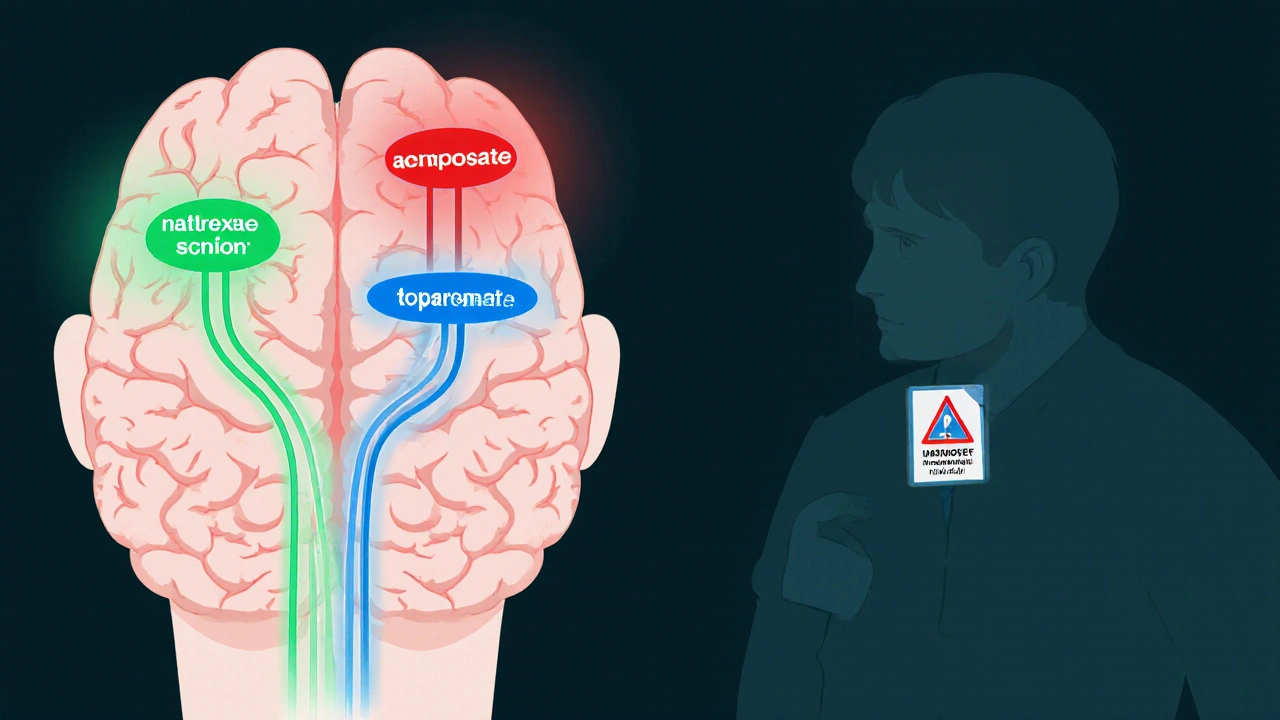
Discover the top Antabuse competitor drugs used today for alcohol dependence-naltrexone, acamprosate, and topiramate-and how they compare in effectiveness, safety, and ease of use.
Disulfiram Alternatives: Safer Options for Alcohol Dependence Treatment
When someone is trying to quit drinking, disulfiram, a medication that causes unpleasant reactions when alcohol is consumed. Also known as Antabuse, it’s been used for decades—but many people stop taking it because of the fear of reactions or because it doesn’t address the root causes of cravings. The truth? There are better, more sustainable ways to support recovery that don’t rely on fear.
Modern treatment focuses on reducing cravings, restoring brain chemistry, and building long-term habits—not just punishing drinking. That’s why naltrexone, a medication that blocks the pleasurable effects of alcohol by targeting opioid receptors in the brain is now one of the most recommended options. It doesn’t make you sick if you drink; it simply makes drinking feel less rewarding. Then there’s acamprosate, a drug that helps stabilize brain activity after stopping alcohol use, especially for people struggling with anxiety, insomnia, or restlessness during early recovery. And for those with strong urges or co-occurring mood disorders, topiramate, an antiseizure medication that also reduces alcohol cravings has shown solid results in clinical studies.
These aren’t just substitutes—they’re different tools for a different kind of recovery. Disulfiram works like a tripwire. The alternatives work like training wheels: they help you rebuild control, one day at a time. You won’t find a magic pill, but you will find options that fit real lives—not just fear-based rules. What works for one person might not work for another, and that’s okay. The goal isn’t to force compliance; it’s to find what helps you stay steady.
Below, you’ll find real comparisons and insights from people who’ve tried multiple paths—whether it’s switching from disulfiram to naltrexone, combining meds with therapy, or exploring non-medication strategies that actually stick. No fluff. No marketing. Just what the data and lived experience show.