
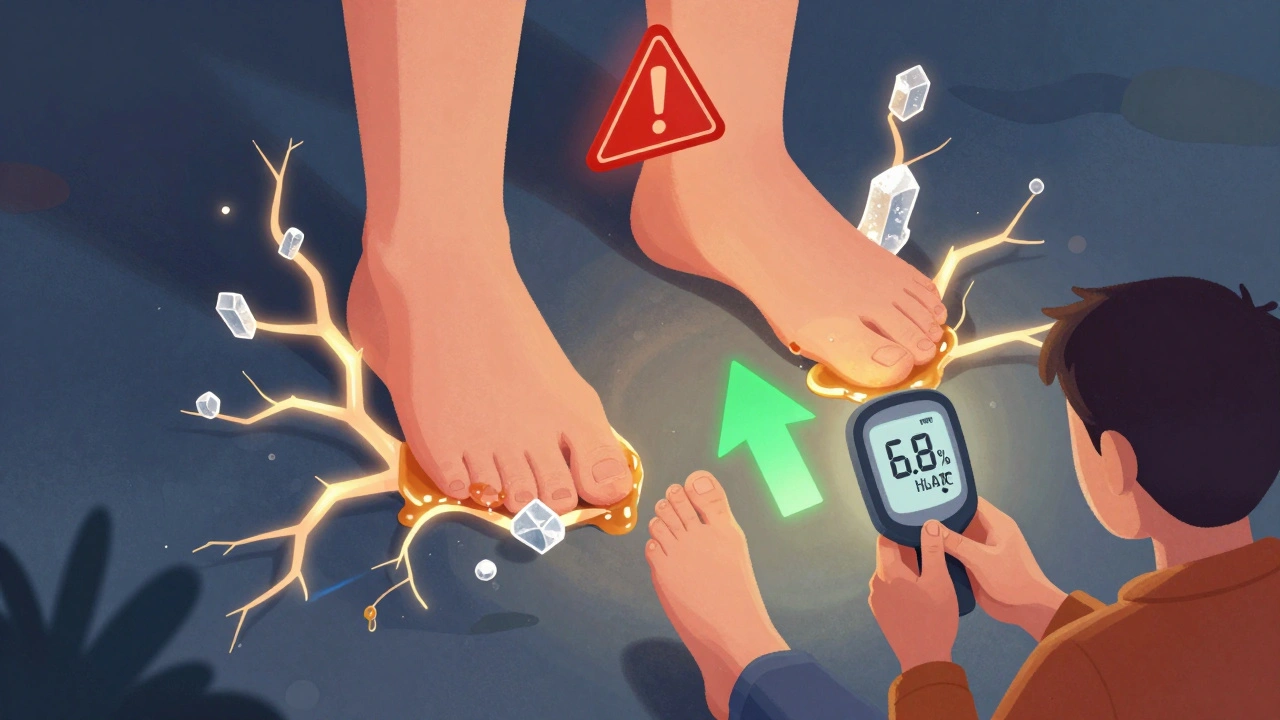
Diabetic neuropathy causes painful nerve damage in up to 70% of people with diabetes. Learn proven ways to manage pain, protect your nerves, and slow progression through blood sugar control, medications, and lifestyle changes.
Diabetic Neuropathy: Causes, Symptoms, and What You Can Do
When you have diabetic neuropathy, nerve damage caused by prolonged high blood sugar levels that affects sensation, movement, and organ function. Also known as diabetes-related nerve damage, it’s one of the most common and preventable complications of diabetes. It doesn’t happen overnight—it creeps in over years if blood sugar stays too high. The nerves in your feet and hands go first, but it can spread to your digestive system, heart, and even your sex organs. You might not notice it until you’re standing barefoot and can’t feel the floor, or until you can’t tell if your foot is cut or burned.
Blood sugar control, the consistent management of glucose levels through diet, medication, and activity is the single biggest factor in preventing or slowing this damage. Studies show that keeping HbA1c under 7% cuts the risk of nerve damage by up to 60%. But it’s not just about numbers—it’s about how you feel. Tingling? Burning? Sharp pains at night? That’s your nerves screaming. And if you’ve lost feeling in your toes, you’re at risk for ulcers that won’t heal, infections that spread, and even amputations. This isn’t inevitable. It’s a warning sign, not a death sentence.
Neuropathy pain, the burning, stabbing, or electric shock-like sensations caused by damaged nerves is real and often misunderstood. Many people think it’s just "old age" or "getting used to it." It’s not. There are medications that help—some originally made for seizures or depression—that calm those misfiring nerves. Topical creams, physical therapy, and even simple foot care routines can make a huge difference. But none of it works if you ignore the root cause: high sugar. And that’s why so many of the posts below focus on how medications, lifestyle changes, and monitoring tools connect back to protecting your nerves.
You’ll find real stories here—not theory. Posts about how generic drugs interact with nerve meds, why some pain relievers make it worse, and how liver health affects how your body processes the drugs you take for neuropathy. There’s advice on spotting fake supplements that claim to "cure" nerve damage, and how to talk to your doctor about switching treatments when side effects pile up. You’ll see how insulin resistance ties into this, how heart health impacts circulation to your nerves, and why checking your feet daily isn’t optional—it’s life-saving.
This isn’t just about managing symptoms. It’s about stopping the damage before it steals your independence. The posts below give you the tools—not the hype—to understand what’s really going on inside your body and what you can do today to protect your nerves, your feet, and your future.