
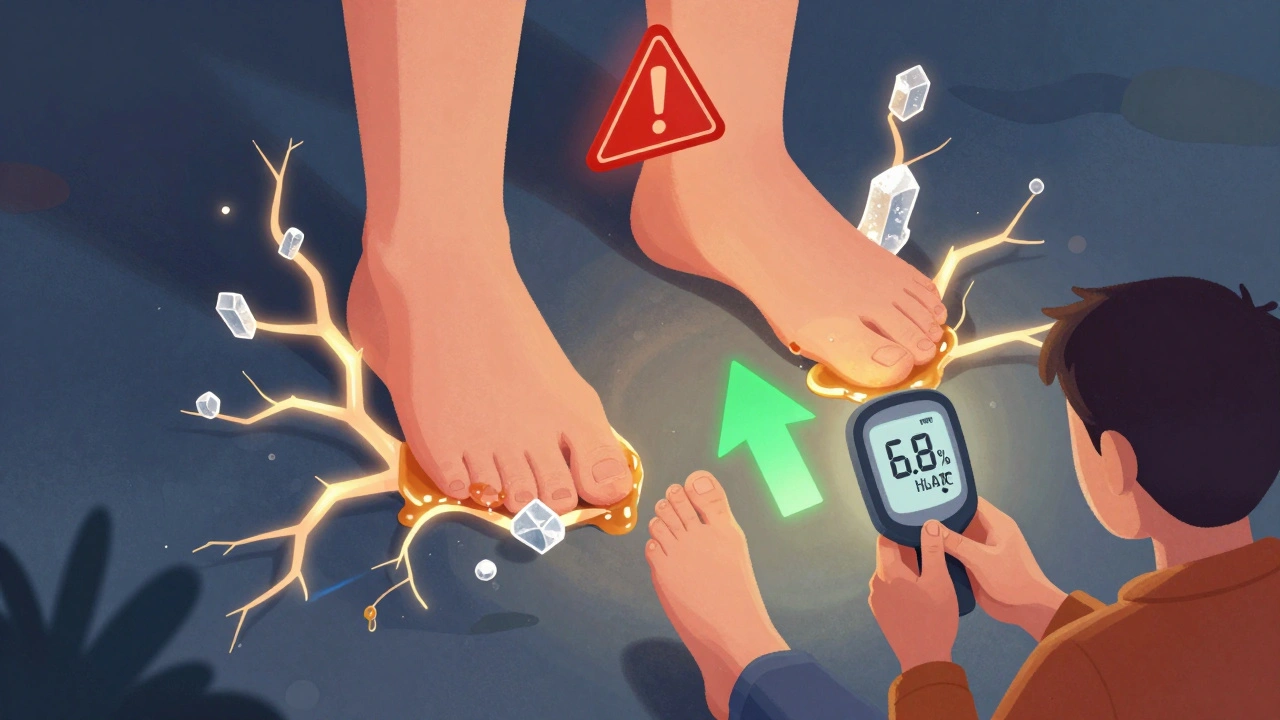
Diabetic neuropathy causes painful nerve damage in up to 70% of people with diabetes. Learn proven ways to manage pain, protect your nerves, and slow progression through blood sugar control, medications, and lifestyle changes.
Diabetes Pain Management: How to Control Nerve Pain and Avoid Dangerous Drug Interactions
When you have diabetes, a chronic condition where the body can’t properly regulate blood sugar. Also known as hyperglycemia, it doesn’t just raise your risk of heart disease or kidney failure—it can slowly fry your nerves. This is called diabetic neuropathy, nerve damage caused by high blood sugar over time. It shows up as burning, tingling, or sharp pain, usually in the feet and hands. Left unchecked, it can make walking painful, sleep impossible, and daily life a struggle.
Managing this pain isn’t just popping painkillers. Many people reach for over-the-counter options like ibuprofen or acetaminophen, but those rarely touch the root cause. The real solutions involve medications designed for nerve pain—like gabapentin, duloxetine, or pregabalin—which work differently than regular pain relievers. But here’s the catch: these drugs don’t play nice with everything. Mixing them with acid reducers, blood thinners, or even certain supplements can lead to dangerous drops in blood pressure, liver stress, or worse. That’s why drug interactions, unexpected and harmful reactions when two or more medications are taken together. Also known as medication conflicts, they’re one of the most underreported risks in chronic disease care. A study from the FDA found that over 40% of people with diabetes take at least three prescription drugs, and nearly half of them aren’t aware their meds might be clashing. Even generic versions can cause issues—not because of the active ingredient, but because of fillers or coatings that change how the drug is absorbed.
It’s not just about what you take—it’s about how you take it. Timing matters. Some nerve pain meds work better with food. Others need to be taken at night to avoid dizziness during the day. And if you’re using long-acting injectables for other conditions, like antipsychotics or insulin, your body’s ability to process pain meds changes. Liver function drops with age and diabetes, slowing how fast drugs clear from your system. That means what was a safe dose last year might be too much now. That’s why monitoring isn’t optional—it’s survival.
There’s also the hidden layer: lifestyle. Blood sugar control is the number one way to stop diabetic neuropathy from getting worse. But even with perfect numbers, some nerve damage sticks around. That’s where physical therapy, proper footwear, and avoiding alcohol come in. And yes, some people swear by ginkgo biloba or turmeric for pain—but those can thin your blood or interfere with your diabetes meds. One wrong combo, and you could end up in the ER.
What you’ll find below isn’t a list of miracle cures. It’s a collection of real, tested insights from people who’ve been there—how to spot dangerous drug mixes, why some pain relievers fail, what alternatives actually help, and how to talk to your doctor without sounding like you’re arguing. These aren’t theory pieces. They’re based on what’s happening in clinics, pharmacies, and patients’ homes right now. You’ll learn how to cut through the noise and find what works—for your body, your meds, and your life.