
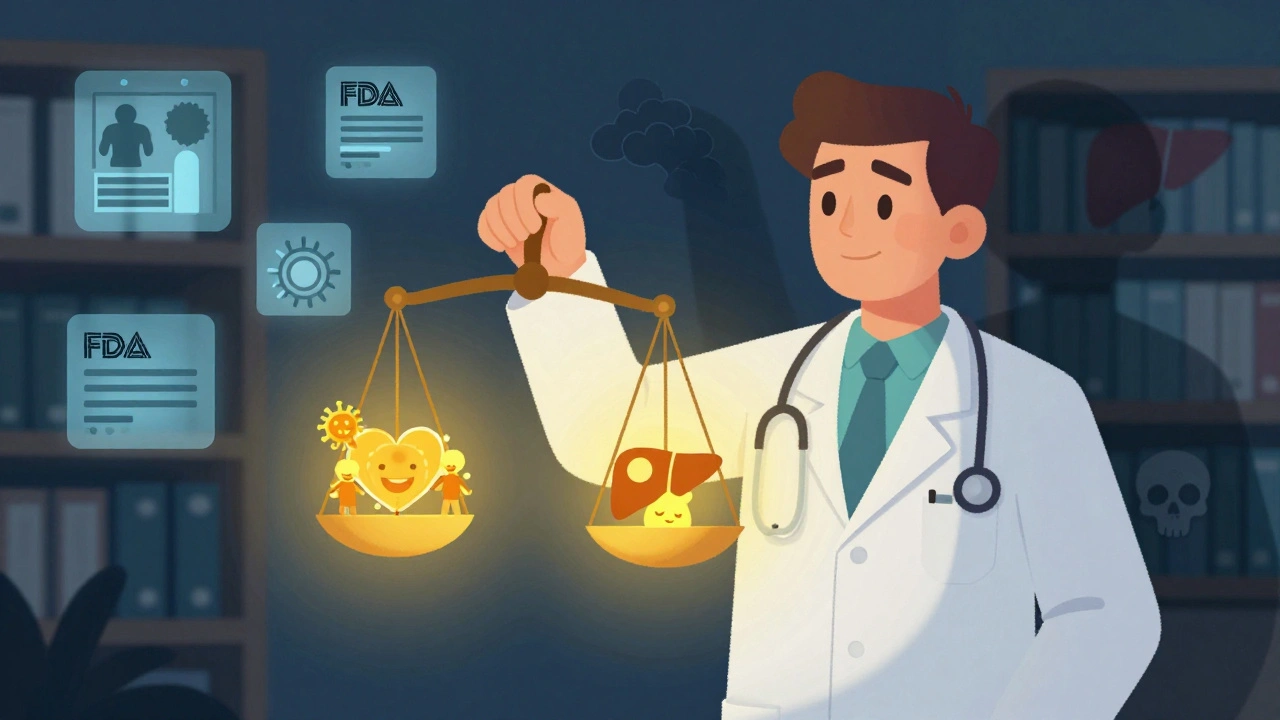
Healthcare providers weigh medication risks against benefits to ensure treatments do more good than harm. This process considers disease severity, side effects, patient preferences, and real-world data-especially when options are limited.
Benefit-Risk Assessment: Weighing Medication Safety and Effectiveness
When you take a medication, you’re making a benefit-risk assessment, the process of comparing how much good a drug does against how much harm it might cause. Also known as risk-benefit analysis, it’s not just something doctors do—it’s something you should understand too. Every pill, injection, or patch has two sides: what it fixes and what it might break. A statin lowers cholesterol and cuts heart attack risk, but can cause muscle pain or memory fog. An opioid eases severe pain, but might lead to dependence or overdose. That’s why benefit-risk assessment isn’t a one-time decision—it’s an ongoing conversation between your body, your condition, and your meds.
This process ties directly to pharmacovigilance, the science of detecting, understanding, and preventing drug side effects after they hit the market. Clinical trials catch the big risks, but the real dangers often show up later—when thousands of people with different health problems take the drug. That’s how we learned about statins and memory, or how long-acting injectables can trigger diabetes if not monitored. Therapeutic monitoring, tracking drug levels in your blood to stay in the safe zone is part of this too. For drugs like tricyclic antidepressants or antipsychotics, a simple blood test can mean the difference between relief and emergency.
And it’s not just about the drug itself. Your liver, your age, what else you’re taking—all change the math. If you have liver disease, your body clears drugs 30–50% slower. That means a normal dose could become toxic. Same with acid reducers: they might help your heartburn but block your thyroid med or antibiotics from working. Even herbal supplements like Ginkgo biloba can turn a safe blood thinner into a bleeding risk. That’s why drug safety, the practice of spotting and managing hidden dangers in medications is so personal. It’s not about avoiding meds—it’s about using them smartly.
What you’ll find below are real stories from people who’ve walked this line. From opioid rotation that cuts side effects without losing pain control, to how counterfeit generics sneak into online orders, to why insurance formularies force substitutions that could backfire. These aren’t theory pieces—they’re practical checklists, warning signs, and survival tips from pharmacists, patients, and providers who’ve seen what happens when benefit-risk balance goes wrong. You’re not just reading about drugs—you’re learning how to protect yourself from the unseen costs of treatment.