
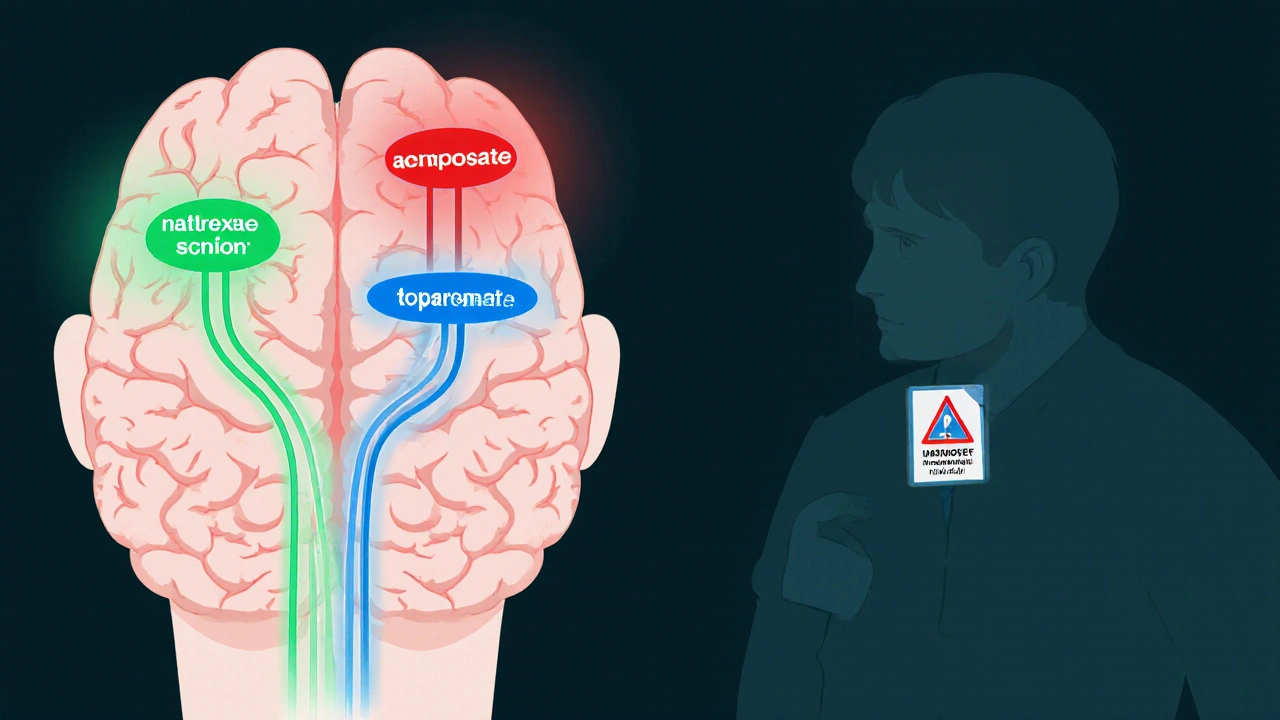
Discover the top Antabuse competitor drugs used today for alcohol dependence-naltrexone, acamprosate, and topiramate-and how they compare in effectiveness, safety, and ease of use.
Acamprosate: What It Is, How It Works, and What You Need to Know
When someone stops drinking alcohol, their brain doesn’t just reset—it scrambles. That’s where acamprosate, a prescription medication used to help maintain abstinence in people recovering from alcohol dependence. Also known as Campral, it doesn’t cure addiction, but it helps steady the brain’s chemistry after withdrawal. Unlike naltrexone or disulfiram, acamprosate doesn’t make you sick if you drink or block the high. Instead, it targets the long-term brain changes that drive cravings, especially during early recovery.
Acamprosate works by balancing two key neurotransmitters: glutamate and GABA. After years of heavy drinking, your brain gets stuck in overdrive—glutamate too active, GABA too weak. This imbalance leaves people anxious, restless, and wired even after they stop drinking. Acamprosate doesn’t fix everything, but it reduces the urge to drink by calming this internal noise. It’s not a magic pill. It’s a tool. And it only works if you’re already quit.
People who use acamprosate are usually in the first few months of sobriety. It’s most effective when paired with counseling, support groups, or lifestyle changes. You can’t take it if you have severe kidney problems. It’s not for binge drinkers who still drink occasionally. And it won’t help if you’re still using alcohol or other substances. Think of it like a brace for a healing bone—you need to stop putting stress on it first.
Other medications like naltrexone and disulfiram are also used for alcohol dependence, but they work differently. Naltrexone blocks the pleasurable effects of alcohol. Disulfiram makes you sick if you drink. Acamprosate doesn’t scare you or numb you—it just helps you feel more normal so you can stick with recovery. That’s why many doctors recommend it for people who’ve had multiple relapses and feel emotionally drained.
Side effects are usually mild—diarrhea, gas, dry mouth. But if you’re on other meds, especially ones that affect your kidneys, talk to your doctor. It’s not a drug you take for life. Most people use it for 6 to 12 months, then decide if they need to continue. The goal isn’t to stay on it forever—it’s to give your brain time to heal so you don’t need it at all.
What you’ll find in the posts below aren’t just facts about acamprosate. You’ll see how it fits into the bigger picture of addiction treatment, how it compares to other options, and how real people manage recovery with it. You’ll also find related topics: how alcohol affects your liver, why cravings return months after quitting, and how to avoid triggers that lead to relapse. These aren’t random articles—they’re the pieces you need to understand what acamprosate really does, and how to use it wisely.