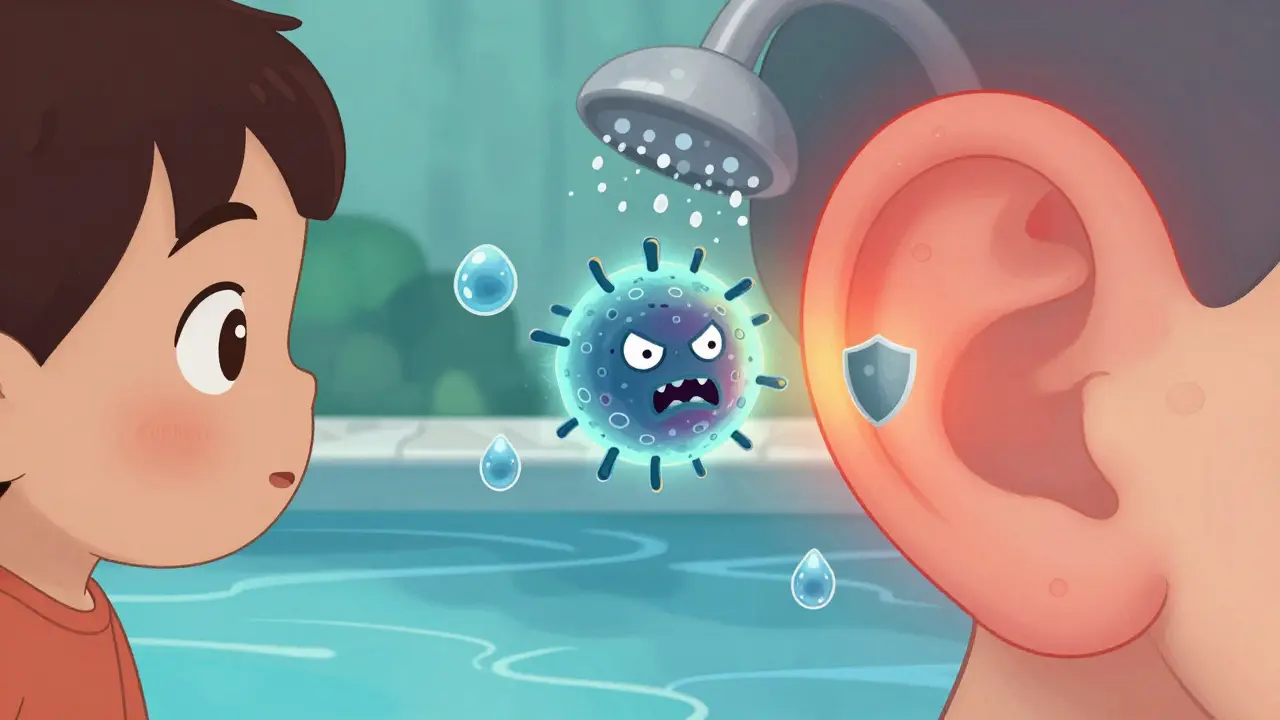
What Exactly Is Swimmer’s Ear?
Swimmer’s ear, or otitis externa is an infection of the outer ear canal, the tube that runs from the eardrum to the outside of the ear, isn’t caused by swimming itself - it’s caused by water getting stuck. When water sits in the ear canal, it creates a warm, damp environment where bacteria like Pseudomonas aeruginosa and Staphylococcus aureus thrive. About 98% of cases come from these bacteria, while fungi make up the rest. This isn’t just a summer problem - it’s a year-round issue for anyone who spends time in water, whether it’s a pool, lake, or even a hot shower.
The pain is the first thing you’ll notice. It’s not a dull ache. It’s sharp, deep, and gets worse when you tug on your earlobe or press on the bump in front of your ear (the tragus). If you’ve ever accidentally pulled your ear too hard while adjusting headphones and felt a jolt of pain, that’s the same sensation - only much worse. In fact, studies show pain increases by 300-400% when the ear is touched. You might also notice drainage - clear at first, then turning yellow or green. Some people even notice their hearing feels muffled. That’s not because your ear is blocked with wax; it’s because the canal swells shut by 50-75%, turning your ear into a narrow, inflamed tunnel.
Who Gets Swimmer’s Ear - And Why?
You might think it’s only kids who swim every day who get this. But the data says otherwise. The highest rates are in kids aged 7 to 12 (43% of cases) and young adults aged 15 to 25 (31%). Men are diagnosed more often than women - 58% of cases. Why? It’s not just about how much they swim. It’s about what they do afterward.
The biggest culprit isn’t water - it’s cotton swabs. Studies show that 65% of cases caused by trauma come from people trying to clean their ears. That little Q-tip doesn’t remove wax - it pushes it deeper and scrapes the delicate skin inside the canal. Even one time can set off an infection. People with eczema or psoriasis are also at higher risk - 28% of chronic cases involve underlying skin conditions that make the ear canal more prone to irritation.
And then there’s frequency. Swimming more than four days a week increases your risk by over seven times. That’s why competitive swimmers, lifeguards, and even people who take daily laps in their backyard pool are the most vulnerable. But you don’t need to be an athlete. A single weekend at the beach, if you don’t dry your ears properly, can be enough.
How to Prevent Swimmer’s Ear - The Proven Ways
Prevention isn’t guesswork. It’s science. And the most effective method is simple: get the water out fast.
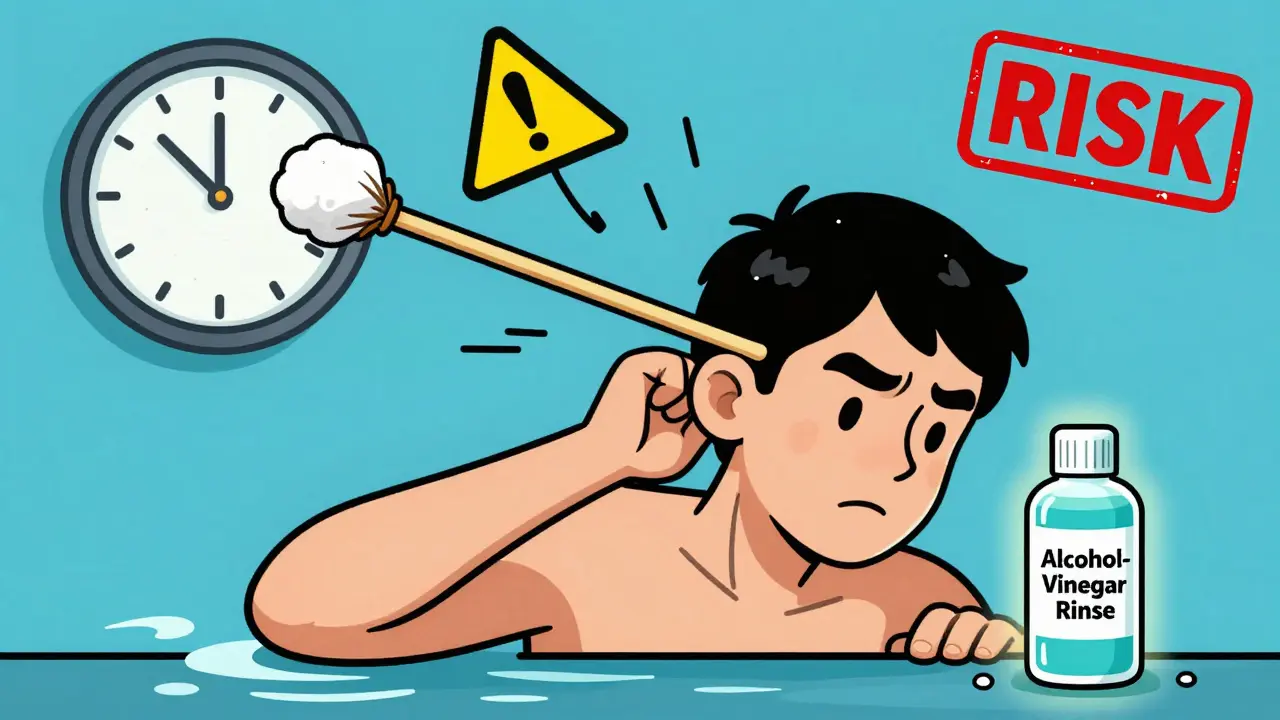
- Alcohol-vinegar rinse: Mix 70% isopropyl alcohol with 30% white vinegar. After swimming, put 3-5 drops in each ear. Let it sit for 30 seconds, then tilt your head to drain. A 2022 study with 1,200 swimmers showed this cuts infection risk by 72%. It works because alcohol dries the ear, and vinegar creates an acidic environment that kills bacteria.
- Custom earplugs: Over-the-counter foam plugs only block 42% of water. Custom silicone plugs, molded to your ear, block 68%. They cost $45-$120, but if you swim weekly, they pay for themselves in avoided doctor visits.
- Dry your ears properly: Don’t just shake your head. Use a hairdryer on the cool setting, held 12 inches away, for 30 seconds. One Reddit user with four years of recurrent infections said this single change stopped them cold. Tilt your head, pull the earlobe gently, and let gravity help. A 2022 study found that keeping water in the ear for more than two minutes after swimming increases infection risk by 37%.
- Never stick anything in your ear: Not cotton swabs, not bobby pins, not your finger. Ever. That’s the #1 thing you can do to avoid this.
How Swimmer’s Ear Is Treated - What Actually Works
If you’ve got it, don’t panic. Swimmer’s ear is highly treatable. But most people mess it up by trying to fix it themselves.
The gold standard is topical antibiotic drops medicated ear drops that go directly into the ear canal. The most common is Cipro HC - a mix of ciprofloxacin and hydrocortisone. You put 10 drops in each ear, twice a day, for seven days. Studies show it works in over 92% of cases. The hydrocortisone reduces swelling, and the antibiotic kills the infection.
For fungal cases (rare, but possible), doctors use clotrimazole drops. You need to use them for two weeks. Don’t stop early - even if the pain fades.
Pain is the real problem. Mild pain? Take acetaminophen (15 mg per kg of body weight, every 6 hours). Severe pain? Your doctor may prescribe oxycodone (0.15 mg per kg, every 4-6 hours). Don’t skip this. Pain control helps you sleep, eat, and heal.
But here’s the catch: if you get your ear wet during treatment, your cure rate drops by 40%. That means no swimming. No showers without protection. No rain. One 2021 study found that patients who kept their ears dry had only a 28% chance of treatment failure. Those who didn’t? 63% failed.
How to Use Ear Drops Right - The Hidden Trick
Most people think putting drops in their ear is simple. It’s not. The way you do it makes all the difference.
- Warm the bottle: Cold drops cause dizziness. Hold the bottle in your hand for 2-3 minutes before use.
- Pull the ear: For adults, pull the top of the ear up and back. For kids, pull down and back. This straightens the canal so the drops reach the infection.
- Stay still: After putting in the drops, lie on your side for 5 minutes. This keeps the liquid in contact with the infected skin instead of dripping out. Without this, the drops only stay for 90 seconds. With it, they stay over 4 minutes.
- Use a calibrated dropper: Most bottles come with droppers that hold too much. A 1mL dropper cuts dosage errors from 42% down to 8%.
One 2022 study using fluorescent dye showed that people who followed these steps delivered 83% more medication to the infected area. That’s the difference between healing in 5 days versus 10.
What Doesn’t Work - And What Can Make It Worse
There’s a lot of bad advice out there.
- Hydrogen peroxide: It’s not a disinfectant here - it’s an irritant. It damages the skin and makes swelling worse.
- Oil drops: Olive oil, coconut oil - they trap moisture. You’re creating the exact environment bacteria love.
- Antibiotics you have at home: Don’t use leftover amoxicillin or cephalexin. They don’t work on ear canal infections. Only topical drops do.
- Waiting it out: If you don’t treat it, it can spread. In rare cases, it can lead to bone infection (necrotizing otitis externa), especially in diabetics or older adults. It’s rare - but deadly if ignored.
And here’s a big one: misdiagnosis. About 25% of people are told they have a middle ear infection (otitis media) when it’s actually swimmer’s ear. The difference? Middle ear pain doesn’t get worse when you tug your ear. Swimmer’s ear does. The tragus test - pressing the small bump in front of the ear - is 94% accurate. If it hurts, it’s otitis externa.
When to See a Doctor - And What to Expect
You should see a doctor if:
- The pain is severe and doesn’t improve after 24 hours
- You have a fever
- Your hearing gets worse
- You’ve had more than two episodes in a year
At the clinic, they’ll look in your ear with an otoscope. They might take a swab if it’s not clearing up. They’ll prescribe drops - and give you clear instructions. Unfortunately, 63% of clinics still just hand you a bottle and say, “Use it twice a day.” But the best practices - like showing you how to use the drops, how to dry your ears, and what to avoid - are what actually prevent recurrence.
One 2023 review of 8,342 patient reviews found that clinics that gave illustrated drying instructions got 4.7/5 ratings. Those that didn’t? 3.2/5. Education matters.
What’s New in Treatment - And What’s Coming
Things are changing fast. In January 2023, the FDA approved a new device called a hydrogel ear wick a soft, absorbent device placed in the ear canal to slowly release antibiotics over days. It’s for severe cases where the canal is swollen shut. It keeps the medicine in contact with the infection for 300% longer than drops.
There’s also new research into Staphylococcus hominis lysate therapy - a treatment that doesn’t kill bacteria, but crowds them out. Early trials show it could cut recurrence rates from 14% to under 7%.
And telehealth is helping. Smartphone otoscopes like TytoCare let doctors see your ear canal remotely. They’re 89% accurate - close to in-person exams. That means faster diagnosis, fewer ER trips, and lower costs.
Why This Keeps Coming Back - And How to Stop It
Eighty-seven percent of people who get swimmer’s ear three or more times a year keep putting things in their ears - despite being told not to. That’s not ignorance. It’s habit. It’s the itch. It’s the feeling that something’s stuck.
But here’s the truth: your ear doesn’t need cleaning. Wax is protective. It moves out naturally. If you’re not having symptoms, leave it alone. The only time you need to clean your ears is if you’re swimming daily. Then, use the alcohol-vinegar rinse. That’s it.
If you’ve had it before, you know how bad it gets. You don’t want to go through that again. So make a rule: after every swim, shower, or bath - dry your ears. Use the drops. Don’t poke. That’s all it takes.
Can swimmer’s ear go away on its own?
Sometimes, mild cases can improve in a few days without treatment. But waiting is risky. The infection can worsen, leading to severe pain, hearing loss, or spread to deeper tissue. Most doctors recommend starting treatment within 24 hours of symptoms to prevent complications. Don’t gamble with your hearing.
Can I swim with swimmer’s ear?
No. Swimming while infected delays healing by up to 50%. Water reintroduces bacteria and keeps the canal moist, making it harder for medication to work. Even if you use earplugs, the risk is too high. Wait until your doctor says it’s safe - usually after the pain is gone and drainage has stopped for 48 hours.
Are ear drops better than oral antibiotics?
Yes. Oral antibiotics like amoxicillin don’t reach the ear canal effectively. Topical drops deliver high doses directly to the infection site. Studies show cure rates above 90% with drops versus under 40% with oral meds. Only in rare, severe cases - like when the infection spreads beyond the canal - do doctors add oral antibiotics.
Why does my ear hurt more at night?
Lying down increases pressure in the ear canal, squeezing the swollen tissue. Also, without daytime distractions, your brain focuses more on the pain. That’s why many people report the worst pain at night. Using a pillow that keeps your head elevated and applying a warm compress can help.
Can children get swimmer’s ear?
Yes - and it’s very common. Kids aged 7 to 12 are the most affected group. Their ear canals are smaller, so swelling blocks them more easily. They’re also more likely to poke their ears with toys or fingers. If your child has ear pain after swimming, don’t assume it’s an ear infection. Get it checked - it’s probably swimmer’s ear.