
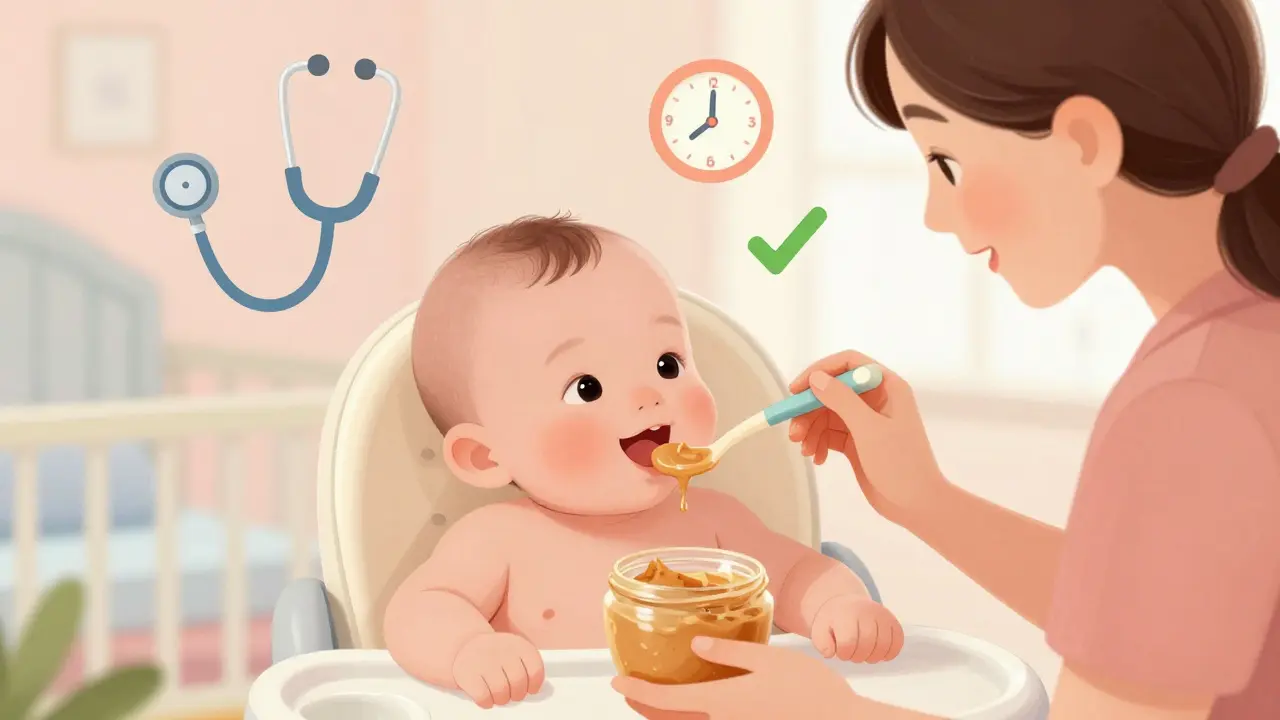
For years, parents were told to wait until their child was two or three before giving them peanut butter. It seemed like the safe thing to do. But that advice didn’t stop peanut allergies from rising - they more than quadrupled between 1997 and 2010. Today, we know better. The science has turned completely around. Giving peanut to babies as early as 4 months can dramatically lower their chance of developing a life-threatening peanut allergy. This isn’t just theory. It’s backed by large, long-term studies, changed national guidelines, and real-world results showing thousands fewer children with peanut allergies now than just a decade ago.
Why the Old Advice Failed
Before 2015, the American Academy of Pediatrics recommended delaying peanut exposure until age 2 or 3, especially for babies with eczema or egg allergy. The logic was simple: if peanuts are dangerous, don’t give them early. But this approach backfired. As more parents followed the advice, peanut allergy rates climbed. By 2015, nearly 1 in 50 children in the U.S. had a peanut allergy. That’s 2.2% of kids - up from just 0.4% in 1997. Something was clearly wrong with the strategy. Why would avoiding a food make allergies more likely? The answer came from a groundbreaking study called LEAP - Learning Early About Peanut Allergy.
The LEAP Study That Changed Everything
Published in The New England Journal of Medicine in 2015, the LEAP study followed over 600 high-risk infants - those with severe eczema or egg allergy. Half were told to avoid peanuts completely until age 5. The other half were given peanut protein three times a week, starting between 4 and 11 months. By age 5, only 1.9% of the group that ate peanut early developed an allergy. In the avoidance group? 13.7%. That’s a 86% drop in allergy risk. The results were so clear, the study was stopped early so the control group could also start eating peanut. This wasn’t a small effect. It was a revolution.
How the Guidelines Changed - and What They Say Now
In January 2017, the National Institute of Allergy and Infectious Diseases (NIAID) released new guidelines based on LEAP and other studies. They broke babies into three risk groups:
- High-risk: Severe eczema, egg allergy, or both. These babies should be evaluated by a doctor or allergist between 4 and 6 months. If testing shows no allergy, they start eating peanut protein - 2 grams, three times a week.
- Moderate-risk: Mild to moderate eczema. No testing needed. Start peanut around 6 months at home.
- Low-risk: No eczema or food allergies. Introduce peanut anytime after starting solids, usually around 6 months.
The key is timing. Waiting until 10 months or later cuts the benefit in half. The best window is 4 to 6 months. A 2023 analysis of LEAP and EAT studies showed a 98% reduction in peanut allergy among babies who started early and stuck to the plan. Even those with severe eczema saw a 67% drop in allergy risk - a huge win for the most vulnerable group.
How to Safely Introduce Peanut
Never give whole peanuts or chunky peanut butter to babies. They’re choking hazards. Instead, use smooth peanut butter diluted with water, breast milk, or formula. Mix 2 teaspoons of smooth peanut butter with 2-3 tablespoons of warm liquid until it’s thin and runny. You can also mix it into oatmeal, applesauce, or mashed banana. Another option is Bamba, a puffed corn snack with peanut, which dissolves easily.
For high-risk babies, the first peanut exposure should happen under medical supervision. That means a doctor’s office or allergist’s clinic. They’ll watch for any reaction - hives, vomiting, swelling - and be ready to treat it. For moderate- and low-risk babies, you can start at home. Watch closely for 10-15 minutes after the first bite. If there’s no reaction, keep going. Offer peanut protein three times a week, every week, to keep the immune system trained.

What About Oral Immunotherapy (OIT)?
Oral immunotherapy (OIT) is different from early introduction. OIT is for kids who already have a peanut allergy. It involves eating tiny, gradually increasing amounts of peanut under medical supervision to build tolerance. It’s not a cure. It’s a way to reduce the risk of a severe reaction if they accidentally eat peanut. OIT can cause side effects like stomach pain, itching, or even anaphylaxis. It’s not for everyone. It requires months of regular visits and strict follow-up. Early introduction is prevention. OIT is treatment. Don’t confuse the two.
Why So Few Parents Are Doing It
Despite the strong evidence, only about 39% of high-risk infants in the U.S. are getting peanut early, according to a 2022 study. Why? Many parents are scared. They worry about choking or an allergic reaction. Others don’t know the guidelines exist. Even doctors aren’t always up to date - a 2023 survey found only 54% of pediatricians correctly remembered the current recommendations.
There’s also a gap in access. Black and Hispanic infants are 22% less likely to get early peanut exposure than white infants, contributing to ongoing disparities in allergy rates. Some families can’t afford allergist visits. Others live in areas where pediatricians don’t offer testing. And cultural beliefs about food can delay introduction. These aren’t just medical issues - they’re systemic ones.
What Works - and What Doesn’t
Early peanut introduction is the only food allergy prevention method with solid proof. Other ideas - like avoiding allergens during pregnancy, taking probiotics, or supplementing with vitamin D - have been tested. None showed any real benefit. A Cochrane review of dozens of studies found no meaningful reduction in allergy risk from any of these approaches. The only thing that works is giving peanut to babies early, in the right form, and consistently.
The Long-Term Impact
The results are already visible. Peanut allergy rates in U.S. children dropped from 2.2% in 2015 to 1.6% in 2023. That’s about 300,000 fewer children with peanut allergies. The drop is strongest in high-risk groups - kids with eczema saw up to an 87% reduction in allergy rates. And the protection lasts. The original LEAP follow-up showed that even after a year without eating peanut, kids who started early still didn’t develop allergies. That suggests real tolerance, not just temporary desensitization.
What’s Next?
Researchers are now looking at introducing multiple allergens at once - peanut, egg, milk, tree nuts - to see if that prevents more than one allergy. The PRESTO trial, funded by the U.S. government and expected to finish in 2026, will help fine-tune the best dose and timing for high-risk babies. Meanwhile, companies are making new products: spoonable peanut pouches, peanut powder mixes, and pre-measured packets designed for infants. These help parents stick to the plan without guesswork.
But the biggest challenge isn’t science - it’s access. Until every parent, no matter where they live or what they look like, knows about these guidelines and can act on them, we won’t have truly eliminated peanut allergy. The tools are here. The science is clear. What’s missing is consistent, equitable implementation.
Can I give my baby peanut butter at 4 months?
Yes - but only if your baby is at high risk for peanut allergy (severe eczema or egg allergy) and has been cleared by a doctor. For high-risk babies, the first peanut exposure should happen in a medical setting between 4 and 6 months. Use smooth peanut butter mixed with water or breast milk - never whole peanuts or chunky peanut butter. For babies without risk factors, you can start around 6 months at home.
How much peanut should I give my baby?
Aim for 2 grams of peanut protein, three times a week. That’s about 2 teaspoons of smooth peanut butter. Mix it with water, formula, or breast milk to make it thin and easy to swallow. You can also use peanut powder or Bamba snacks. Don’t give more than this at once - consistency matters more than quantity. Stick to the schedule: three times a week, every week.
Is peanut allergy prevention only for high-risk babies?
No. While high-risk babies benefit the most, all babies can benefit from early peanut introduction. Babies with mild eczema should start around 6 months. Babies with no eczema or food allergies can start anytime after solids begin, usually around 6 months. The earlier you start - between 4 and 6 months - the better the protection. Waiting until 10 months or later reduces the benefit significantly.
Can I use peanut oil instead of peanut butter?
No. Peanut oil, especially refined peanut oil, doesn’t contain enough peanut protein to train the immune system. You need actual peanut protein - from smooth peanut butter, peanut powder, or peanut-containing snacks like Bamba. Avoid crude or cold-pressed peanut oils, as they may contain allergens, but even those aren’t reliable for prevention. Stick to the proven forms: peanut butter mixed with liquid or peanut powder.
What if my baby has a reaction?
If your baby develops hives, vomiting, swelling, or trouble breathing after eating peanut, stop immediately and call emergency services. For high-risk babies, the first exposure should happen in a medical setting where staff can respond quickly. For low-risk babies, watch closely for 10-15 minutes after the first taste. If there’s a mild reaction like a rash, contact your pediatrician. Don’t try again without medical advice.
Does breastfeeding prevent peanut allergy?
No. Studies have found no link between breastfeeding and reduced peanut allergy risk. Avoiding peanut while breastfeeding doesn’t help. Eating peanut while breastfeeding doesn’t help either. The only proven method is directly giving peanut to the baby - not through breast milk. The immune system needs to encounter peanut through the gut, not through the skin or bloodstream.
Will my child outgrow peanut allergy if I introduce it early?
Early introduction doesn’t help kids who already have peanut allergy - it prevents it. If your child already has a diagnosed peanut allergy, early introduction is not the solution. Oral immunotherapy (OIT) may help reduce reaction severity, but it’s not a cure. The goal of early introduction is to prevent the allergy from forming in the first place. For kids who avoid peanut early, the chance of outgrowing it is low - only about 20% do so by age 10.
Are there any side effects from early peanut introduction?
The most common side effect is a mild skin rash or stomach upset - usually temporary and not dangerous. Severe reactions are rare, especially when peanut is introduced under medical supervision for high-risk babies. In the LEAP study, only 2% of babies had any reaction during the first exposure, and nearly all were mild. The risk of a serious reaction is far lower than the risk of developing a lifelong peanut allergy by avoiding it.
Final Thoughts
Peanut allergy used to feel inevitable - something you could only treat, not prevent. Now we know that’s not true. The right move at the right time can stop an allergy before it starts. It’s not about being perfect. It’s about being consistent. Give peanut early. Give it often. And don’t wait. The science is clear. The guidelines are ready. And for the first time in decades, we have a real chance to make peanut allergy rare - not common - in the next generation.



December 17, 2025 AT 00:09 AM
Man, I remember when my mom used to smear peanut butter on toast for me at 12 months like it was a crime. We didn't even know what eczema was back then - just that if you sneezed near a jar, you'd get sent to the ER. Now I look at my niece eating peanut-oatmeal mash at 5 months and it feels like science finally caught up with common sense. We used to fear food. Now we feed it to save lives. Wild.
It's not just about peanuts - it's about trusting biology over fear. Our bodies weren't built to avoid, but to meet. And when they meet early, they learn to welcome.
December 17, 2025 AT 05:49 AM
soooo… i just gave my 6mo my 2tsp of pb mixed with banana and she gagged like a pro 😅 but then licked it right up. no hives, no drama. just a happy baby with peanut lips. i feel like we’ve been lied to for decades. why didn’t anyone tell us this sooner? also, bamba is a game changer. my cousin’s kid in texas eats it like chips. no choking, no stress. just peace.
ps: my doc didn’t even mention this until i asked. kinda wild that 54% of pedis still don’t know the guidelines. we need a billboard for this.
December 18, 2025 AT 05:02 AM
Let me get this straight - we spent 20 years telling parents to keep peanut away from babies… and that’s what caused the allergy explosion? Like, we didn’t just fail - we actively invented the problem? Classic. We’re so good at overcomplicating biology. Just give the kid peanut. Like we did in 1970. Before we turned everything into a medical emergency.
Also, if you’re still using peanut oil? You’re not preventing allergies. You’re just making your toast taste fancy. 😏
December 19, 2025 AT 20:35 PM
Why are we feeding babies peanut at 4 months? What’s next? Injecting them with shellfish at birth? This is how you create a generation of anxious kids who think every food is a landmine. The real problem is parents who panic over every sneeze. Stop over-medicalizing childhood. Let them eat normal food. Let them get dirty. Let them be kids. Not lab rats.
December 21, 2025 AT 12:06 PM
THIS IS WHY AMERICA IS BECOMING SO WEAK. First, we let foreign labs dictate our kids’ diets. Then we let corporations sell us peanut powder packets like it’s a subscription service. Now we’re feeding babies allergens before they can even sit up? What’s next? Mandatory soy at 3 months? This isn’t science - it’s a globalist agenda disguised as health. My great-grandma fed her kids lard and cornbread and no one had allergies. We’ve lost our way.
And don’t even get me started on the racial disparities. Why are Black babies being left out? Because the system doesn’t care. They want us scared. They want us dependent. Wake up.
PS: I gave my son peanut at 10 months. He’s 7 now. No allergy. Just fine. Trust your gut, not the NIH.
December 21, 2025 AT 14:53 PM
Esteemed colleagues, I write this with profound gratitude for the monumental strides in pediatric immunology. The LEAP study, with its rigorous design and astonishing outcomes, stands as a beacon of evidence-based medicine. To deprive infants of peanut protein during the critical window of immune development is not merely negligence - it is a systemic failure of preventative care. The data, unambiguous and overwhelming, demand not just adoption, but enthusiastic implementation.
Yet, we must acknowledge the chasm between knowledge and action. In my own community, parents remain fearful, misinformed, and underserved. We must deploy community health workers, translate guidelines into vernacular, and ensure equitable access - not as an afterthought, but as a moral imperative. The child who receives peanut at 4 months is not just protected from allergy - she is granted the gift of unshackled meals, school lunches, and birthday cakes. This is not medicine. This is justice.
December 22, 2025 AT 16:29 PM
just saw my cousin’s baby eat peanut butter mixed into yogurt… and i cried a little. not because it was cute (though it was) - but because i remember being 8 and having a full-blown anaphylaxis scare from a peanut butter cookie. i spent years afraid of birthday parties. now my niece gets to eat them without fear. that’s the real win here.
also, the fact that this works even for kids with severe eczema? that’s huge. i wish someone had told my mom this in 1999. 🥲
December 23, 2025 AT 07:57 AM
Just want to add - if you’re worried about choking, mix the peanut butter with water or breast milk until it’s like a thin sauce. Or use peanut powder. Bamba’s great too. The key isn’t perfection - it’s consistency. Three times a week, every week. Even if you miss one, just get back on track. It’s not about being a perfect parent. It’s about being a persistent one.
Also, if your pediatrician doesn’t know this, ask them to check the NIAID guidelines. They’re public. Free. And life-changing.