
Every year, over 1.3 million medication errors happen in U.S. hospitals. Many of them aren’t caused by careless staff-they’re caused by human fatigue, similar-looking drug names, or misread handwriting. But there’s one tool that’s changed the game: barcode scanning.
How Barcode Scanning Stops Errors Before They Happen
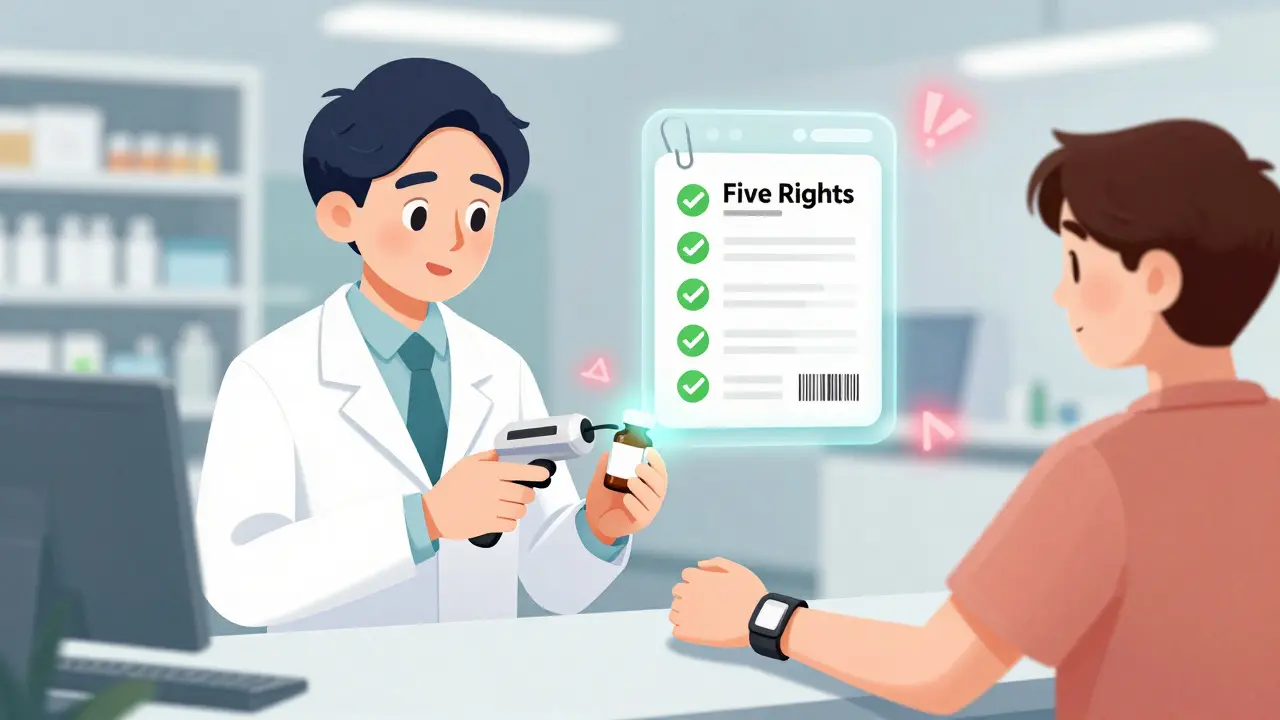
Picture this: a pharmacist picks up a bottle of levothyroxine to fill a prescription. The label says 100 mcg. The doctor ordered 25 mcg. The patient’s chart shows they’re sensitive to even small dose changes. Without scanning, this mistake could slip through. With barcode scanning, the system checks the medication against the patient’s electronic prescription in real time. If the dose doesn’t match? It flashes a warning. No second guesswork. No reliance on memory. This isn’t theory. It’s proven. A 2021 study in BMJ Quality & Safety found that barcode scanning prevents 93.4% of potential dispensing errors when used correctly. That’s not a small improvement-it’s a revolution. Before barcodes, pharmacists relied on double-checks, which only caught about 36% of mistakes. Now, with scanning, the system acts as a second set of eyes, every single time. The magic happens through the "five rights": right patient, right medication, right dose, right route, right time. Each step is verified by scanning. The pharmacist scans the patient’s wristband. Then they scan the medication. The system cross-references both against the digital order. If anything’s off-wrong drug, wrong patient, wrong strength-it stops. No exceptions.The Technology Behind the Safety Net
Most pharmacy barcode systems use 1D linear barcodes, the kind you see on grocery items. These store the National Drug Code (NDC), a unique identifier assigned by the FDA since 2006. But newer systems are shifting to 2D matrix codes, which can hold more data: lot numbers, expiration dates, even manufacturer details. This is important because a vial of insulin might look identical to another, but the concentration could be ten times stronger. A 2D barcode can flag that difference before it’s dispensed. These scanners connect to pharmacy information systems (PIS) and electronic health records (EHRs) using standardized protocols like HL7. The hardware is simple-a handheld scanner, a tablet, or a mobile cart with a built-in reader. But the real power lies in the integration. When a barcode is scanned, the system doesn’t just say "yes" or "no." It logs the action, timestamps it, and ties it to the pharmacist’s ID. That creates accountability and a paper trail for audits. In hospitals, these systems often link to automated dispensing cabinets (ADCs) and robotic arms. A nurse pulls a medication from a cabinet, scans it, and the system confirms it matches the patient’s order. No manual counting. No guessing. In community pharmacies, the setup is simpler but just as critical. Scanners sit at the counter, and pharmacists scan before handing over any prescription.What Happens When the Barcode Doesn’t Scan?
Here’s the catch: barcodes aren’t perfect. About 15% of scanning attempts fail, according to ECRI Institute data from 2024. Why? Damaged labels, faded ink, smudged packaging, or oddly shaped containers like insulin pens or ampules. That’s where human judgment has to step in. The biggest danger isn’t the scanner failing-it’s what pharmacists do next. Studies show that 29% of medications and 20% of patient wristbands are never scanned, often because staff are rushed or the system is slow. Some even develop workarounds: "I know this med, I’ll skip the scan." That’s how errors slip through. The FDA and ISMP are clear: if a barcode won’t scan, you must visually verify the medication. Look at the label. Check the name, strength, and form against the prescription. Don’t rely on memory. Don’t assume the label is correct just because it’s printed. One case in Pennsylvania involved vancomycin-correct barcode, wrong concentration. The system approved it because the label had the right NDC, but the actual drug inside was ten times stronger. The barcode didn’t catch it because the pharmacy mislabeled the vial. The system can’t fix bad data. Best practice? Always have a visual verification protocol in place. Train staff to treat scanning failures as red flags, not inconveniences. Use special trays for small vials. Keep lighting strong. Don’t let speed override safety.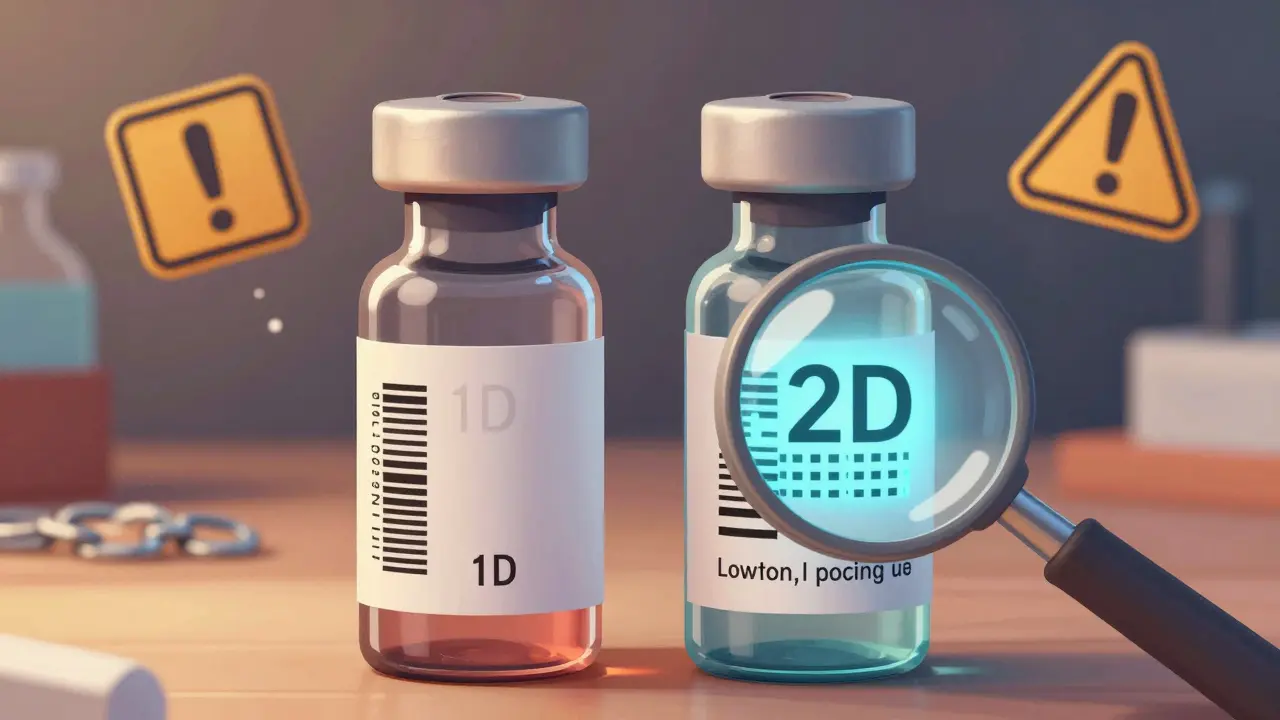
Real Stories From the Pharmacy Floor
Sarah Chen, a hospital pharmacist in Pittsburgh, says her team’s dispensing errors dropped by 75% after barcode scanning went live. "We caught a 10x overdose of levothyroxine last year because the system flagged it. The patient was elderly, on thyroid meds for years. That dose could’ve killed her." But not everyone’s thrilled. On Reddit, a pharmacy tech wrote: "It adds 15-20 minutes to every shift. Scanners freeze. Insulin pens won’t scan. We end up doing manual checks anyway, but now we’re also troubleshooting tech." A 2023 survey of 1,247 pharmacists found 78% saw fewer errors with barcode scanning. But 63% said it slowed them down. And 41% admitted they sometimes bypass the scan during busy hours. That’s the tension: safety vs. efficiency. The solution isn’t to ditch the system-it’s to fix the workflow. Hospitals that succeeded invested in training, created escalation paths for scanning failures, and assigned staff to monitor which drugs were most often skipped. They also tested new products before they hit the shelves to make sure barcodes were readable.Why This Isn’t Just for Hospitals
You might think barcode scanning is only for big hospitals. But community pharmacies are catching up. In U.S. hospitals, 78% use barcode systems. In independent pharmacies? Only 35%. The cost is a barrier. But the risk is higher than ever. With the rise of specialty drugs-like cancer therapies or rare disease treatments-mistakes can be deadly. A wrong dose of methotrexate can cause organ failure. A mix-up between metformin and metoprolol? That’s a cardiac risk. These aren’t theoretical dangers. They’ve happened. And they keep happening where there’s no barcode safety net. Even small pharmacies can start simple. A $500 handheld scanner, a laptop, and a basic pharmacy software upgrade can make a huge difference. The goal isn’t to go full automation-it’s to add one reliable checkpoint before handing over medication.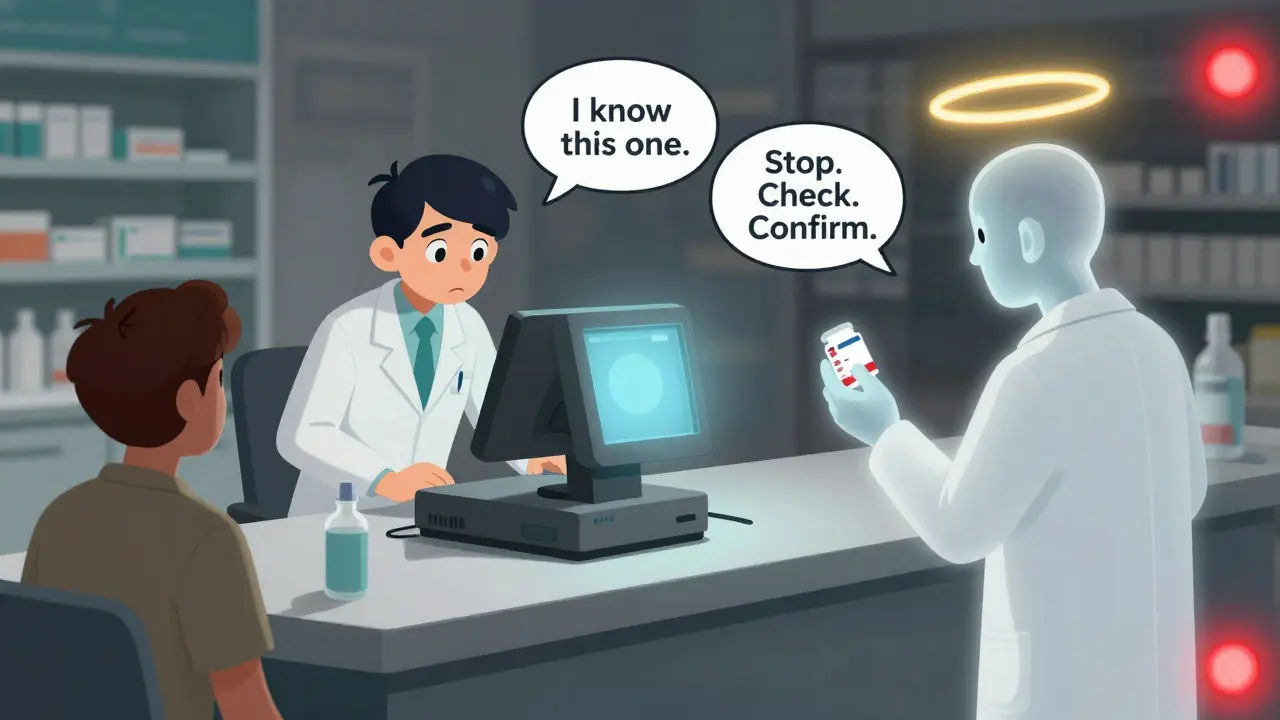
The Bigger Picture: Safety Layers, Not Silver Bullets
Barcode scanning isn’t the only tool. Computerized prescribing (CPOE), smart IV pumps, and automated dispensing cabinets all play roles. But barcode scanning sits in the middle-connecting the order, the medication, and the patient. It’s the linchpin. Experts like Dr. Michael Cohen from ISMP call it a "Tier 1" safety practice. That means strong, proven, essential. But he also warns: "It’s not a standalone solution. It’s part of a system." If you scan without verifying the label, you’re trusting a machine to catch what a human should see. The future is moving toward 2D barcodes and AI-assisted scanning. Epic Systems released a new mobile version in March 2024 that improved scanning success by 22%. Cerner plans AI that predicts which barcodes are likely to fail before they’re scanned. By 2026, over 65% of medications are expected to use 2D codes, making it easier to track lot numbers and expiration dates. But the core truth hasn’t changed: technology reduces errors. But only if people use it right.What You Can Do to Stay Safe
If you’re a patient: Ask if your pharmacy scans your prescription. If they don’t, ask why. You have the right to know your meds are checked. If you’re a pharmacist or tech: Never skip a scan. If the barcode fails, stop. Look at the label. Compare it to the screen. If you’re unsure, ask a colleague. One extra second can save a life. If you’re a hospital administrator: Don’t just buy scanners. Train staff. Monitor usage. Review data monthly. Which drugs are most often scanned incorrectly? Which staff skip the most? Fix the system, not just the scanner.Final Thought: It’s Not About Technology. It’s About Discipline.
Barcode scanning doesn’t eliminate human error. It forces us to slow down. To check. To verify. To admit we’re not perfect. That’s the real win. The technology works. The data proves it. The question isn’t whether to use it. It’s whether you’ll use it the right way.How effective is barcode scanning at preventing medication errors?
When used correctly, barcode scanning prevents 93.4% of potential dispensing errors, according to a 2021 study in BMJ Quality & Safety. It reduces medication administration errors by 65% to 86% in hospitals. The system checks the five rights-right patient, medication, dose, route, and time-before a drug is given, stopping mistakes before they reach the patient.
Do all pharmacies use barcode scanning?
In U.S. hospitals, 78% use barcode scanning systems, especially those with 300+ beds. But in independent community pharmacies, adoption is below 35%, mostly due to cost and workflow concerns. Smaller pharmacies are slowly adopting simpler versions, but many still rely on manual checks.
What happens if a barcode doesn’t scan?
If a barcode won’t scan, you must visually verify the medication. Never skip this step. The system can’t catch errors if the label is wrong-even if the barcode is correct. ECRI Institute warns that sending a label without visual confirmation is unsafe. Always compare the physical drug to the prescription, check the strength, and confirm the patient’s name.
Can barcode scanning prevent all medication errors?
No. It prevents errors caused by wrong drug, wrong dose, or wrong patient-but not errors from mislabeling, miscommunication, or incorrect prescribing. If a pharmacist puts the wrong drug in a vial but prints a correct barcode, the system will approve it. That’s why visual verification and clear communication are still essential.
Are 2D barcodes better than 1D barcodes in pharmacies?
Yes. 2D matrix barcodes can store more data-like lot numbers, expiration dates, and manufacturer info-making them more reliable for tracking and safety. By 2026, over 65% of medications are expected to use 2D codes, up from just 22% in 2023. They’re especially useful for complex drugs like insulin or chemotherapy agents where concentration matters.
What are the biggest challenges with barcode scanning in pharmacies?
The biggest issues are scanning failures (15% of attempts), staff workarounds (68% of hospitals report bypassing scans), and system slowdowns. Damaged labels, small vials, and poor lighting make scanning hard. Training gaps also lead to errors-staff who don’t know how to handle failures are more likely to skip scans. Regular data reviews and better hardware help reduce these problems.



December 27, 2025 AT 09:55 AM
Barcodes saved my aunt’s life. She was on warfarin and the system caught a mix-up with a similar-looking drug. No drama, no yelling-just a quiet alert. That’s all it takes.
Pharmacists aren’t superheroes. We need tools like this to keep up.
Also-yes, the scanners freeze. But skipping them? That’s when things go sideways.
December 28, 2025 AT 08:05 AM
Let’s be real-this whole barcode thing is just another corporate KPI theater. The real issue? Understaffed pharmacies. You can scan a barcode all day, but if you’re doing 80 scripts an hour with no break, you’re gonna miss stuff. The tech doesn’t fix human capital collapse.
Also, 93.4%? That’s cherry-picked data. Real-world failure rates are closer to 30% when you account for mislabeled vials and expired labels. The FDA doesn’t audit this stuff.
And don’t get me started on HL7 integration. It’s a garbage fire of XML schemas and legacy middleware.
December 30, 2025 AT 07:39 AM
Man always thinks machine will save him. But truth is, man forgets his soul. When you trust a barcode more than your eyes, you lose your humanity. The doctor writes, the pharmacist sees, the patient takes. That is the way. Technology is not the path. Discipline is.
Why do you think old pharmacies had fewer errors? Because they slowed down. Now everyone runs. And running kills.
December 31, 2025 AT 14:09 PM
As someone who has trained over 400 pharmacy technicians across three states, I cannot overstate the transformative impact of barcode scanning when implemented with fidelity and institutional support.
It is not merely a technological upgrade-it is a paradigm shift in pharmacovigilance. The reduction in medication administration errors from 65% to 86% is not statistically marginal; it is ethically monumental.
Yet, the persistent failure to enforce visual verification protocols-despite ECRI’s explicit warnings-represents a catastrophic erosion of professional accountability. The 29% non-scanning rate among frontline staff is not a technical issue; it is a cultural one.
Leadership must move beyond procurement and into behavioral reinforcement. Monthly audit reviews, real-time feedback loops, and mandatory competency recertification are non-negotiable.
Moreover, the transition to 2D matrix barcodes is not merely advantageous-it is imperative. The inclusion of lot numbers, expiration dates, and manufacturer identifiers within the code structure allows for granular traceability that linear barcodes simply cannot provide.
The case of the mislabeled vancomycin vial? A textbook example of system failure rooted in procedural negligence, not technological limitation.
Let us not confuse the tool with the task. The barcode scanner is not the guardian-it is the enabler. The guardian is the disciplined, trained, and psychologically supported pharmacist who refuses to bypass the protocol.
And to those who claim it slows them down-yes, it does. And that slowness is the price of safety. Would you rather have a 15-minute delay-or a 15-minute funeral?
Investing in robust hardware, adequate lighting, and specialized trays for insulin pens and ampules is not an expense-it is an act of moral courage.
We are not merely dispensing pills. We are safeguarding lives. And if your workflow cannot accommodate that, then your workflow must change.
Barcodes are not magic. But discipline? That is sacred.
January 1, 2026 AT 14:37 PM
One must contemplate the metaphysical implications of entrusting life-and-death decisions to a machine that reads ink patterns. Is the barcode not merely a symbol? A signifier without essence? The pharmacist, once a guardian of the pharmacopoeia, now reduced to a data-entry clerk validating machine-generated affirmations.
And yet-what is the human hand, if not a flawed instrument? The eye, a faulty sensor. The mind, a vessel of fatigue and distraction.
Thus, the barcode becomes the oracle. The algorithm, the priest. The system, the temple.
But who guards the oracle? Who ensures the ink is not smudged by haste? Who verifies the label when the machine nods in false affirmation?
Technology does not absolve us of responsibility-it magnifies our negligence.
Let us not worship the scanner. Let us honor the pause. The breath. The double-check. The silent vow whispered before the pill leaves the hand.
For in the end, no code can replace conscience.
January 3, 2026 AT 02:02 AM
Okay but have y’all seen the new Epic mobile scanner update?? 😍 It’s like… AI that predicts which barcodes are gonna fail BEFORE you even scan?? 🤯 I mean, come on. This is next-level stuff. I got a screenshot of my dashboard-error rate dropped 41% in two weeks. And the timestamps? All logged. All traceable. All beautiful.
Also, my manager said if I don’t hit 98% scan compliance by Q3, I’m getting a ‘performance improvement plan’ 🙃 So yeah, I scan everything. Even the insulin pens. Even the ones that look like they’ve been through a washing machine.
Also-has anyone else noticed that the scanner makes this little *beep* when it works? It’s so satisfying. Like a tiny victory bell. 🛎️💯
January 3, 2026 AT 17:19 PM
My cousin is a pharmacy tech in rural Ohio. She told me they got their first scanner last year. She cried the first time it caught a wrong dose. Said she’d been scared every day to hand out meds.
She doesn’t say it out loud, but she feels safer now.
That’s what this is about. Not stats. Not KPIs. Just… not hurting someone.
And yeah, it’s slow. But slow is better than sorry.
January 4, 2026 AT 21:40 PM
Barcodes are just the start. Next they’ll put chips in your pills. Then track your heartbeat when you take them. Then sell your data to pharma. You think this is about safety? Nah. It’s about control. The system wants to own every step. Every scan. Every second. They don’t trust you. They never did.
And when the network goes down? What then? You’re just a person holding a bottle with no idea what’s inside.
They call it progress. I call it surrender.
January 6, 2026 AT 06:27 AM
i used to work at a little pharmacy and we never had scanners. one day a guy got the wrong blood pressure med and ended up in the er. we fixed it quick but man… i still think about it.
we got a scanner last year. it’s clunky as hell but i scan everything now. even when i’m tired. even when it’s 3am.
just… scan. please.
January 7, 2026 AT 02:21 AM
Let me tell you what they don’t want you to know. Barcodes are a distraction. The real problem? The FDA allows drug manufacturers to reuse NDC codes across different concentrations. That’s right. The same barcode can be on a 1mg pill and a 100mg pill. The system doesn’t know the difference.
And the scanners? They’re all connected to a central database owned by a private company that also owns the software that writes the prescriptions.
Who owns the data? Who profits when you scan? Who gets paid when you get it wrong?
They’re not trying to save lives. They’re trying to monetize compliance.
And the 2D barcodes? That’s just the next phase. RFID implants next. You think I’m joking? Look at the patents. Look at the lobbying. Look at the silence from the media.
This isn’t safety. It’s surveillance with a side of insulin.
January 7, 2026 AT 18:52 PM
Barcodes are a trap. A beautiful, shiny, high-tech trap.
They make you feel safe. But safety is an illusion.
The system will never catch a mislabeled vial. It will never know if the pharmacist swapped the bottle because they were tired. It will never hear the whisper: "I know this one."
And when the power goes out? When the server crashes? When the scanner dies? What then?
You’re back to human error.
But now you’ve forgotten how to be careful.
Because you trusted the machine.
And machines don’t care if you live or die.
They just scan.
And then they wait for the next one.
Be afraid.
Be very afraid.
And don’t let them tell you otherwise. 😈
January 8, 2026 AT 03:53 AM
Been in pharmacy for 22 years. Seen scanners come and go. First they were huge. Then they were tablets. Now they’re on phones.
Truth? The tech helps. But the person using it? That’s the real magic.
Good ones slow down. Bad ones rush. Doesn’t matter what they scan.
Just make sure someone’s watching. And that someone cares.
That’s all.
January 9, 2026 AT 13:45 PM
What if the real breakthrough isn’t the barcode-but the pause it forces?
Before scanners, pharmacists were racing through scripts like it was a game show. "Next! Next! Next!"
Now? There’s a beat. A tiny silence. A moment where you look at the label. You look at the screen. You breathe.
That pause? That’s the moment we forgot we needed.
It’s not about the tech. It’s about reclaiming the space between action and consequence.
I’ve watched new techs become better pharmacists because they learned to wait.
Not because the machine told them to.
But because they realized: waiting is how you love your patients.
And maybe… that’s the real barcode.
One that can’t be scanned.
But can be felt.
January 11, 2026 AT 02:56 AM
Just saw the comment from the tech who said scanning adds 20 minutes to their shift. I get it. I’ve been there.
But here’s the thing-what if those 20 minutes are the difference between someone going home… and someone’s family getting a call at 3am?
I don’t care if it’s slow. I care if it’s safe.
And honestly? The scanners that freeze? They’re probably old. Get new ones. Budget for it.
Because your next patient might be someone’s mom. Or kid. Or best friend.
Scan. Every. Time.