
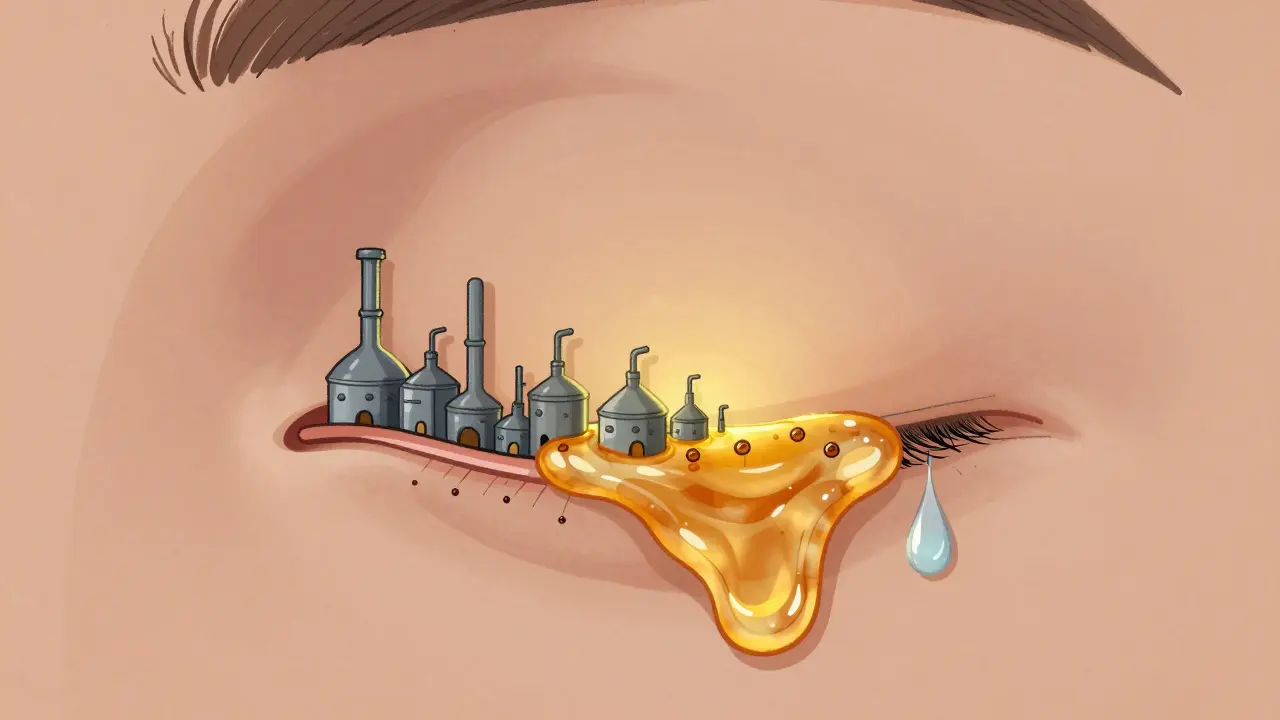
Over half of people who visit an eye doctor for dry eyes aren’t just dealing with lack of tears-they’re struggling with meibomian gland dysfunction (MGD). This isn’t a minor irritation. It’s a chronic condition where the tiny oil glands in your eyelids get clogged, stop working properly, and leave your eyes drying out faster than they should. Without those oils, your tears evaporate in seconds. You blink, and your vision blurs. Your eyes sting, burn, or feel gritty-even when you’ve cried or used drops all day. If you’ve been told you have ‘dry eye’ and nothing seems to help, MGD might be the real culprit.
What Exactly Is Meibomian Gland Dysfunction?
The meibomian glands are 25 to 40 tiny oil factories lining each eyelid. They secrete a clear, slippery fluid that forms the outer layer of your tear film. Think of it like a waterproof seal on a windshield-it keeps the moisture underneath from evaporating. When these glands get blocked, the oil thickens into a toothpaste-like consistency or stops flowing altogether. That’s MGD.
There are two main types: obstructive MGD, where the ducts are physically clogged (most common), and hypersecretory MGD, where glands make too much poor-quality oil. Both lead to the same problem: rapid tear evaporation. Studies show MGD is behind 86% of all dry eye cases. It’s not rare-it’s the rule. And it gets worse with age. By 60, nearly half of all adults have some level of gland dysfunction.
Left untreated, MGD doesn’t just cause discomfort. Over time, the glands shrink and die. Once they’re gone, they don’t come back. That’s why early action matters. Permanent damage can lead to chronic pain, corneal scarring, and even vision loss.
The Real Cost of Ignoring MGD
Many people try over-the-counter eye drops, hoping for relief. They work briefly, but they don’t fix the root issue. You’re just putting out fires without turning off the gas. The result? A cycle of temporary comfort followed by worsening symptoms.
Patients often wait years before seeking proper care. But timing is everything. Those who start treatment within the first year of symptoms see 37% better outcomes than those who wait five years or more. The longer you wait, the more likely your glands have already atrophied. And once they’re gone, no treatment can restore them.
There’s also a hidden cost: quality of life. People with untreated MGD report trouble reading, using screens, driving at night, and wearing contact lenses. One patient described it as ‘having sandpaper behind your eyelids every time you blink.’ That’s not exaggeration-it’s the reality for millions.
Home Care: The Foundation of MGD Treatment
No matter what in-office treatment you get, home care is non-negotiable. If you skip this, even the most expensive procedures will fail within months.
The daily routine is simple but strict: 10 to 15 minutes a day, every day.
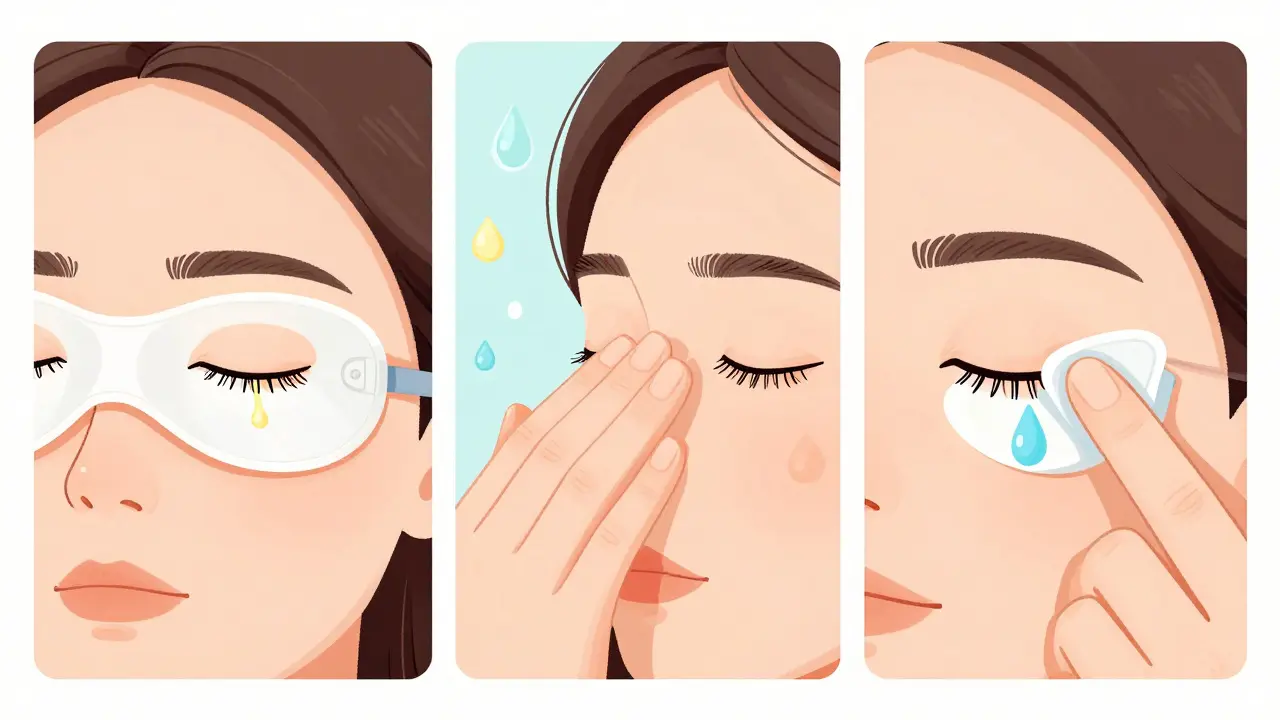
- Warm compress for 5 minutes. Use a Bruder Mask heated to 40-42°C (104-108°F). The heat melts the hardened oil in the glands. Regular hot washcloths don’t cut it-they cool too fast.
- Lid massage. Gently press along the eyelid edge with your finger, moving from the outer to inner corner. This pushes melted oil out of the glands.
- Lid cleaning. Wipe the lid margin with a hypochlorous acid solution like OCuSOFT Lid Scrub. This reduces bacteria and inflammation that clog glands.
Studies show you need at least 85% compliance to keep symptoms under control. That means missing fewer than two days a month. If you skip more than that, recurrence rates jump to 63% within six months. It’s not optional-it’s maintenance, like brushing your teeth.
In-Office Treatments: What Actually Works
When home care isn’t enough, doctors turn to procedures. Not all are equal. Here’s what the evidence says.
LipiFlow Thermal Pulsation
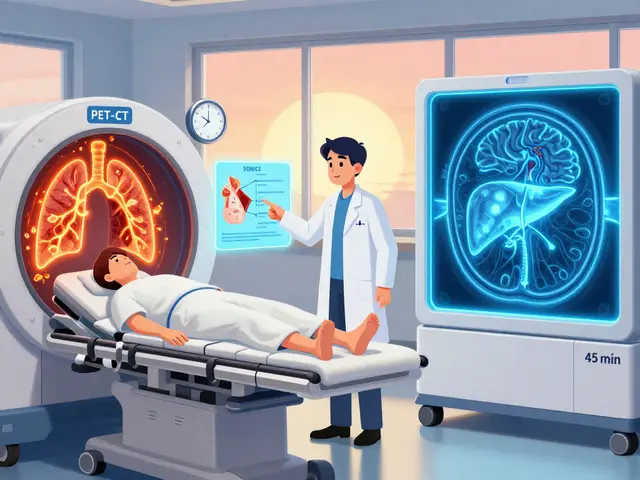
LipiFlow is the most studied device for MGD. It applies controlled heat (42.5°C) to the inner eyelid while gently massaging the outer lid. This melts blockages and expresses trapped oil in one 12-minute session per eye. The whole process takes about 45 minutes.
Results? Clinical trials show a 50% improvement in gland function within weeks. For obstructive MGD, 68% of patients see lasting improvement. But it’s less effective for hypersecretory MGD. Cost? $1,500 to $2,500 per eye. Insurance rarely covers it-only 15-20% of plans do.
Intense Pulsed Light (IPL)
IPL uses flashes of broad-spectrum light to target blood vessels near the eyelid skin. These vessels cause inflammation that worsens MGD. By reducing inflammation, IPL helps glands start working again.
But IPL alone doesn’t work. It must be paired with manual gland expression. Studies show patients using IPL + expression saw OSDI scores drop from 32.6 to 18.3-meaning a 44% improvement in symptoms. Four sessions, three weeks apart, are typical. Each session takes 15 minutes. Cost: $800-$1,200 per session.
Meibomian Gland Probing (MGP)
This is the most aggressive option. A thin probe is inserted into each gland duct to physically break through blockages and fibrosis. It’s done under local anesthetic and takes about 30-40 minutes.
It’s especially useful for advanced cases where glands are scarred or fibrotic. Dr. Scheffer Tseng says most thermal devices miss this key issue-probing does. Studies show combining MGP with heat leads to 85% sustained improvement at 12 months.
Pharmaceutical Options
Oral antibiotics are often used to reduce inflammation. Azithromycin (5 days of pills) has proven better than doxycycline (30 days). It’s more effective, has fewer side effects (only 3.2% vs. 28.6% adverse reactions), and patients finish treatment faster.
Topical lifitegrast (5%) targets inflammation directly on the eye surface. In severe MGD, it cuts corneal staining scores by more than half in 12 weeks.
What Doesn’t Work (And Why)
Not every treatment is backed by science. Some clinics push expensive devices with little proof.
The U.S. Department of Veterans Affairs classifies thermal evacuation therapies-like LipiFlow-as ‘investigational and experimental’ due to insufficient long-term data. That doesn’t mean they don’t work. It means insurers won’t pay unless you prove it’s medically necessary.
IPL alone, without gland expression, shows weak results. One expert calls it ‘Level II evidence’-meaning it’s promising but not definitive. Don’t pay for IPL if they don’t combine it with manual expression.
And forget about ‘eye drops for MGD.’ Most drops only lubricate. They don’t unblock glands or reduce inflammation. They’re bandaids on a broken pipe.

Real Patient Experiences
One Reddit user, DryEyeWarrior87, tried three LipiFlow sessions over 18 months. His OSDI score dropped from 48 to 18. But he says: ‘If I miss my warm compresses for more than three days, my eyes go back to burning.’
Another, MGDstruggles, had stage 4 MGD with 70% gland loss. LipiFlow gave him two months of relief. IPL with expression worked better-but cost $2,000 per session with no insurance coverage.
At Dry Eye Clinics of America, 82% of patients were satisfied with combined MGP and LipiFlow. But only 43% stuck with daily home care after six months. And guess what? Those who stopped saw symptoms return.
The pattern is clear: success isn’t about the procedure. It’s about consistency.
What’s Next for MGD Treatment
Research is moving fast. Exosome therapy-using healing signals from stem cells-is showing 92% symptom improvement in early trials. Nanomicellar cyclosporine (Cequa) delivers drugs deeper into eye tissue than ever before.
And now, experts recommend treating MGD even before cataract surgery-even if you have no symptoms. Why? Because untreated MGD increases post-surgery inflammation by 40%.
The future is about prevention, not just repair. The 2023 Dry Eye Workshop II now treats MGD as the core driver of dry eye disease. That’s a big shift.
How to Get Started
If you suspect MGD:
- Stop relying on drops alone.
- Start daily warm compresses and lid hygiene. Use a Bruder Mask and OCuSOFT Lid Scrub.
- See a dry eye specialist-not a general optometrist. Ask if they do meibography (imaging of the glands).
- Get a baseline OSDI score and gland imaging. Track progress.
- If home care fails after 3 months, ask about LipiFlow, IPL + expression, or MGP.
Don’t wait for permanent damage. MGD doesn’t get better on its own. It gets worse. But with the right steps, you can stop it-and even reverse early damage.
Is meibomian gland dysfunction the same as dry eye?
Not exactly. Dry eye is a broad term. MGD is the leading cause of dry eye, responsible for 86% of cases. When the oil glands in your eyelids don’t work right, your tears evaporate too fast. That’s evaporative dry eye, which is caused by MGD. Other types of dry eye come from not making enough tears-but MGD is the most common.
Can MGD be cured?
It can be managed effectively, but not always cured. If caught early and treated with consistent home care and in-office procedures, gland function can improve significantly. But if glands have already atrophied (shrunk and died), they won’t regenerate. The goal becomes preventing further loss and maintaining comfort long-term.
Why do my eyes feel worse after using eye drops?
Many eye drops contain preservatives like benzalkonium chloride, which can irritate the eye surface and worsen inflammation in MGD. Also, drops only replace water in your tears-they don’t fix the missing oil layer. Without that oil, your tears still evaporate quickly, so the relief is short-lived and may even make your eyes feel drier over time.
How long does LipiFlow last?
Most patients see improvement for 6 to 12 months after one LipiFlow treatment. But without daily warm compresses and lid hygiene, symptoms return in 3 to 6 months. The procedure doesn’t replace home care-it enhances it. Think of it like a deep cleaning for your oil glands, but you still need to brush your teeth every day.
Is IPL therapy safe for dark skin?
Yes, but it requires extra care. IPL works by targeting pigment in blood vessels. Darker skin has more melanin, which can absorb too much light and cause burns or discoloration. Experienced providers adjust the settings and use cooling devices to minimize risk. Always choose a specialist trained in treating MGD with IPL on diverse skin tones.
Can I do MGD treatment at home without seeing a doctor?
You can manage early-stage MGD at home with warm compresses, lid scrubs, and massage-but only if you’re sure it’s MGD. Many conditions mimic MGD-like blepharitis, allergies, or autoimmune disease. A proper diagnosis requires meibography (gland imaging) and tear film analysis. Skipping diagnosis risks missing something serious. Home care is essential, but it’s not a substitute for professional evaluation.

January 22, 2026 AT 15:30 PM
just started the bruder mask and lid scrubs last week and my eyes already feel less gritty 😊 i thought i was just old but turns out i had mgd all along. it's not magic but it's real. don't give up.
January 23, 2026 AT 07:54 AM
they dont want you to know this but lipiflow is a scam pushed by big eye care. the real cause is 5g radiation messing with your tear ducts. theyll charge you 2k then tell you to keep using the mask. watch the video on youtube called 'eye drops are a lie'.
January 25, 2026 AT 07:09 AM
you people treat this like its a gym routine when its actually a spiritual discipline. your eyelids are mirrors of your inner chaos. if you skip warm compresses its because you're avoiding your own pain. stop treating symptoms and start facing your soul. the oil isnt just grease its your blocked emotions trying to surface. fix your mind first then the glands will follow. no device can heal what your spirit refuses to release.
January 25, 2026 AT 19:06 PM
hi! i've been doing the routine for 6 months now and honestly it's changed my life. i used to avoid screens entirely but now i can read before bed without crying. the key is consistency - even on days you feel lazy just do 2 minutes. it adds up. you got this 💪
January 27, 2026 AT 13:43 PM
the real lesson here isn't about glands or devices - it's about patience. we live in a world that wants instant fixes but healing is slow. like growing a tree. you water it every day even when you don't see roots. mgb is the same. trust the process. 🌱
January 28, 2026 AT 10:30 AM
so you're telling me i paid $2000 for a 12-minute procedure and now i have to do 15 minutes of homework every day? brilliant. so the real product here isn't lipiflow - it's the mask. they made a business model out of selling you a habit. clever.
January 29, 2026 AT 19:31 PM
the fact that insurance won't cover this says everything. if it were truly essential they'd pay. instead we're told to pay out of pocket for maintenance. how convenient.
January 31, 2026 AT 15:51 PM
you think you're doing the right thing with your mask and scrubs but you're just playing along with the medical-industrial complex. real healing is fasting your eyes from screens and staring at the sun at dawn. no device no scrub just nature. you're being manipulated to buy products when the answer is simpler than you think
February 1, 2026 AT 10:14 AM
my wife does the routine every night and i started doing it with her just to keep her company. turns out my eyes felt better too. didn't even know i had it. sometimes the best treatments are the ones you do together.